Evening film groups
Flatmates who can dim the lounge and care about black levels and contrast in animated films. Samsung UK and Panasonic UK & Ireland describe OLED’s pixel-level light control, but the room and exact model still matter.


For animated-film nights in a shared flat, consider OLED if you can dim the room and value deep blacks; consider Mini LED if daylight and reflections are the bigger concern. A standard 4K LED TV is another route when screen fit, streaming and connections matter more than premium contrast. Measure the seating area, then check the exact model’s apps, audio options and energy information before deciding.
Flatmates who can dim the lounge and care about black levels and contrast in animated films. Samsung UK and Panasonic UK & Ireland describe OLED’s pixel-level light control, but the room and exact model still matter.
Flatmates who often watch with daylight or room lights falling on the screen. Panasonic UK & Ireland describes Mini LED’s brighter-image potential in well-lit settings; reflection handling still needs a model-specific check.
Consumers balancing late-night listening, streaming and a screen that fits several seats. Check headphone behaviour, sound connections and stand dimensions on the TV being considered rather than assuming they are shared across a range.
Choose the display route around the lounge’s lighting, then check whether the screen and connections work for everyone sharing it. Samsung UK and Panasonic UK & Ireland describe the technology differences below; they do not establish how every individual TV will perform.
Consider it: Film nights are mainly after dark or the room can be dimmed, and black-level contrast is the priority.
Trade-off: Mini LED can produce a brighter image in a well-lit room, so assess OLED against the flat’s usual daylight.
Consider it: Daytime viewing or persistent reflections make a brighter-room option worth examining.
Trade-off: Mini LED uses a backlight, so high-contrast scenes can show some blooming. QLED does not by itself identify a Mini LED backlight; check the exact model.
Consider it: The group’s priorities are a suitable screen size, its streaming apps and connections rather than a particular premium contrast technology.
Trade-off: A 4K resolution label alone tells you little about HDR presentation or reflection handling; assess the individual TV.
| Concern | What to check | Who this matters to |
|---|---|---|
| Film-night picture | Compare the exact display type and picture features for the lighting used on film nights. | I mainly watch after dark and want dark animated scenes to retain their contrast. Roughly 31% of consumers put film-night picture quality first. |
| Daylight and reflections | Note the screen’s position relative to windows; check the selected model’s anti-reflection features. | If the lounge stays bright, I need a picture I can follow without rearranging every viewing session. For around 25% of consumers, daylight and reflections are the primary concern. |
| Quiet shared use | Confirm headphone and speaker behaviour, required apps, and HDMI ARC/eARC if connecting a soundbar. | I want to watch late without disturbing flatmates, while everyone can still use their preferred streaming setup. Quiet listening and shared connections come first for roughly 19% of consumers. |
| Room fit and electricity use | Measure seating distance and stand space; compare the exact TVs’ energy labels. | A screen has to fit the communal room and work for the group’s regular viewing. Around 25% of consumers give room fit and everyday practicality priority. |
OLED’s pixel-level black control suits dim viewing, while Panasonic UK & Ireland describes Mini LED as capable of a brighter image in well-lit settings. Animation alone does not settle the choice.
Check where windows and lights fall relative to the planned screen position, then compare the reflection features of the exact models.
A TV needs to work from the group’s seats and fit its furniture or planned mounting position.
Measure the main viewing distance, available stand space and the TV’s full stand dimensions. Treat size guidance as a starting point, not a required measurement.
Pairing headphones, playing sound through headphones and speakers together, and connecting a soundbar are separate checks. LG UK’s pairing guidance and Sony UK’s K-65XR70 connection specifications do not establish those features for other models.
Confirm the selected TV’s headphone options, simultaneous-audio behaviour and HDMI ARC/eARC connection against the way the flat will use sound.
The intended setup may also require compatible headphones, a soundbar, cables or adapters.
TVs can have different stated energy use, so screen technology and size are not the only practical considerations.
Compare the exact models’ UK energy labels and product information sheets. GOV.UK identifies on-mode SDR consumption in kWh per 1,000 hours as a television energy-information measure.
These brands offer relevant display ranges or model-specific connection information; the details below are not a substitute for checking the TV you intend to buy.
LG UK lists OLED and QNED Mini LED ranges, giving shoppers display routes to compare for different lounge conditions.
Samsung UK presents OLED, QLED and Neo QLED as different display routes.
Sony UK lists Mini LED and OLED ranges, with connection specifications worth checking on individual BRAVIA models.
Panasonic UK & Ireland discusses OLED and Mini LED choices for differently lit rooms.
These TVs offer different screen sizes and named display types for shared film viewing. Compare each one with the lounge’s lighting, seating distance and listening arrangements.
 No image available
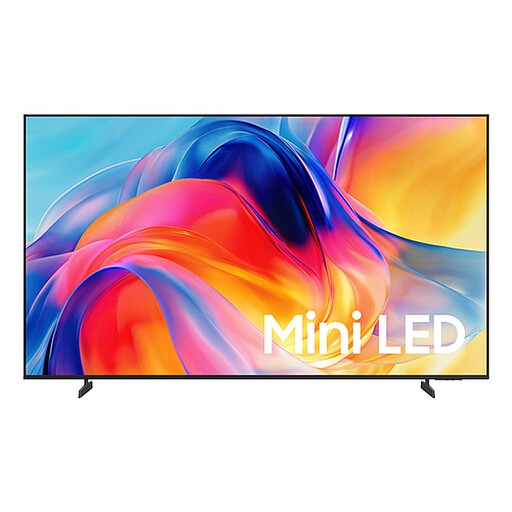
Consider this named Mini LED option if the shared lounge is often bright, subject to checking its reflection handling in the planned position.
The product name specifies a 55-inch 4K HDR TV with VIDAA OS. Confirm its headphone behaviour and UK energy information if either matters to the flat.
 No image available
Consider the larger screen for group viewing only after checking seating distance and where the TV will stand.
The product name identifies a 65-inch 4K Mini LED smart TV. Check the exact model’s audio options and energy label before relying on them for shared use.
 No image available
This is a named Mini LED option to assess when a 50-inch screen suits the shared seating area and daylight is a consideration.
The product name specifies 4K HDR and Google TV. Confirm headphone behaviour for quiet viewing; if gaming also matters, confirm the exact refresh-rate specification before relying on it.
 No image available
For dimmable film nights, establish whether an 83-inch screen fits the group’s viewing distance and available wall or stand space before considering this model.
The product name specifies 4K Ultra HD. Confirm the exact display technology and headphone behaviour when assessing it against the OLED route.
 No image available
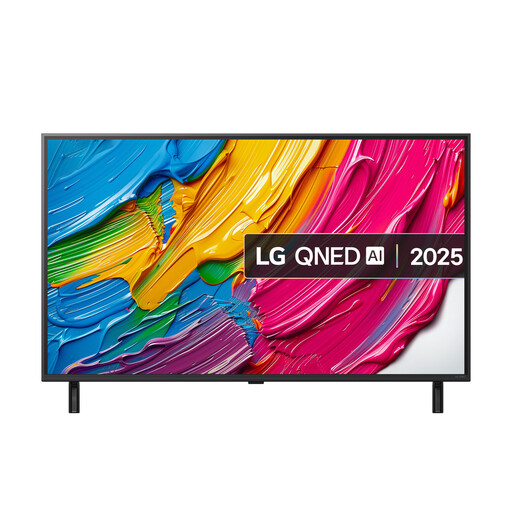
A 43-inch option may suit a smaller shared seating area, provided its size works from each regular viewing position.
The product name specifies QNED, 4K UHD and webOS. Check the exact backlight type rather than assuming QNED means Mini LED, and confirm headphone behaviour if late-night viewing matters.
Start with the distance from the main seats and the space available for the TV, rather than the room’s name. Which? gives 48–50 inches at around 2.6 m as an indicative viewing-distance example, not a required size for every flat.
Owning a TV alone does not determine whether a licence is needed. TV Licensing says a licence is required to watch or record live TV or use BBC iPlayer; if the flat only watches on-demand programmes on other services and no live TV, it says a licence is not needed. Check how the flat’s household arrangements affect who is covered.
Compare the exact models’ efficiency classes and stated on-mode consumption, paying attention to the viewing mode shown. GOV.UK’s television energy-information guidance identifies SDR consumption in kWh per 1,000 hours; check HDR information where applicable.
Use a suitable electrical-equipment reuse or recycling route rather than putting the TV in ordinary household waste. Hampshire County Council identifies TVs and display equipment as waste electrical and electronic equipment; check the collection or recycling arrangements available locally.