Communal film-night hosts
When several flatmates watch together, consider the side seats as well as the central sofa position. Which? advises paying attention to viewing angle; screen placement and sound also matter when everyone shares the room.


Measure the usual viewing distance and check where everyone will sit before choosing a screen: 48–50 inches is a starting point for this shared-flat setting, not a size that will fit every room. A 48-inch OLED is worth considering when dark-scene contrast matters most, while a 50-inch Mini LED model gives you reflection and brightness features to compare for daytime viewing. A direct-lit 4K TV is another route for streaming, but check the exact model’s picture, built-in sound and furniture fit rather than choosing by display label alone.
When several flatmates watch together, consider the side seats as well as the central sofa position. Which? advises paying attention to viewing angle; screen placement and sound also matter when everyone shares the room.
If the TV must sit on an existing cabinet, measure both the viewing distance and the furniture. Which? discusses 48–50-inch screens as a size group to investigate at around 2.6 m, rather than a fit for every lounge.
If short films are often watched in daylight or opposite a window, compare reflection handling on the exact TV. Samsung advertises a glare-free treatment for its 50-inch QN90F, while TCL lists HDR brightness features for its 50C6KS; neither specification establishes how another model will perform in your room.
For short films in a shared flat, settle the screen position and seating layout before weighing display features. Which? gives around 2.6 m as a guide for 48–50-inch TVs, but the distance from your usual seats and the space on your cabinet should decide whether that size group works.
Consider it: For evening viewing when dark-scene contrast is a priority; LG describes pixel-level true blacks on its OLED48C56LB.
Balance it against: A bright room or off-centre seating still calls for model-specific reflection and viewing-angle checks.
Consider it: When daylight or reflections regularly affect the communal screen; Samsung advertises glare-free treatment on its QN90F.
Balance it against: Brightness and dimming specifications vary by model and do not establish film-picture accuracy or dialogue clarity.
Consider it: When the household’s priority is a suitably sized smart TV for its preferred streaming services.
Balance it against: Confirm picture and sound performance for the exact model; a direct-lit label alone cannot settle the comparison with OLED or Mini LED.
| Concern | What to check | Who this matters to |
|---|---|---|
| Screen and furniture fit | Measure the usual seat-to-screen distance, then check the exact TV and stand dimensions against the cabinet. | If the sofa is close to the screen and the TV shares a small cabinet, I need it to fit both the viewing distance and the furniture. Around 36% of consumers put room fit first. |
| Side-seat viewing | Map regular seating positions and look for independent viewing-angle results for the exact model. | When flatmates sit in chairs away from the centre, I want the picture to remain watchable for them too. Around 29% of consumers make shared seating their primary concern. |
| Dialogue at considerate volume | Compare the built-in speaker arrangements and model-specific dialogue assessments; decide separately whether an additional speaker suits the flat. | If we rely on the TV’s speakers, I need to follow dialogue without turning the volume up for the whole building. Roughly 21% of consumers place built-in sound first. |
| Daytime picture | Check the window position and compare independent reflection and brightness results for the exact TV. | For films watched while the communal room is bright, I need to judge whether reflections will distract us. Around 14% of consumers make bright-room viewing their main priority. |
A screen can fit the intended size category yet be awkward at the normal seating distance or too wide for the existing cabinet.
Measure the usual seats and furniture before settling on 48 or 50 inches. Treat Which?’s viewing-distance guidance as a starting point, not a substitute for the room layout.
TV Licensing ties the requirement to watching or recording live TV and to BBC iPlayer use, including viewing on devices other than a television. The household’s viewing habits and tenancy arrangement both matter.
Agree which services flatmates use. TV Licensing says one licence covers the address under a joint tenancy; check the arrangement if residents have separate room contracts.
HDR, Mini LED and Dolby Atmos identify features or formats, not how clear dialogue will sound at a considerate volume or how the picture will look from a side chair.
Look for independent picture, viewing-angle and audio assessments of the exact model, and check whether the household would use a separate sound solution.
Joybuy’s page for the TCL 50C6KS states that the item is no longer available. A similarly named TCL television is not necessarily the same model.
Check the full model identifier, live listing and warranty before ordering, especially when comparing specifications from different TCL ranges.
A reference point for the compact OLED route through the 48-inch OLED evo AI C5 OLED48C56LB.
A reference point for the bright-room Mini LED route through the 50-inch QN90F.
A reference point for a 50-inch QD-Mini LED route with integrated audio through the 50C6KS.
These Joybuy choices cover 50-inch Mini LED and direct-lit smart TVs, plus a 48-inch OLED for evening viewing. Compare each one with your measured room layout and preferred streaming services; the display type alone does not establish how it will sound or look from every seat.
 No image available
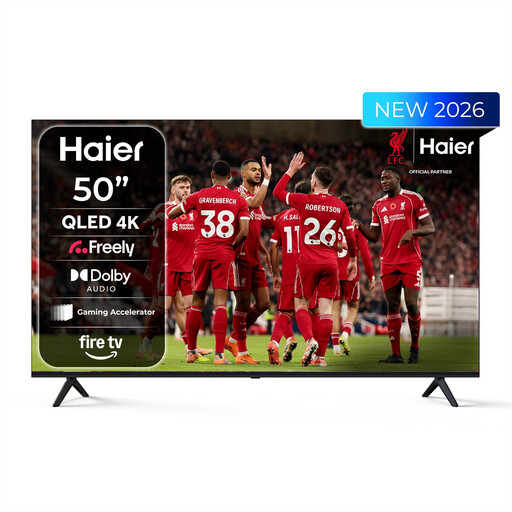
Consider this model if a measured 50-inch screen fits the communal room and you want Google TV with built-in Onkyo 2.1 audio. Its title lists 4K HDR and QD-Mini LED; check independent reflection and side-seat results for this exact model.
If refresh rate matters to you, confirm the panel specification before ordering: the stated native and variable-refresh figures differ between the title and description.
 No image available
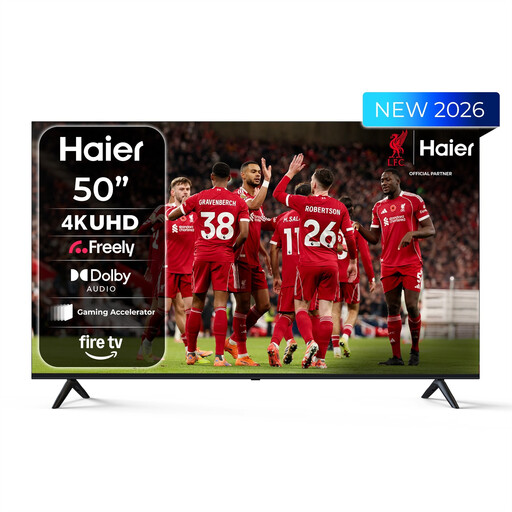
Consider this direct-lit 4K model if the room suits a 50-inch screen and Fire TV and Freely match the household’s viewing plans. The title also lists HDR10+ and Dolby Audio; check the cabinet fit, side-seat picture and dialogue clarity for this model.
Do not treat a 2K motion or gaming refresh figure as the native 4K refresh rate.
 No image available
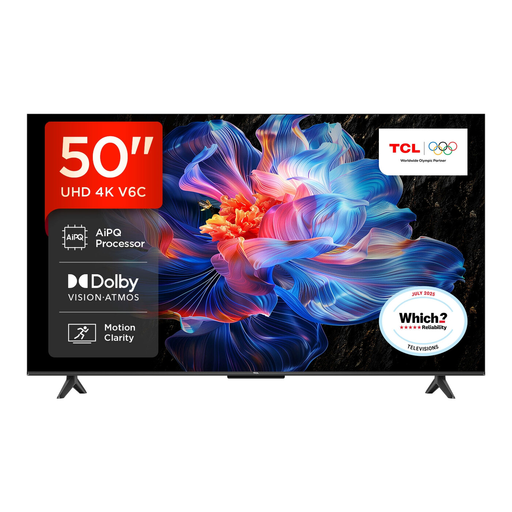
This 4K direct-lit model suits a comparison where a 50-inch screen fits and the household wants Fire TV and Freely. Its title lists HDR10 and Dolby Audio; assess its cabinet fit and built-in sound separately from those format labels.
If you also compare gaming features, check refresh-rate claims at the resolution you intend to use rather than assuming a 2K figure applies at 4K.
 No image available
Consider this 4K HDR model if Google TV suits your streaming plans and the measured room accommodates 50 inches. The title lists Dolby Atmos, but that does not establish dialogue clarity from the built-in speakers.
Its 120Hz Game Accelerator is described for FHD; check the native 4K refresh specification if you need it. Measure the cabinet and look for model-specific side-seat assessments before choosing.
 No image available
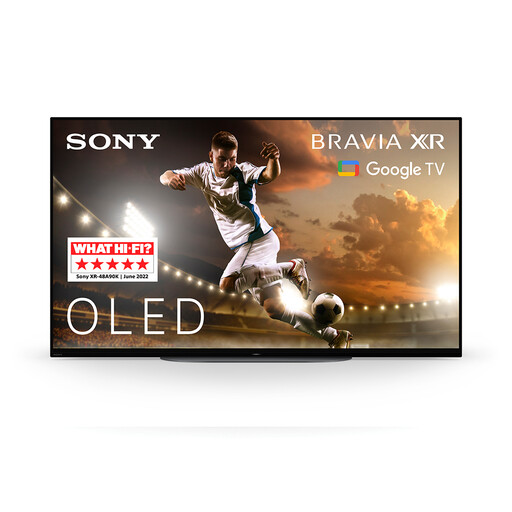
Consider this 48-inch OLED for evening short films if OLED is the display route you want to assess and Google TV suits the household. The product name also identifies 4K HDR, Google Cast, Dolby Vision and Dolby Atmos.
Check the exact stand dimensions, built-in speaker arrangement and independent side-seat performance before relying on it for the shared viewing area.
On-demand viewing on services other than BBC iPlayer does not itself require a TV Licence, provided you do not watch or record live TV. TV Licensing says a licence is required for BBC iPlayer use and for live TV on any channel or streaming service, so check what the flatmates actually watch.
For a property with a joint tenancy, TV Licensing says one licence is needed for the address. Separate room contracts can change what each resident needs, so check the tenancy arrangement and whether the address is already covered.
Choose between 48 and 50 inches after measuring the usual viewing distance, the available furniture space and the seats to the side. Which? gives around 2.6 m as a guide for 48–50-inch TVs, not a rule that overrides the room layout.
Choose the arrangement that suits the selected TV and the flat’s installation conditions. Before wall mounting, confirm tenancy permission, wall construction, the TV’s weight and VESA compatibility; for a TV unit, check its dimensions and the model’s stand footprint.