Regular side-seat viewers
You usually watch from an armchair or the end of a sofa rather than directly in front of the screen. The question is whether faces, colours and dark parts of the picture still look convincing from your usual seat.


For dark detective series watched regularly from a side seat, consider an OLED TV, but check independent viewing-angle results for the exact model before choosing. A Mini LED LCD may suit a brighter room if its reflection handling and off-centre picture both hold up in model-specific tests; neither display label settles those questions on its own.
You usually watch from an armchair or the end of a sofa rather than directly in front of the screen. The question is whether faces, colours and dark parts of the picture still look convincing from your usual seat.
You watch crime or mystery programmes in a dim room and want to distinguish clothing, streets and objects in low-light scenes. Contrast and shadow detail matter more to you than a brightness claim alone.
You watch off-centre while daylight or lamps are visible from your seat. You need to judge reflections and usable brightness alongside the viewing angle, rather than treating either as a separate purchase decision.
Start with the exact TV’s horizontal viewing-angle result, then assess dark-scene performance and reflections from the seats you use. RTINGS explains the viewing-angle trade-off between IPS- and VA-type LCD panels, while Which? includes viewing angle and contrast in its TV picture-quality tests; a Mini LED backlight does not identify which LCD panel an individual model uses.
| Concern | What to check | Who this matters to |
|---|---|---|
| Off-centre picture | Find an independent horizontal viewing-angle test for the exact model and screen size. If possible, look at it from your usual seat. | If I regularly watch from the end of the sofa, I want faces and shadowy clues to remain clear without moving to the centre. Around 42% of consumers put off-centre picture accuracy first. |
| Dark-scene contrast | Compare black levels and shadow detail in model-specific tests; for LCDs, check local-dimming behaviour as well as the HDR specification. | When I watch in a dim room, I care most about making out objects in night scenes rather than simply seeing bright highlights. Dark-scene contrast comes first for about 33% of consumers. |
| Reflections and room fit | Check reflection tests against your window and lamp positions, and measure viewing distance and the available space before choosing a size. | Daylight or a lamp can catch the screen from my side seat, and I still need to take in the whole frame comfortably. For roughly 25% of consumers, managing reflections and fitting the screen to the room is the primary need. |
RTINGS finds that IPS-type LCD panels generally retain picture quality better at an angle than VA-type panels. A label such as QLED or Mini LED does not establish the viewing angle of a particular TV.
Look for an independent horizontal viewing-angle result for the exact model and size, especially if someone watches from an armchair or end seat most evenings.
Bright highlights do not tell you whether dark clothing and background details remain distinct, or whether a lamp will reflect in the screen. OLED and Mini LED LCD take different approaches to contrast, with results that depend on the model and room.
Compare dark-scene and reflection results under conditions resembling where you watch.
Which? notes that a very large TV viewed from too close can make the whole picture harder to take in.
Measure both the central and side-seat distances, then check the TV’s full dimensions against the available furniture or wall space.
The exact model’s energy information helps you compare TVs without assuming that display technology alone determines energy use. Replacing a large set also means arranging what happens to the old one.
Read the online energy label and product information sheet, and ask the retailer how its old-TV take-back arrangement works for your order.
LG’s OLED range is relevant if side-seat viewing and contrast in dark scenes are your main priorities.
Sony’s BRAVIA OLED models offer another OLED route to compare for this viewing setup.
Samsung offers OLED and Neo QLED LCD routes to compare when both dark scenes and room lighting affect your choice.
TCL’s Mini LED LCD range is relevant if a bright room makes an LCD route worth considering.
These OLED choices relate to side-seat viewing and dark detective scenes. Before choosing among them, compare model-specific viewing-angle and reflection tests, then check that the screen size fits your usual seats.
 No image available
Consider this OLED model if a 55-inch screen fits your seating distance. Its listing describes an anti-glare screen; compare independent reflection and side-angle results before relying on it for a bright side seat.
 No image available
This larger OLED option is worth considering only if viewers can take in the full picture from their usual seats. Measure the available space and viewing distances, and check independent viewing-angle and reflection results for this model.
 No image available
Consider the 42-inch size where the room or viewing distance calls for a smaller screen. For side-seat detective viewing, check this model’s horizontal viewing angle and reflections rather than assuming the OLED label answers both questions.
 No image available
This 65-inch OLED is an option where the screen fits both the room and the side-seat viewing distance. Compare independent off-centre and reflection results for this exact model before deciding how it suits your lighting.
 No image available
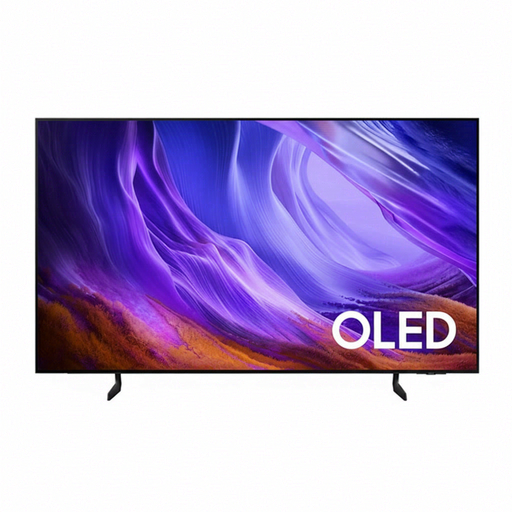
OLED makes this a relevant option to investigate for dark-scene viewing. Confirm the exact model, screen size and resolution, then check its side-angle and reflection performance before deciding whether it fits your room.
Find an independent horizontal viewing-angle test for the exact model, then view it from your furthest regular seat if practical. As RTINGS explains, moving off-centre can change aspects of the picture; a front-on demonstration will not show what you see from an armchair.
Consider OLED when side-seat viewing and dark-scene contrast are priorities; consider a Mini LED LCD when room brightness also makes reflection handling important. Compare independent tests of the specific TVs, because Mini LED backlighting does not guarantee a wide viewing angle and OLED alone does not establish how a model handles reflections.
According to TV Licensing, you need a TV Licence to watch live TV on any channel or streaming service, or any BBC iPlayer programme, live or on demand. You do not need one solely to watch on-demand programmes on other services, such as Netflix or ITVX.
Check the exact model’s energy label and product information sheet rather than judging energy use by screen technology alone. GOV.UK guidance says products within the UK energy-labelling requirements must display the label at the point of sale, including on a website, and be accompanied by a product information sheet.