
24/7 Customer Support

Free returns

Same-day & Next-day Delivery

Quality Guaranteed

Unlock Your Welcome Offers: FREE Delivery | Up to 80% OFF | Free 30-day JoyPlus trial
Download the APP
A new television is an exciting purchase, but finding the right way to display it is just as important for your viewing experience and home safety. With so many options available—from sleek wall mounts to versatile mobile stands—choosing the correct TV stand can feel overwhelming. The right choice not only complements your room's decor but also ensures your television is secure and positioned for optimal viewing.
This guide is designed to help you understand the different types of TV supports available. We will walk you through key considerations and highlight a few practical solutions to help you make an informed decision for your home, office or commercial space.
Navigating the technical specifications of TV stands and mounts is simpler than it looks. Focusing on these three areas will help you narrow down your options effectively.
Before looking at any stand or mount, you need to know your television's specifications. The most critical factor is the VESA mount standard. This refers to the standardised pattern of four screw holes on the back of your TV. It's expressed in millimetres, such as 200x200 or 400x400. You must ensure that the stand or mount you choose is compatible with your TV's specific VESA pattern, screen size and weight. This information is usually found in your TV's manual or on the manufacturer's website.
The ideal TV support depends heavily on your room layout and how you intend to use the screen.
Always check the maximum load capacity of any stand or mount and ensure it can comfortably support your television's weight. For wall-mounted options, the type of wall is crucial. Solid brick and concrete walls are ideal, while plasterboard or drywall may require specialised fixings and professional assessment. For any freestanding or mobile stand, ensure it is placed on a flat, level surface to prevent any risk of tipping.
Here are a few versatile options that address common needs, from mobility to space-saving designs.

Why It Stands Out: This mobile TV stand combines practical mobility with a refined aesthetic. The alloy steel frame provides a sturdy structure, while the integrated wood shelf adds a touch of warmth and provides convenient storage for media players or soundbars. It’s a functional piece of furniture, not just a piece of equipment.
Pros:
Who is it for? This is an excellent choice for anyone who values flexibility. It’s ideal for renters who cannot install a wall mount, businesses that need a portable TV trolley for meetings or homeowners who enjoy rearranging their living space.
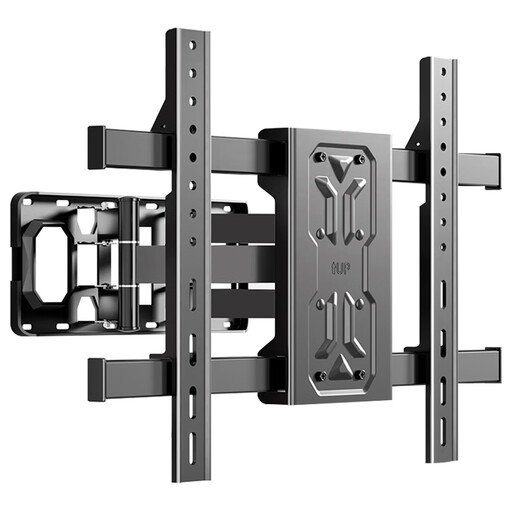
Why It Stands Out: As a full motion TV bracket, this mount offers superior positioning control. It can retract to just 42mm from the wall for a discreet look or extend out to 340mm, making it easy to adjust for glare or different seating arrangements. The solid SPCC cold-rolled steel construction supports a significant weight.
Pros:
Who is it for? This mount is well-suited for home cinema enthusiasts who want to eliminate screen glare and achieve the perfect viewing angle. It's also a practical solution for kitchens or open-plan living areas where the screen needs to be visible from multiple spots.
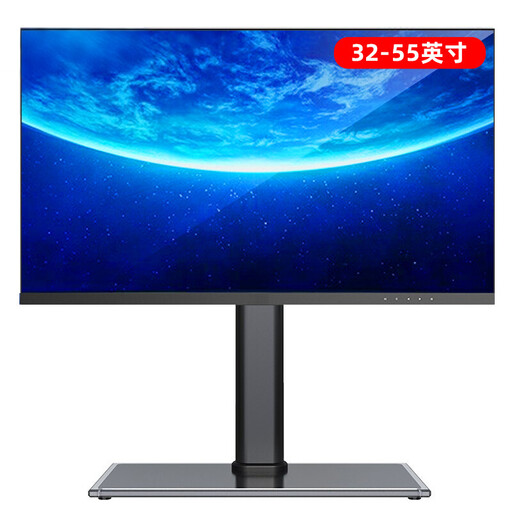
Why It Stands Out: The key feature of this product is its two-in-one design. It can be used as a fixed TV wall mount for a secure, low-profile installation or assembled as a universal TV base stand. This adaptability makes it a highly practical and cost-effective choice.
Pros:
Who is it for? This is a great option for those who anticipate their needs changing. It’s perfect for renters who may want a freestanding stand now but plan to wall-mount their TV in a future home. It also offers a fallback if wall mounting proves impractical in your current space.
If these specific models aren't quite what you're looking for, there is a wide world of solutions available. From different sizes of mounts to stands with unique features, finding the perfect match for your television and home is entirely possible.
Explore our full collection of stands, mounts and brackets to find what you need. Browse our complete range of TV Accessories.
How do I know if a TV stand or mount is compatible with my television? To confirm compatibility, you need to check three things: your TV's screen size, its weight and its VESA mount pattern. The VESA pattern is the distance between the four mounting holes on the back of your TV, measured in millimetres. All stands and mounts will list the screen sizes, weight limits and VESA patterns they support. Always cross-reference these with your TV's specifications before purchasing.
Can I put any TV stand on wheels? It is not advisable to add wheels to a standard, stationary TV stand. A dedicated mobile TV stand or portable TV trolley is engineered with a lower centre of gravity and a wider base to ensure stability while in motion. Using a purpose-built TV stand on wheels is the safer option to prevent tipping and protect your equipment.
What is the difference between a fixed and a full motion TV bracket? A fixed TV wall mount holds your television flat against the wall, offering a very slim and unobtrusive profile, but it does not move. In contrast, a full motion TV bracket allows you to pull the TV away from the wall, tilt it up and down and swivel it left and right. This is ideal for large rooms, corner installations or spaces where you need to adjust the screen to reduce glare.