Close-seated theatre viewers
If you sit near the screen, compare its width and stand depth with your furniture as well as its diagonal size. Sony UK advises treating viewing distance as a starting point and allowing for room layout and comfort.


Start with a screen size that fits your seating distance and furniture, then choose picture features for the light in your room. OLED is worth considering for dark-stage scenes watched mainly in the evening; Mini-LED is a route to investigate when daylight is a bigger concern. Whichever TV you choose, check dialogue at your seating position and confirm how your theatre service will reach the screen.
If you sit near the screen, compare its width and stand depth with your furniture as well as its diagonal size. Sony UK advises treating viewing distance as a starting point and allowing for room layout and comfort.
If you usually watch in the evening, dark stage backgrounds and changes in lighting may shape your picture priorities. Sony UK describes individually controlled OLED pixels as producing deep blacks; check the features of the particular TV you are considering.
If daylight affects the picture and spoken lines are central to your enjoyment, assess reflections and audio together. Check your theatre service’s device options before relying on a TV’s built-in apps.
Settle the screen’s physical fit first, then weigh evening picture quality against daylight viewing and decide how you will hear and stream the performance.
| Concern | What to check | Who this matters to |
|---|---|---|
| Screen size and fit | Measure the seat-to-screen distance, available width and stand depth. Use Sony UK’s 4K viewing-distance guidance as a starting point, not a size recommendation. | I sit close to the screen and need to see the stage without crowding the room; around 36% of consumers put physical fit first. |
| Dark-scene picture | Check the exact panel type and picture modes, alongside the lighting you normally watch in. | When I watch evening performances, dark sets and changes in stage lighting matter most to me; roughly 29% of consumers prioritise that picture need. |
| Dialogue and access | Confirm your service’s supported devices and the TV’s audio connections. Audio-format or speaker specifications alone do not establish speech clarity. | I need to follow spoken lines and get my chosen production onto the TV without a complicated setup; about 21% of consumers make dialogue and access their primary concern. |
| Daylight and reflections | Note where windows reflect in the screen and compare the exact models’ brightness and reflection-related specifications. | My viewing often happens while the room is bright, so I want to assess whether stage detail remains comfortable to watch; around 14% of consumers put daylight viewing first. |
Even if a screen meets Sony UK’s minimum 4K viewing-distance guidance, it still needs to suit your seating comfort and fit the furniture or wall space.
Measure the normal viewing position, available width and stand depth; leave room for any audio equipment you intend to use.
National Theatre lists browser, iOS, Android, Amazon Fire and Roku TV routes for National Theatre at Home. That does not establish a native app on every smart-TV platform.
Check the route for your chosen service and TV before buying. If you plan to use an external streaming device, allow an HDMI input and a power socket.
A separate device also adds another item to connect and operate.
Dolby Atmos support and speaker output describe features, not how intelligible dialogue will be from your seat.
Try dialogue-heavy material where possible, and check the connections you would need for compatible external audio or headphones.
Display technology and diagonal size alone are not enough to judge a particular TV’s electricity use.
Compare the energy label and product information sheet for the exact size and variant under consideration.
Panasonic’s UK 42-inch TV-42Z90B specification makes its compact OLED range relevant to a room where screen fit and evening viewing both matter.
Sony’s OLED range is relevant if dark stage backgrounds are a picture priority.
Samsung’s Neo QLED range offers a Mini-LED route to assess if daylight is a major part of your viewing routine.
TCL’s C6K series is another QD-Mini LED route to examine for a room where daylight affects viewing.
These TVs offer compact and larger OLED choices, a compact QNED option and Mini-LED alternatives. Match each screen to your room measurements and viewing light rather than treating the list order as a verdict on picture quality.
 No image available
Consider this 42-inch screen if seating is close and OLED interests you for evening theatre viewing; measure its overall dimensions before deciding it fits.
The product name lists 4K HDR, Google TV, Dolby Vision and Dolby Atmos. Confirm a supported route for your theatre service.
 No image available
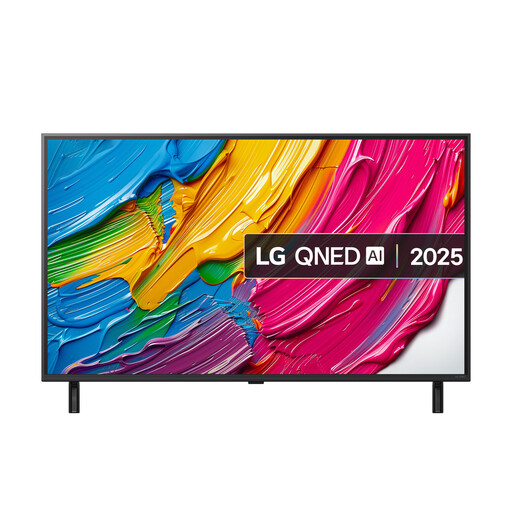
This 43-inch option is worth measuring for limited furniture or wall space; its QNED designation should not be mistaken for OLED.
The product name lists 4K UHD, webOS and eARC. Check your theatre service’s route to webOS or a compatible external device.
 No image available
A 55-inch OLED is a choice to assess for evening viewing if both the seating arrangement and available width accommodate it.
The product name identifies a 4K smart TV. Confirm the exact dimensions and your theatre service’s streaming route.
 No image available
Consider this Mini-LED route if you often watch in daylight, while checking reflections and whether a 50-inch screen fits comfortably.
The product name lists 4K HDR, Google TV and an ONKYO audio system. Check how your theatre service works with the selected setup.
 No image available
This is another daylight-viewing route to assess if a 55-inch screen suits your seating distance and furniture.
The product name lists 4K HDR, VIDAA and a built-in subwoofer. Check dialogue from your usual seat, the streaming route and any external-audio connection you need.
Choose by your seating distance and the TV’s physical footprint, not its diagonal alone. Sony UK’s 4K guidance gives approximate minimum distances of 90 cm for 43 inches, 1 m for 49–55 inches and 1.2 m for 65 inches; your layout and comfort still matter. Measure the available width and stand depth before ordering.
Investigate OLED if you mainly watch dark-stage scenes in the evening, and Mini-LED if daylight is the more pressing issue. Sony UK describes deep blacks from individually controlled OLED pixels, while Samsung UK and TCL UK describe lighting and brightness features on their cited Mini-LED ranges. Compare exact models in light like your own rather than assuming either label settles the choice.
Do not assume your chosen TV has a native app. National Theatre lists browser access and apps for iOS, Android, Amazon Fire and Roku TV; check the supported route for the TV you plan to buy or allow for a compatible external device.
Not necessarily, but judge speech from your normal seating position before relying on built-in sound. Audio features do not guarantee dialogue clarity in your room; if you expect to add a soundbar, check the TV’s connections and space for it.
Compare the energy label and product information sheet for the exact TV size and variant you are considering. A screen’s technology name alone does not tell you its electricity use.