Groups with seats spread across the room
If people watch from a wide sofa or chairs off to either side, the picture needs to remain clear beyond the centre seat. RTINGS identifies viewing angle as particularly important for this arrangement.


For a group spread across a room, choose a 4K screen that fits the seating layout, then check how the exact TV looks from the side; RTINGS identifies wide viewing angles as important for broad seating arrangements. OLED is worth considering when side-seat consistency and dark-scene contrast matter most, while a Mini LED model with confirmed wide-angle and reflection-control features may better address a bright room. Neither panel label guarantees how a particular TV will handle your seats or lighting.
If people watch from a wide sofa or chairs off to either side, the picture needs to remain clear beyond the centre seat. RTINGS identifies viewing angle as particularly important for this arrangement.
Windows and lamps can reflect in the screen while the group watches. Look at the room lighting alongside the exact TV’s reflection-control features; Sony and Samsung describe these features for particular TVs and screen treatments.
Scenery, maps and captions need to be visible from the usual seats. Measure the viewing distance and available space before settling on a screen size; Sony’s 4K viewing-distance guidance offers a starting point, not a substitute for checking the room.
For widely spaced seats, compare viewing angles as well as screen size. Then decide whether dark-room contrast or reflections during daytime viewing will have more influence on the group’s experience.
Consider it when: Side seats and dark-scene contrast matter most, particularly for evening viewing; LG describes its OLED technology as providing wide viewing angles and deep blacks.
Check: Reflection handling and brightness on the exact model if the room is often sunlit.
Consider it when: Windows or lamps make daytime reflections a priority and viewers also sit off-centre; Sony lists both X-Anti Reflection and X-Wide Angle for its BRAVIA 9.
Check: Those features on the exact model and size rather than assuming they come with every Mini LED TV.
| Concern | What to check | Who this matters to |
|---|---|---|
| Picture from side seats | Look for exact-model viewing-angle results or listed wide-angle technology. RTINGS notes that viewing angle matters when seating extends across a room. | If people sit well away from the centre, I want colours and contrast to hold up from their seats. Around 29% of consumers put off-centre picture consistency first. |
| Screen size and distance | Measure seating distance, the TV’s full width and its stand footprint. Sony gives a minimum 4K viewing distance of 1.5 times the screen’s vertical height. | When the whole group needs to follow maps and captions, I want a screen that is easy to see without overwhelming the available space. Screen size and distance come first for around 29% of consumers. |
| Daytime reflections | Note where windows and lamps appear in the screen, then check the exact model and size for reflection-control features. | If we watch while the room is bright, I do not want reflected light obscuring the scenery. Roughly 24% of consumers make daytime visibility their primary concern. |
| Contrast and programme access | Compare exact-model display features, then confirm the smart-TV platform supports the services you use and whether they require an account or subscription. | For evening viewing, I care most about dark-scene contrast and being able to open our programmes on the TV. These are the leading needs for around 18% of consumers. |
A large diagonal does not tell you whether the TV, its stand and the viewing distance suit the room.
Measure the furniture or wall, the route into the room and the usual seats before ordering. Use Sony’s viewing-distance guidance as a starting point, then judge comfort in your layout.
Picture quality can change away from the centre seat, and a panel-category name does not establish an individual model’s viewing-angle performance.
Check exact-model viewing-angle evidence or a listed wide-angle feature. If possible, view the model from positions resembling your side seats.
Screen treatments handle reflected light differently, and the feature offered can vary with the model and screen size.
Identify the windows and lamps likely to appear in the screen, then check the reflection-control specification for the precise TV you are considering.
A smart TV does not itself provide every streaming service. In the UK, GOV.UK says a TV Licence is required to watch or record live TV on any channel or service, or to use BBC iPlayer.
Confirm the apps and accounts you need, and check your household’s TV Licence position before using live TV or BBC iPlayer.
LG’s OLED range is relevant when shared viewing angles and dark-scene contrast are priorities.
Sony is worth examining for a bright room with wide seating when an individual Mini LED model includes both reflection control and wide-angle technology.
Panasonic offers OLED and Mini LED lines to compare when screen size, room lighting and smart-TV platform all matter.
These large-screen 4K TVs offer several display types for group viewing, including an OLED and a Mini LED model. Use the room measurements and side-seat and reflection checks above to assess each exact TV rather than treating display type or size alone as a match.
 No image available
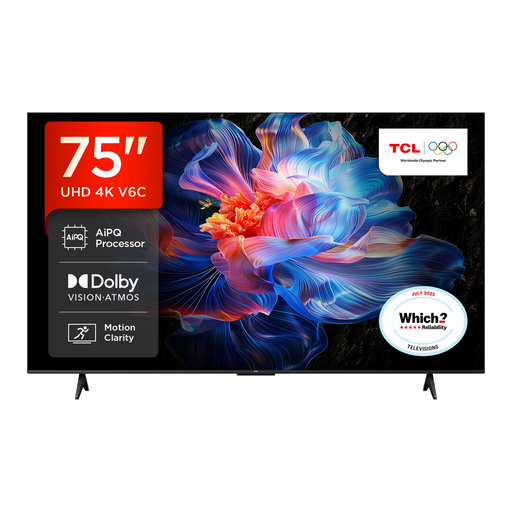
Consider its 75-inch screen when the group needs to follow scenery and on-screen detail from seats at a suitable distance.
The title specifies Direct LED, 4K HDR, Google TV and Dolby Atmos. Check the picture from side seats, reflection handling and installation dimensions for your room.
 No image available
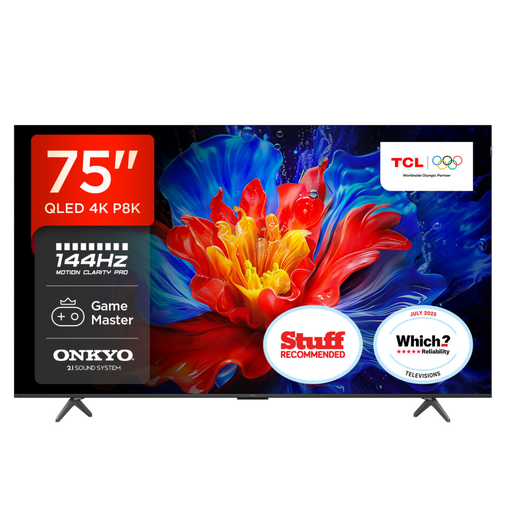
Its 75-inch screen is an option to assess when several people need to see travel-programme detail.
The title specifies QLED, 4K HDR PRO, Google TV and an ONKYO 2.1 sound system. Confirm viewing angles, reflections and the TV’s physical fit before choosing it for a wide seating arrangement.
 No image available
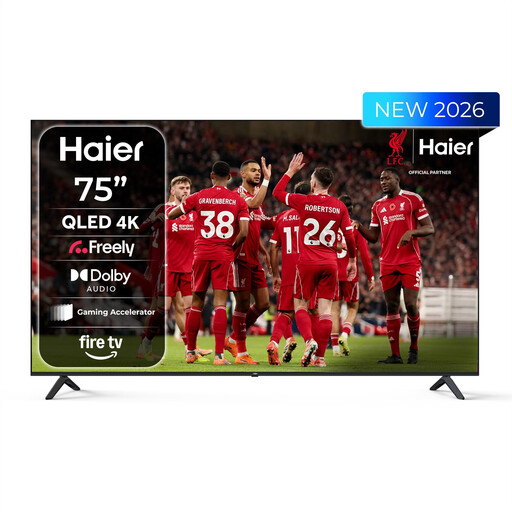
Consider this 75-inch model if a large screen and its stated TV platforms suit how your group watches programmes.
The title specifies 4K Ultra HD, HDR10+, Fire TV and Freely. Check the services you need, side-seat picture quality, reflections and installation dimensions for the exact model.
 No image available
This 75-inch Mini LED model is one to examine if your group watches travel programmes in a bright room.
The title specifies 4K HDR, Google TV and up to 2048 local dimming zones. That zone figure does not establish reflection control or side-seat performance: check both for the exact TV, along with its dimensions.
 No image available
Consider this 65-inch OLED when that size fits your seating layout and dark-scene contrast is a priority.
The title specifies 4K HDR, Google TV, Dolby Vision and Dolby Atmos. Check this model’s side-seat picture, daytime reflections and installation dimensions rather than assuming its performance from the OLED label.
Start with the distance from the usual seats and the space available for the TV, rather than a diagonal measurement alone. Sony’s minimum viewing-distance guidance for 4K TVs is 1.5 times the screen’s vertical height; also check the full TV and stand dimensions and whether everyone can view it comfortably.
No: OLED is worth considering for wide seating and dark-scene contrast, but a bright room also calls for a check of reflection handling. A Mini LED TV can be another option when the exact model has suitable wide-angle and reflection-control features; Sony lists both types of feature for its BRAVIA 9, not for every Mini LED TV.
GOV.UK says you need a TV Licence to watch or record live TV on any channel or service, or to use BBC iPlayer. Check how you will watch a particular programme rather than assuming that streaming it removes the licence requirement.
Not necessarily: the services available depend on the TV’s platform and the services’ current device support. Check the exact model and the programmes’ providers before buying, including any account, internet connection or subscription requirements.