
24/7 Customer Support

Free returns

Same-day & Next-day Delivery

Quality Guaranteed

Unlock Your Welcome Offers: FREE Delivery | Up to 80% OFF | Free 30-day JoyPlus trial
Download the APP
A new television can transform your living space, but leaving it on a bulky stand can take up valuable floor space and limit your viewing options. A well-chosen TV wall bracket not only creates a sleek, modern look but also helps you position your screen perfectly to reduce glare and improve comfort.
However, with so many options available—from simple fixed mounts to complex articulating arms—finding the right one can feel daunting. This guide is designed to help you understand the key features to look for, ensuring you select a mount that is safe, functional and perfectly suited to your television and your home.
Before you start browsing, a few key considerations will help narrow down your choices and ensure a secure fit.
The most critical step is to confirm compatibility between the bracket and your television. Look for these three specifications:
Not all walls are suitable for mounting a television. In the UK, most homes have either solid walls (brick, concrete) or stud walls (plasterboard fixed to a wooden frame).
TV brackets offer different levels of movement. The best one for you depends on your room layout and viewing habits.
Here are our recommendations, selected to meet a range of common needs, from ultimate flexibility to a discreet, low-profile finish.
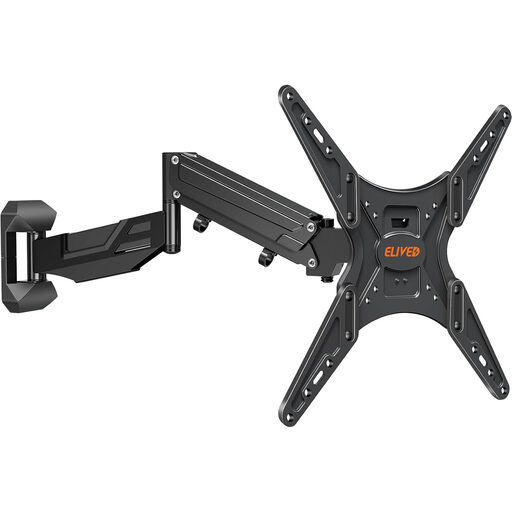
Why It Stands Out: This mount’s gas spring mechanism sets it apart, allowing for smooth, effortless height and position adjustments without needing tools. It’s a highly adaptable height adjustable TV mount that combines full-motion capabilities with a clean, modern design.
Pros:
Who is it for? This is an excellent choice for anyone who wants maximum viewing flexibility. It's ideal for multi-use rooms where you might be watching from a sofa, a dining table or even an adjacent kitchen, as you can easily adjust the height and angle.
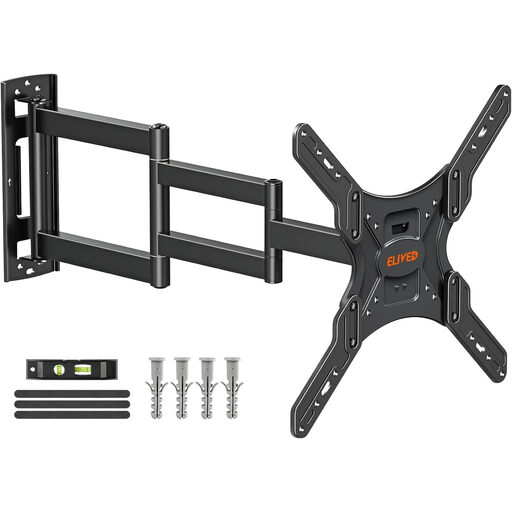
Why It Stands Out: With an impressive extension of nearly 75cm, this long reach TV bracket is specifically designed to solve placement problems. It allows you to pull a TV out from a recess or position it perfectly across a corner, something standard mounts cannot achieve.
Pros:
Who is it for? If you have an awkward corner, a large room or need to place your TV in an alcove, this mount provides the reach and flexibility you need. It’s the problem-solver for non-standard room layouts.
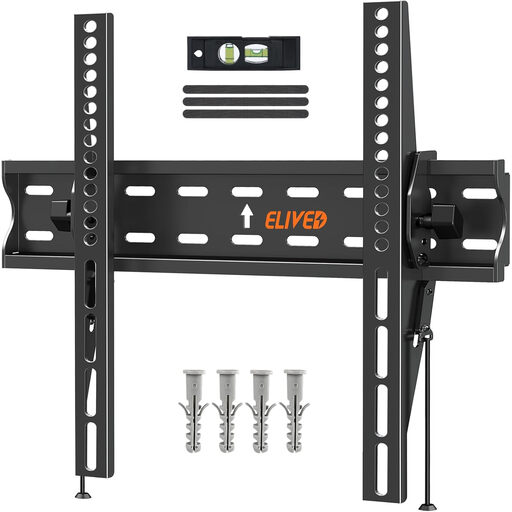
Why It Stands Out: This slim TV wall mount is all about creating a clean, unobtrusive look. It holds your television just 38mm from the wall, creating a picture-frame effect while still offering the practical benefit of tool-free tilting to combat glare.
Pros:
Who is it for? This mount is for those who prioritise aesthetics and want their TV to blend seamlessly with their decor. It's the perfect choice for bedrooms and living rooms where the TV is mounted at a comfortable height and doesn't require side-to-side movement.
If these recommendations don't quite match what you're looking for, or if you need a mount for a different size of television, there are many other solutions available.
Explore our complete collection of mounting accessories for televisions to find the perfect fit for your home.
1. How do I know if a TV wall bracket is compatible with my TV? Check three things: your TV's VESA pattern (the distance between the four mounting holes on the back), its weight and its screen size. The bracket's specifications must list a VESA pattern, weight capacity and screen size range that includes your TV. VESA and weight are the most important factors for safety and compatibility.
2. Can I install a TV wall bracket on a plasterboard wall? No, you should never mount a TV bracket directly onto plasterboard (drywall) alone. It is not strong enough to hold the weight. You must locate the wooden studs behind the plasterboard and fix the mount securely into them. For solid brick or concrete walls, you can mount directly using the appropriate wall plugs and screws.
3. What is the difference between a tilting and a full-motion TV mount? A tilting TV wall mount only allows you to angle the screen up or down, which is useful for reducing glare or for screens mounted high on a wall. A full motion TV mount (or swivel bracket) has an extendable arm that lets you pull the TV away from the wall and angle it left and right, as well as tilt it. This offers far more flexibility for viewing from different parts of a room.