
24/7 Customer Support

Free returns

Same-day & Next-day Delivery

Quality Guaranteed

Unlock Your Welcome Offers: FREE Delivery | Up to 80% OFF | Free 30-day JoyPlus trial
Download the APP
Mounting your television on the wall is a fantastic way to reclaim floor space and achieve a clean, modern look in your living room. However, the path to a perfectly mounted TV is often paved with potential pitfalls. Many shoppers are drawn in by claims of "universal fit" or overlook critical details, only to find their new bracket is incompatible with their TV, unsuitable for their wall type or simply doesn't provide the viewing experience they hoped for.
As the Joybuy Product Recommendation Officer, my role is to help you navigate these choices. Let's cut through the clutter and focus on what truly matters. Here are the common traps to avoid and the key factors to check before you buy a TV wall bracket.
To ensure a secure fit and a great viewing experience, focus on these three non-negotiable factors.
Before looking at any bracket, you need three pieces of information from your television:
Your wall is the foundation of the entire setup. In the UK, you will typically encounter two main types:
The right type of bracket depends entirely on your room and viewing habits.
Based on these practical considerations, here are a few options matched to different household needs.
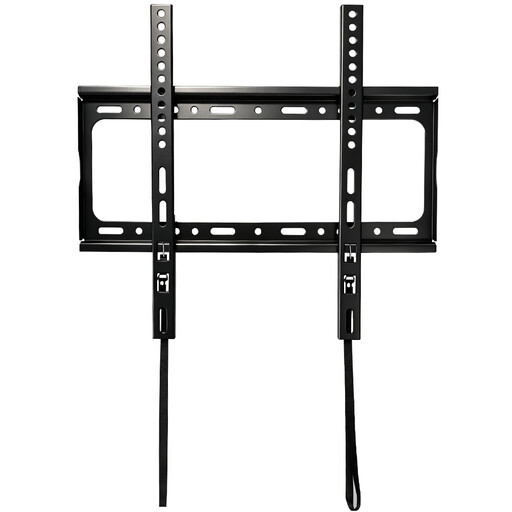
Why This Fits Their Persona: This user wants a 'picture frame' effect with no visible hardware or gaps. Their living room has a dedicated viewing area, so they don't need tilt or swivel functions, prioritising a clean, flush-to-the-wall finish above all else.
By focusing on one job—holding the TV securely and close to the wall—it avoids the complexity of motion mounts. Its simple design and clear VESA compatibility (up to 400x400mm) prevent mismatch errors.
Features an extremely slim profile, holding the TV just 2.5cm from the wall. The cold-rolled steel construction supports a high load capacity of up to 100kg, providing peace of mind.
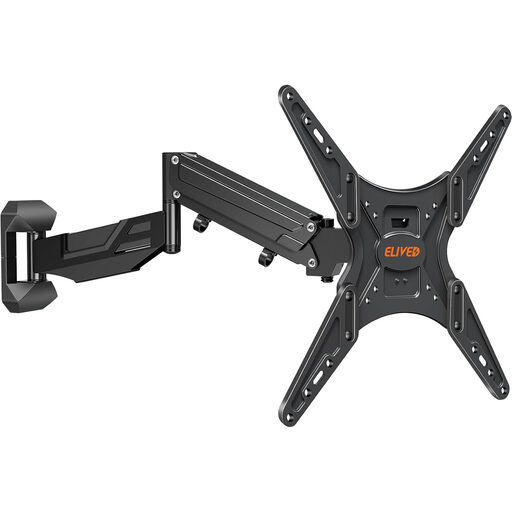
Why This Fits Their Persona: This user has an awkward room layout or an open-plan kitchen-diner. They need to angle the TV to avoid glare during the day, point it towards the sofa for movie night and then towards the dining table. Effortless adjustment is key.
It directly solves the problem of a fixed viewing angle. The gas spring mechanism provides smooth height and position changes without tools, preventing the frustration of a stiff, hard-to-move articulated arm.
The gas spring arm allows for 219mm of vertical height adjustment and 515mm extension from the wall. It also features integrated cable management for a tidy finish, even when extended.
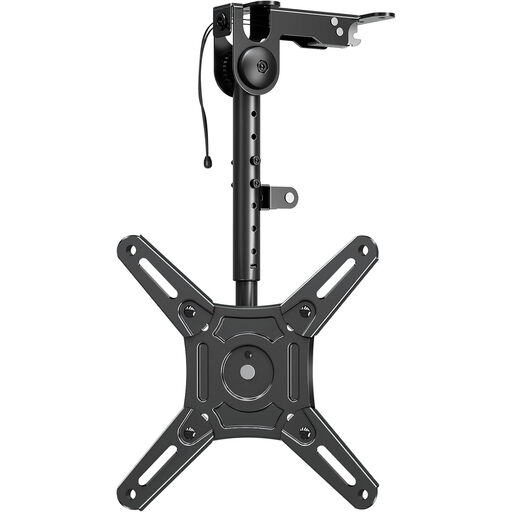
Why This Fits Their Persona: This user wants a small TV in the kitchen to watch the news or follow recipes, but has zero spare counter or wall space. An under cabinet tv mount is the only viable, space-saving solution.
This is a purpose-built product for a specific niche. It avoids the trap of trying to adapt a standard wall mount for a job it wasn't designed for, ensuring a secure and functional installation in a tight space.
Its key feature is the foldable design, which allows the TV to be tucked up and out of the way when not in use. It also offers a full 360° swivel for perfect positioning anywhere in the kitchen.
We have compiled a complete, real-time list of products that fully satisfy these strict selection criteria and UK safety regulations.
1. Can I install a TV wall bracket on a plasterboard wall? Yes, but with a critical condition: you must secure the bracket directly to the wooden studs behind the plasterboard. Do not attach a mount to the plasterboard itself, as it is not strong enough to hold the weight and will fail. Use a stud finder to locate the studs and ensure your bracket's wall plate can span across at least one, preferably two, for a secure installation.
2. How do I know which VESA size I need? The simplest way is to measure it yourself. On the back of your TV, you will see four screw holes in a square or rectangular pattern. Measure the distance between the holes horizontally and then vertically in millimetres. For example, if the horizontal distance is 400mm and the vertical is 200mm, your TV has a VESA 400x200 pattern. This information is also usually listed in your TV's user manual or on the manufacturer's product page.
3. Do all TV brackets come with the right screws for my TV? Most TV wall bracket kits include a variety of screw sizes (e.g., M4, M6 and M8) and spacers to fit the majority of televisions. However, in some rare cases, particularly with certain TV brands or models, you may need to purchase specific screws separately from a hardware shop. It's always a good idea to check the screw holes on your TV before you begin installation.