
24/7 Customer Support

Free returns

Same-day & Next-day Delivery

Quality Guaranteed

Unlock Your Welcome Offers: FREE Delivery | Up to 80% OFF | Free 30-day JoyPlus trial
Download the APP
Choosing a TV wall mount bracket can make a room look tidier and improve viewing comfort, but the wrong model may leave you with a crooked screen, inaccessible cables or an unsafe installation. Product listings often focus on large screen-size ranges and impressive movement figures while giving less attention to the measurements that determine whether the bracket will actually fit your television and wall.
The most common buying mistakes are:
A practical purchase starts with your TV’s measurements, the wall construction and the viewing position in your room.
VESA refers to the horizontal and vertical spacing between the mounting holes on the back of your TV, measured in millimetres. Common patterns include 100 × 100 mm, 200 × 200 mm, 400 × 400 mm and 600 × 400 mm.
A universal TV bracket is only universal within its stated VESA range. Check your television manual or measure the hole spacing before ordering. Also compare the TV’s weight with the bracket’s maximum load capacity. Leave a sensible margin rather than selecting a mount that is rated only slightly above the television’s weight.
Screen size is a useful first filter, but it is not a substitute for checking VESA dimensions and load capacity. This is particularly important with larger televisions, soundbars and heavier older screens.
A fixed TV wall bracket keeps the television close to the wall and is suitable when the seating position is directly in front of the screen. Low-profile models can leave only a few centimetres between the TV and wall, creating a neat appearance.
A tilting TV wall mount adds vertical adjustment, which can help when the television is mounted above eye level or when reflections are a concern. It still requires enough clearance to connect cables during installation.
A full-motion TV wall mount or telescopic TV mount can swivel, tilt and extend towards the room. This is useful for open-plan spaces, kitchens and corner installations, but the extended arm creates more leverage on the wall fixings. The mounting surface and fasteners therefore need particular attention.
A TV wall mount should be fixed to a suitable load-bearing structure, such as:
Do not install a bracket into plasterboard or drywall alone unless the wall has been structurally reinforced and the manufacturer’s instructions permit the chosen fixing method. Use a stud finder where appropriate, check for cables and pipes before drilling, and use a spirit level to mark the wall plate accurately.
For larger screens, a heavy-duty TV wall mount may require two people for lifting and positioning. Check that the supplied bolts and anchors match your wall type; included hardware is not automatically suitable for every UK property.
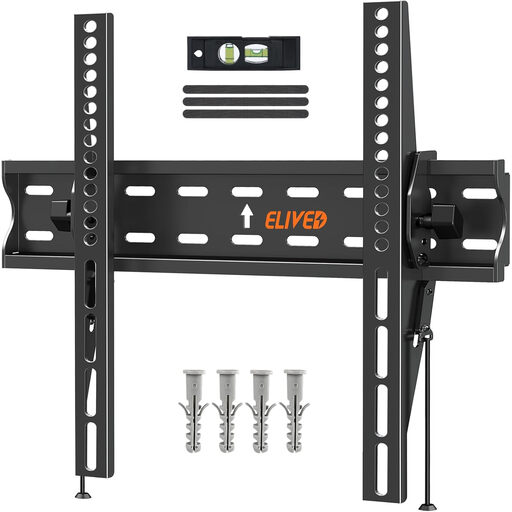
Why This Fits Their Persona: A practical choice for a living room, bedroom or home office where a discreet, close-to-wall installation matters more than swivel movement.
The stated 75 × 75 mm to 400 × 400 mm VESA range and 45 kg load rating make compatibility easier to verify than relying on screen size alone.
38 mm wall profile, 0° to -8° tool-free tilt and compatibility with flat or curved screens.
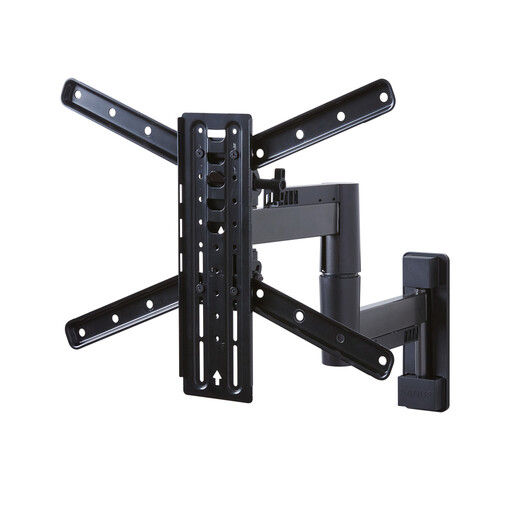
Why This Fits Their Persona: Suitable for households that want adjustable viewing in a lounge or open-plan room while keeping cable routing organised.
The listing specifies the movement range, wall profile and installation features, rather than presenting “full motion” as an unexplained benefit.
Extends up to 19 inches, supports tilt and swivel adjustment, and includes in-arm cable channels.
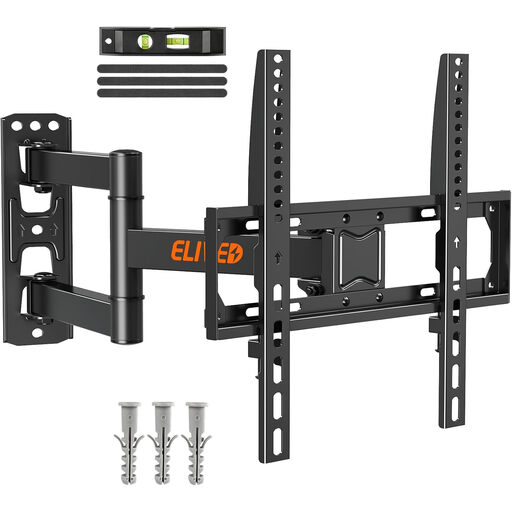
Why This Fits Their Persona: Designed for rooms where the television needs to face different seating areas, including corner locations in UK living rooms or studios.
Its stated articulation and post-installation levelling adjustment address common corner-mount alignment problems, provided the wall fixing is suitable.
Offers up to 488 mm extension, ±90° swivel, +5°/-13° tilt and a 35 kg maximum load.
Before drilling, confirm the wall plate will sit over the intended studs or suitable masonry. Measure the TV’s final height and account for the bracket’s wall clearance, cable plugs and any soundbar below the screen.
After installation:
We have compiled a complete, real-time list of products that fully satisfy these strict selection criteria and UK safety regulations.
Not directly in most cases. The bracket should be fixed to timber or metal studs, masonry or a properly reinforced structure using fixings suited to that wall. Check the installation instructions before purchasing.
A fixed mount generally has fewer moving parts and requires less clearance. A tilting TV wall mount adds adjustment for reflections or higher mounting positions, but still needs accurate wall fixing and enough space to attach cables.
They do not use electricity, so there is no ongoing energy cost. However, inspect screws, locking points and swivel joints occasionally. Movement, vibration and the leverage of an extended arm can gradually loosen fittings if the mount is not installed correctly.