
24/7 Customer Support

Free returns

Same-day & Next-day Delivery

Quality Guaranteed
Download the APP
Categories
By Joybuy Product Recommendation Officer | Published on 08 June 2026
Mounting your television on the wall is one of the most effective ways to reclaim floor space, create a clean, modern look and achieve the perfect viewing angle. However, with a wide array of options available—from fixed and tilting to full-motion designs—finding the right TV wall mount can feel overwhelming.
This guide is designed to simplify your decision. We will walk you through the key considerations for choosing a mount, from compatibility to functionality and present our top recommendations to help you secure your television safely and stylishly.
Before you start browsing, a few key details will help narrow down your search and ensure you select a bracket that is both safe and suitable for your needs.
The most critical step is to confirm your television's specifications. On the back of your TV, you will find four screw holes in a square or rectangular pattern. The distance between these holes is a standardised measurement known as the VESA mount pattern, given in millimetres (e.g., 200x200mm or 400x400mm).
Your chosen wall mount must support your TV's specific VESA pattern and be rated to hold its weight. This information is usually found in your TV's user manual or on the manufacturer's website. For larger or heavier screens, opting for a heavy duty TV wall mount provides essential peace of mind.
Consider how you watch television and where it will be placed. This will determine which type of mount is most appropriate.
TV wall mounts are designed to be installed on solid walls. In most UK homes, this means either solid brick/concrete or plasterboard walls with internal wooden studs. It is crucial that the mount is anchored securely into these structural supports. Never install a TV wall mount directly onto plasterboard alone, as it cannot support the combined weight of the mount and the television.
Here are our recommendations, selected to meet a range of common household needs and TV specifications.
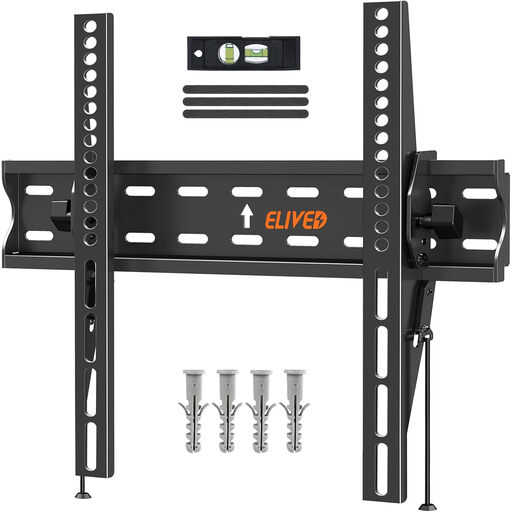
Why It Stands Out: This mount’s primary advantage is its exceptionally slim profile. It holds the TV just 38mm from the wall, creating a sleek, almost-flush appearance that complements modern interiors. The tool-free tilting mechanism is a practical feature for making quick adjustments to counteract screen glare.
Pros:
Who is it for? This is an excellent choice for those who want a minimalist setup in a bedroom or living room and primarily need to adjust for screen glare from overhead lights or windows.
View Product Details on Joybuy.co.uk
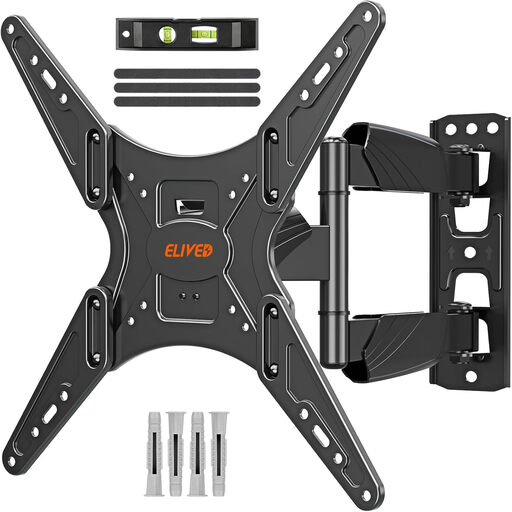
Why It Stands Out: Engineered for flexibility, this full motion TV mount is particularly effective for corner installations or rooms with awkward layouts. Its single articulating arm provides a wide range of motion, including a ±90° swivel, while the post-installation levelling feature allows for minor adjustments after mounting to ensure a perfectly straight screen.
Pros:
Who is it for? This mount is suited for anyone needing to position their TV in a corner or who wants the flexibility to adjust the viewing angle for different parts of a room.
View Product Details on Joybuy.co.uk
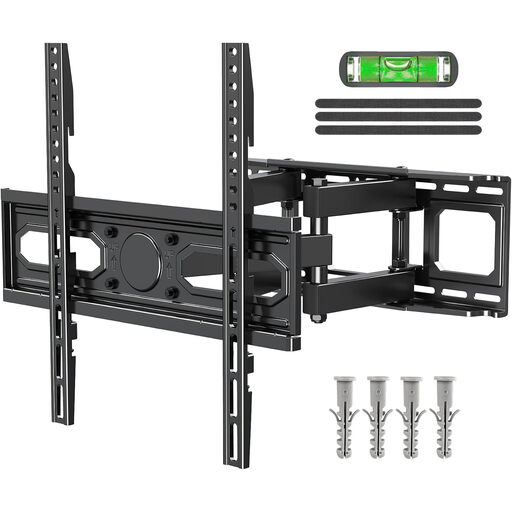
Why It Stands Out: With its robust double-arm design, this heavy duty TV wall mount offers superior stability for larger and heavier televisions. The six articulating arms ensure smooth and secure movement, providing confidence when extending the screen away from the wall. It’s a strong contender for a TV mount for a 55 inch TV or even larger models up to 70 inches.
Pros:
Who is it for? This is the go-to option for those with larger televisions or anyone setting up a home theatre who requires a strong, reliable and highly flexible mounting solution.
View Product Details on Joybuy.co.uk
While these recommendations cover many common scenarios, every home and setup is unique. If you're looking for a mount with different specifications, such as for a smaller screen or a ceiling installation, there are many other solutions available.
Explore our full range of home accessory solutions to find the perfect fit for your space.
VESA is a set of standards for the manufacturing of flat-screen televisions and monitors. A VESA pattern refers to the dimensions of the four-hole attachment configuration on the back of a TV, measured in millimetres. For example, a VESA 400x400mm pattern means the screw holes are 400mm apart horizontally and 400mm apart vertically. Ensuring your mount matches your TV's VESA pattern is essential for compatibility.
You should not attach a TV mount directly to a plasterboard (drywall) surface alone, as it is not strong enough to hold the weight. The mount must be securely fastened to the wooden studs located behind the plasterboard or to a solid wall made of brick or concrete. Most mount kits include hardware for both types of installation.
A tilting TV wall bracket is ideal if your main concern is reducing glare or if the TV is mounted higher than eye level. It only allows for vertical angle adjustments. A full motion TV mount offers much greater flexibility, allowing you to extend the TV from the wall and swivel it horizontally as well as tilt it vertically. This is better for large rooms, corner placements or spaces where you watch from multiple locations.