
24/7 Customer Support

Free returns

Same-day & Next-day Delivery

Quality Guaranteed

Unlock Your Welcome Offers: FREE Delivery | Up to 80% OFF | Free 30-day JoyPlus trial
Download the APP
Choosing a TV wall mount can make a room feel more spacious, improve viewing angles and keep cables organised. However, a bracket that looks suitable on a product page may still be incompatible with your television or wall.
The important details are usually found in the technical specifications rather than the headline. Before buying a TV wall bracket, check the VESA pattern, television weight, wall type and the amount of movement you actually need.
A bracket advertised for “32–55 inch TVs” is not automatically suitable for every television in that range. The fixing holes on the rear of the TV must match the bracket’s VESA measurement, such as 200 × 200 mm or 400 × 400 mm.
Measure horizontally and vertically between the centres of the mounting holes. Also check whether the mounting screws, spacers and washers suit the depth of your TV.
A mount’s maximum load capacity should exceed the weight of your television, not merely equal it. Remember to account for the television only unless the manufacturer states otherwise; soundbars and accessories may require separate support.
A large bracket may have a higher capacity, but it can also be heavier and more difficult to position. Select a model with a suitable margin while ensuring the wall can support the combined load.
A full-motion TV mount may swivel and extend substantially from the wall, but it needs clearance at the sides and behind the screen. Extension can also place more leverage on the wall fixings.
For a television viewed directly from one sofa, a fixed TV wall mount or tilting TV mount may provide a neater and simpler installation. Full movement is more useful in open-plan rooms, corners or spaces with multiple seating positions.
A universal TV bracket should clearly state its supported VESA range. Common patterns include:
A wide VESA range does not remove the need to measure your TV. Check the product listing and your television’s manual before ordering.
Most TV wall mounts in this selection are intended for wood studs or solid concrete and brick walls. Do not install a heavy television bracket into plasterboard alone unless an appropriate structural fixing system has been specified and the wall has been assessed for the load.
UK renters should obtain the landlord’s permission before drilling. For stud walls, locate the centre of the studs rather than relying on plasterboard fixings. Use a spirit level and, for larger screens, ask another adult to assist with lifting and hanging the television.
A low-profile TV bracket can sit only a few centimetres from the wall, creating a clean appearance. Measure the depth of the television, including cable plugs, because a very shallow mount may leave limited room for connections.
Tilting can help when the television is mounted above eye level or opposite a bright window. Swivel and extension are useful for corner installations, but moving brackets need sufficient side clearance and careful cable routing.
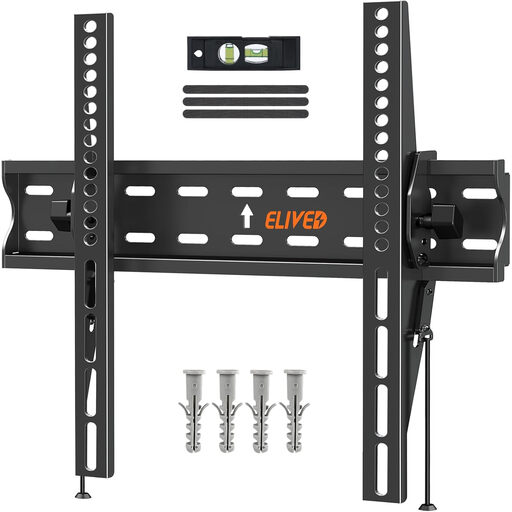
Why This Fits Their Persona: Suitable for a first living-room, bedroom or home-office installation where a simple, close-to-wall design is preferred.
The listing specifies screen size, VESA range and load capacity, helping buyers check compatibility before installation rather than relying on screen size alone.
Supports 26–60 inch TVs up to 45 kg, with VESA 75 × 75 mm to 400 × 400 mm, 38 mm wall clearance and 0° to -8° tilt.
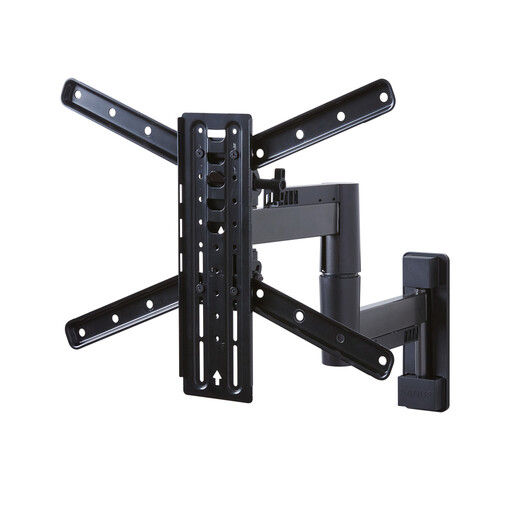
Why This Fits Their Persona: A considered option for home entertainment rooms where viewing position, cable appearance and post-installation alignment matter.
Its stated extension, wall clearance and installation adjustments make the movement range easier to assess before purchase.
Offers tilt, swivel and extension up to 19 inches, plus in-arm cable channels and post-installation levelling.
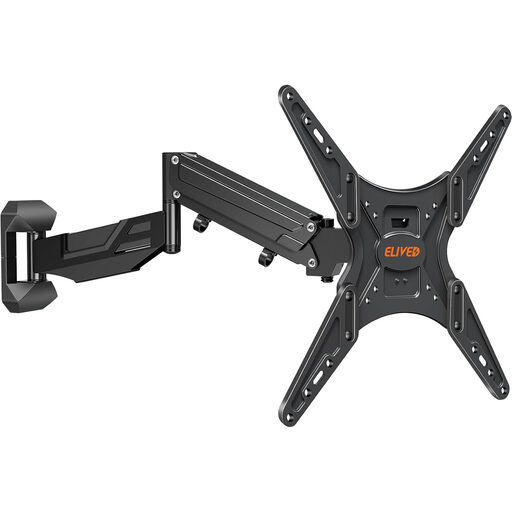
Why This Fits Their Persona: Designed for rooms where viewers sit at different angles, including corner layouts, offices and multi-seat lounges.
The specified extension, swivel and tilt ranges help buyers judge whether the wall and furniture layout can accommodate the arm.
Fits 23–55 inch flat or curved TVs up to 25 kg, with 515 mm extension, 180° total swivel, tilt adjustment and a 219 mm height range.
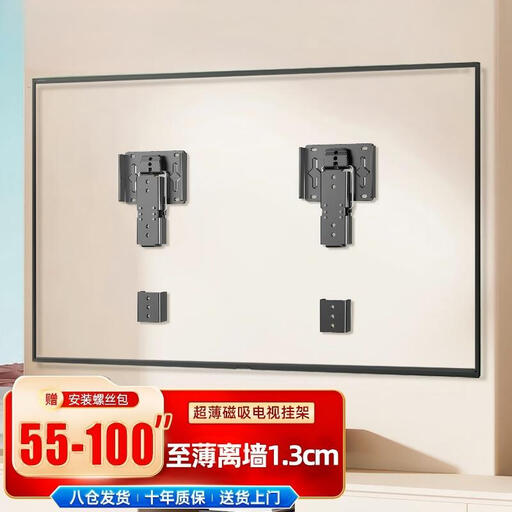
Why This Fits Their Persona: A fixed solution for large televisions in a dedicated lounge, meeting room or office where the screen is viewed from one main position.
It states the supported size range, 60 kg load limit and VESA range, reducing the risk of choosing a small bracket for a large screen.
Supports 32–100 inch TVs, VESA 75 × 75 mm to 600 × 400 mm and up to 60 kg, with a fixed, space-saving format.
We have compiled a complete, real-time list of products that fully satisfy these strict selection criteria and UK safety regulations.
Before mounting your television:
For a curved television, confirm that the mounting arms and supplied spacers can sit evenly against the rear housing. A TV mount for flat-screen TVs may also fit a curved model, but only where the listed VESA and screen specifications match.
Not usually without appropriate structural support. Many brackets specify installation into wood studs or solid brick and concrete walls only. Plasterboard alone may not safely support the combined weight of a television and mount. If the wall construction is unclear, consult a qualified installer before drilling.
A fixed mount keeps the screen close to the wall, while a tilting TV mount can angle the screen down when it is installed higher than normal eye level. Compare the television’s position, viewing height and available cable clearance rather than choosing by appearance alone.
It does not normally have an electricity-running cost, but moving parts and wall fixings should be checked occasionally. Avoid forcing the arm beyond its stated range, keep cables slack enough for movement and tighten fixings only according to the supplied instructions.