For short films in a bright lounge, start with the reflections you see from your usual seat: compare the exact TV model’s reflection handling and brightness before choosing Mini LED or OLED. If daylight is persistent, consider a high-brightness Mini LED model; if you can control the light and care most about dark-scene contrast, consider OLED. In either case, check the film source’s HDR format and measure the space before settling on a screen size.
Who is this for?
Daylight-lounge film viewers
If you watch with the curtains open or lamps on, check what reflects in the planned screen position before comparing panel types. RTINGS identifies brightness as important for overcoming glare, while manufacturers describe reflection treatments that vary by model.
Cinematic-detail viewers
If shadow detail and film presentation matter most to you, compare the exact TV’s picture modes and HDR support with the films and services you use. Controlling the room lighting gives you more freedom to weigh those features against daylight visibility.
Room-fit-first buyers
If the sofa position or available wall space limits your choice, measure both before deciding on a screen. Which? recommends using the distance from your seat to the proposed TV position to guide screen size.
What matters when choosing?
Compare how the screen handles your room’s light first, then check film features against your viewing sources and choose a size that fits the seating position.
Mini LED
Consider when: Daylight often reaches the screen and a particular model offers the brightness and reflection treatment your room needs.
Trade-off: Local dimming and its control of bright objects against dark backgrounds vary by model; the Mini LED label alone does not establish bright-room performance.
OLED
Consider when: Dark-scene contrast is a priority and you can manage the room lighting, or the exact model’s reflection handling suits your lounge.
Trade-off: Ambient light can make dark areas appear less black, and brightness and screen coatings differ between OLED models.
| Concern | What to check | Who this matters to |
|---|
| Glare and daylight visibility |
Check the exact model’s reflection treatment and bright-room performance; note whether windows or lamps face the screen. |
When daylight catches the screen, I want dark shots to remain visible rather than seeing the window reflected in them. Around 50% of consumers would put glare and daytime visibility first. |
| Film detail and source compatibility |
Check the TV’s film-oriented picture modes and whether its HDR formats match your film source. |
For films with dark scenes, I care about contrast and whether my source and TV support the same HDR format. Roughly 30% of consumers would prioritise film detail and source compatibility. |
| Screen fit and ownership information |
Measure the main-seat distance and available space; compare the exact TVs’ energy labels and product information sheets. |
If the sofa is close to the TV position, I need a size that fits the space, and I want to check its energy information before buying. About 20% of consumers would place room fit and ownership checks first. |
Buying pitfalls
-
Choosing by the panel label alone
Mini LED has no fixed performance definition, according to RTINGS, and neither a Mini LED nor an OLED label tells you how a particular screen will handle reflections.
Compare the exact model’s reflection specification and independent bright-room testing where available, rather than treating the panel type as the answer.
-
Overlooking windows and lamps
A reflection in the planned screen position can distract from a short film’s darker scenes even when the picture is bright.
Look at that position at the time you normally watch, then compare the reflection treatments of the models you are considering.
-
Assuming a brand’s film features apply to every TV
HDR formats, picture modes and reflection treatments can differ by model and screen size.
Check the complete UK model code and size-specific specifications against the streaming app or device you intend to use.
-
Assuming all on-demand viewing is licence-free
TV Licensing distinguishes on-demand programmes on services other than BBC iPlayer from BBC iPlayer and live TV.
Check whether you will use BBC iPlayer or watch live programmes on any channel or streaming service when deciding if you need a TV Licence.
Brands to consider for these TV features
Sony
BRAVIA models are worth examining if film-oriented features and reflection handling are priorities.
- Sony UK lists X-Anti Reflection and local dimming for the K-65XR90.
- Those specifications concern that model and size, not every BRAVIA TV; check the code of the screen you intend to buy.
Samsung
Its OLED, Neo QLED and lifestyle-TV ranges offer different approaches to screens used in bright rooms.
- Samsung UK distinguishes anti-reflection, which softens reflections, from anti-glare treatment, which diffuses incoming light.
- That distinction does not establish how any two TVs perform against each other; compare the exact models and independent tests where available.
LG
Its OLED range is relevant when dark-scene presentation and film-oriented features lead the choice.
- LG UK identifies Dolby Vision and FILMMAKER MODE among the features offered in its TV range.
- Availability varies by model, size and region; check the exact UK TV’s reflection treatment before choosing it for direct daylight.
TCL
Its QD-Mini LED range gives buyers models to compare for HDR formats and bright-lounge use.
- TCL UK lists anti-reflection treatment, several HDR formats and 500+ local-dimming zones for its 65-inch C805K.
- Those are specifications for the named model and size; they should not be assumed for other TCL screens.
Joybuy TV choices
These OLED and Mini LED TVs offer different screen sizes to consider for short-film viewing. Check each model’s reflection handling against your lounge before treating its panel type as a bright-room recommendation.
 No image available
Samsung S90F 55-inch OLED 4K TV (2025)
Consider this OLED model if film presentation leads your choice and a 55-inch screen fits your seating position.
Check the exact model’s reflection treatment and brightness for the light in your lounge.
View on Joybuy
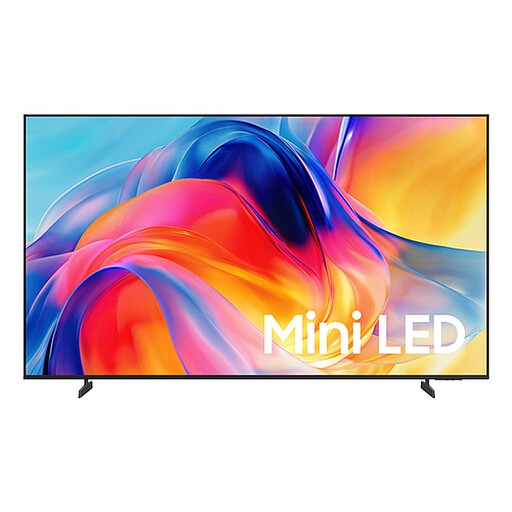 No image available
Samsung TU65M70H 65-inch Mini LED 4K TV (2026)
Consider this Mini LED model if you have room for a 65-inch screen and want to compare its daylight performance with other TVs.
Check reflection treatment and bright-room evidence for the exact model; the Mini LED label does not settle either question.
View on Joybuy
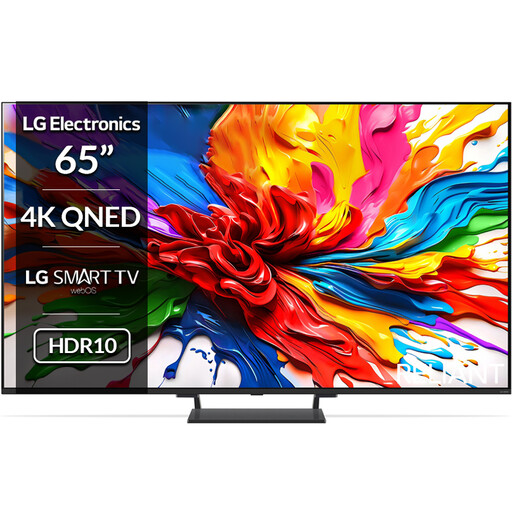 No image available
LG 65QNED93A6A 65-inch QNED Evo Mini LED 4K TV
Consider this 65-inch Mini LED TV if that size suits your lounge and you are comparing film-source compatibility.
Check its supported HDR formats against your source, along with the exact model’s reflection handling and bright-room performance.
View on Joybuy
 No image available
TCL 50Q6C-UK 50-inch QD-Mini LED 4K HDR TV
Consider this 50-inch QD-Mini LED model if a smaller screen better suits your measured seating distance and available space.
Check its HDR-format compatibility and exact-model reflection handling. If refresh rate matters for other uses, confirm the specification for this variant.
View on Joybuy
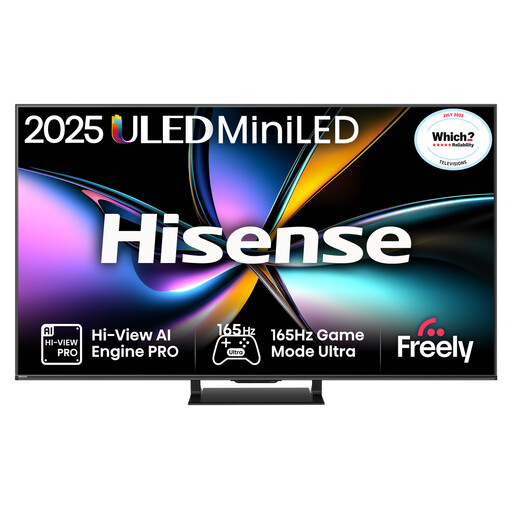 No image available
Hisense U7Q Pro 65U7QTUK Pro 65-inch Mini LED 4K HDR TV
Consider this 65-inch Mini LED model if the screen fits your lounge and you want to check its compatibility with your HDR film sources.
Before deciding on it for daylight viewing, compare reflection handling and bright-room performance for this exact model.
View on Joybuy
Frequently asked questions
Should I choose OLED or Mini LED for a bright lounge?
Choose between exact models by checking both reflection handling and brightness in the light you normally watch by. RTINGS identifies those as important bright-room factors; the panel label alone cannot tell you whether a TV will cope with your windows or lamps.
How do I choose a screen size for short films?
Measure from your main seat to the planned TV position, then check the space available for the screen and stand. Which? recommends using viewing distance to guide size, rather than choosing a diagonal measurement without considering the room.
Do I need a TV Licence to watch short films on demand?
TV Licensing says on-demand programmes on services other than BBC iPlayer do not require a TV Licence. You do need one to use BBC iPlayer for live or on-demand programmes, or to watch live TV on any channel or streaming service.
How should I compare TVs’ energy information?
Compare the energy label and product information sheet for each exact TV you are considering. Use the listed information rather than assuming that one panel technology determines energy use across different models and screen sizes.


