Keep your current TV if it delivers the console modes you use; consider replacing it when a specific mode you want, such as 4K at 120Hz, is unavailable after checking the whole connection. For fast-paced games, check the exact TV model and HDMI input for 120Hz, variable refresh rate (VRR) and low-latency operation rather than relying on an HDMI 2.1 label. A console-compatible monitor is another option for a desk setup, but its HDMI capabilities need the same scrutiny.
Who needs to check gaming features?
Fast-paced console players
If you play shooters, racing or fighting games, check whether your console, game and chosen TV input can use a 120Hz mode, VRR and a low-latency picture mode. Resolution alone will not tell you which of those modes is available.
Living-room PS5 or Xbox upgraders
If a new TV will also serve as the household screen, check its 4K and HDR console modes on the input you intend to use. PlayStation and Xbox guidance both make the connected display and its settings part of that decision.
Owners considering keeping their TV
If your current screen already handles the games and output modes you use, a replacement may be unnecessary. Check the console’s display information and the TV’s input settings before deciding.
What matters when choosing a screen?
Start with the modes your console and games can use, then check whether the screen’s intended HDMI input and any equipment between it and the console will carry them.
| Concern | What to check | Who this matters to |
|---|
| Smooth, responsive play |
Check 120Hz support on the intended HDMI input, VRR compatibility and how the TV enters its low-latency mode. Confirm that your console and games offer the modes you want. |
In fast-moving games, I want the screen to use the responsive modes my console can output. Around 36% of consumers would put that need first. |
| Connection compatibility |
Check the exact model’s port specifications and HDMI settings, plus whether a soundbar or AV receiver passes the wanted signal. |
I do not want to choose a TV whose advertised mode disappears through the input or equipment I actually use; roughly 29% of consumers would make connection compatibility their primary concern. |
| 4K and HDR picture |
Confirm the console’s supported output, the TV input’s 4K and HDR capabilities, and how the picture looks in Game Mode. |
For living-room or single-player games, I care most about getting the picture mode my console and games support. About 21% of consumers would prioritise that image-focused need. |
| Keeping the current setup |
Inspect the console’s display information before replacing the TV; check whether the existing cable and any intermediate equipment carry the desired mode. |
If my present screen already does what I need, I would rather keep using it and accept its known limits. For around 14% of consumers, that would be the main consideration. |
Mistakes to avoid
-
Assuming every HDMI socket supports the same modes
Xbox Support notes that some inputs on a 4K/HDR TV may support lower modes. Sony UK also says compatible BRAVIA models can require the correct port and Enhanced Format setting for certain gaming features.
Check the exact TV model’s input-by-input specifications, then plan where the console and sound equipment will connect.
-
Treating a high refresh-rate headline as a console specification
Samsung says the 4K 240Hz, 165Hz and 144Hz modes it advertises for selected gaming TVs require supported PC-connected games and graphics hardware. Those figures do not establish the HDMI mode available to a console.
Check the console-specific resolution and refresh-rate combinations for the exact model instead.
-
Replacing a TV before checking its settings and connections
A console’s display information can help identify the modes available through the current connection. Xbox Support cautions that a soundbar or AV receiver between the console and TV can affect video features.
Check the TV’s input settings and test a direct console-to-TV connection before deciding the screen needs replacing.
-
Relying on a generic HDMI cable description
A cable label alone does not establish that the whole setup supports the intended video mode. HDMI Licensing Administrator identifies certified Ultra High Speed HDMI cables by a checkable certification label.
If a replacement cable is needed for a high-bandwidth setup, check its certification and choose a length that reaches without straining the connections.
Brands to consider for console-gaming TVs
LG
LG UK describes gaming features including VRR and high refresh rates across selected TVs in its range.
- Selected models offer gaming-focused display modes; check which modes are available through the HDMI input you will use.
- A range-level refresh-rate claim does not establish that a particular console can use that rate on every model or port.
Samsung
Samsung’s OLED and Neo QLED gaming-TV lines include model-dependent HDMI and low-latency features.
- The range provides models to check for console-specific HDMI modes and adaptive-sync support.
- Samsung identifies its advertised 4K 240Hz, 165Hz and 144Hz modes as PC-connected features requiring suitable graphics hardware; check console support separately.
Sony BRAVIA
Sony UK provides setup guidance for gaming features on specific compatible BRAVIA products and operating systems.
- The guidance identifies HDMI-port settings to check when setting up supported 4K/120Hz and VRR modes.
- The BRAVIA name alone does not establish that a given model supports those modes; compatibility and settings vary.
Joybuy TVs for console gaming
These TCL televisions are options to examine if you want a TV for home console play. Compare their screen sizes and stated gaming modes, then confirm the exact HDMI input’s compatibility with your console before choosing.
 No image available
TCL 55P8K-UK 55-inch QLED 4K HDR PRO TV
Consider this 55-inch TV if you want a QLED 4K HDR screen for living-room console play.
The title also names a 288Hz Game Accelerator, but that figure should not be taken as the console’s supported refresh rate. Check the exact model’s console modes and the HDMI input you intend to use.
Joybuy
 No image available
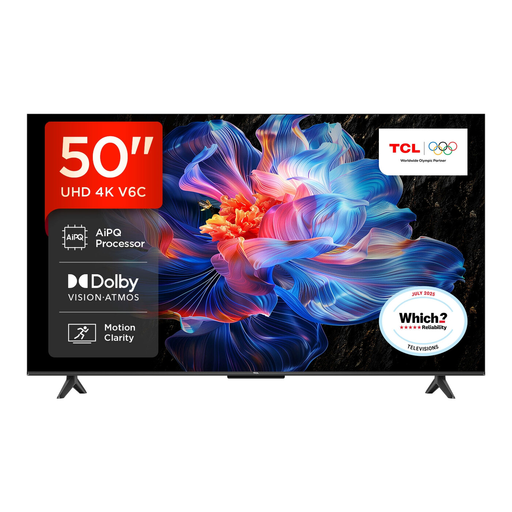
TCL 50V6C 50-inch Direct LED 4K HDR Google TV
This 50-inch model is worth considering if its screen size suits your room and you want a 4K HDR TV for console play.
Its title specifies a 120Hz Game Accelerator at FHD resolution. Check the exact HDMI input’s supported console modes rather than assuming that this means 4K at 120Hz.
Joybuy
 No image available
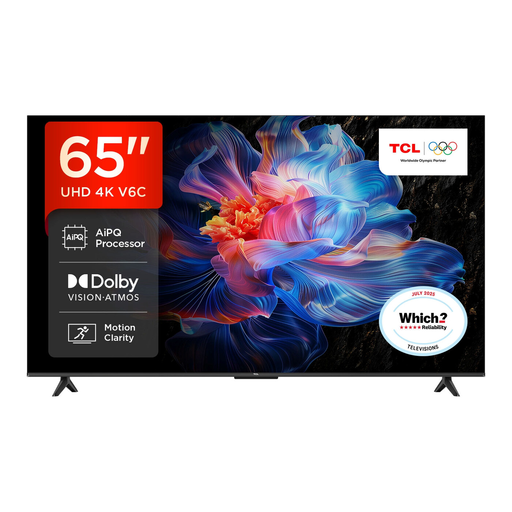
TCL 65V6C 65-inch Direct LED 4K HDR Google TV
Consider this 65-inch version if you want a larger home TV and its dimensions suit your viewing space.
The named 120Hz Game Accelerator is specified for FHD. Confirm the resolution and refresh-rate combinations accepted by the intended HDMI input for your console.
Joybuy
 No image available
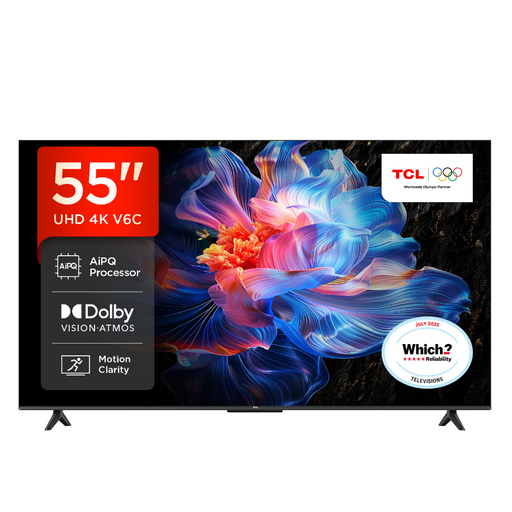
TCL 55V6C 55-inch Direct LED 4K HDR Google TV
This 55-inch V6C offers a size between the listed 50-inch and 65-inch V6C variants for a home console setup.
Its title specifies 120Hz Game Accelerator at FHD, not a confirmed 4K/120Hz console mode. Check the chosen HDMI port’s supported modes before buying.
Joybuy
 No image available
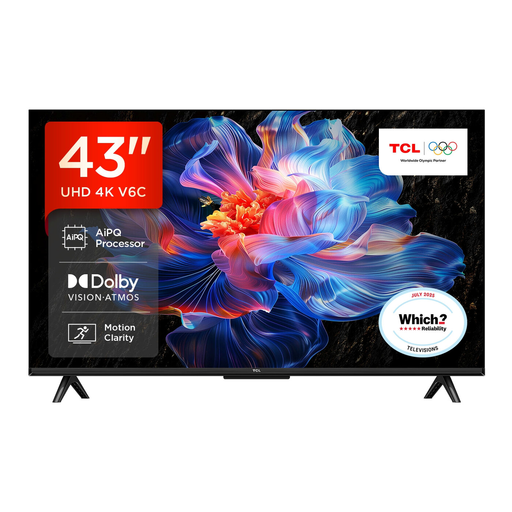
TCL 43V6C 43-inch Direct LED 4K HDR Google TV
Consider this 43-inch TV where a smaller home screen suits the available space.
Its 120Hz Game Accelerator wording specifies FHD resolution. Verify the console modes supported by the exact HDMI input, particularly if 4K at 120Hz is a priority.
Joybuy
Frequently asked questions
Do I need an HDMI 2.1 TV for PS5 or Xbox gaming?
No: a TV that supports the output modes you use can still serve for console gaming. For Xbox Series X gaming at 4K and 120Hz, Xbox Support specifies a Series X, an Ultra High Speed HDMI cable and an HDMI 2.1-capable TV. On PS5, check the connected display’s reported capabilities and use 120Hz modes only where the TV and game support them.
How do I check my current TV before replacing it?
Check what the console reports through the connection you actually use. On PS5, inspect Current Video Output Signal and Information for the Connected HDMI Device under Screen and Video settings; on Xbox, open 4K TV details under TV & display options. Compare the results with the TV manufacturer’s specifications for that particular HDMI input.
Will a new HDMI cable enable 4K gaming at 120Hz?
Only if the console, TV input and every device in between already support that mode. Xbox Support calls for an Ultra High Speed HDMI cable for Series X 4K/120Hz, but a cable cannot add an unsupported feature to a TV or AV receiver. Try a direct console-to-TV connection when troubleshooting.
What energy information should I compare on UK TV labels?
Compare the exact models’ on-mode energy consumption in kWh per 1,000 hours, rather than assuming one display technology uses less energy. UK television energy labels distinguish standard dynamic range (SDR) information from HDR information where applicable.


