Choose a gaming-focused TV if you regularly play compatible fast-paced games and want 4K at 120Hz, variable refresh rate (VRR) or automatic low-latency switching. A general TV can also suit a shared living room if its exact model and HDMI input support the modes you intend to use. Settle screen size and seating layout first, then check the console, cable, port allocation and any soundbar connection together.
Who needs which gaming features?
Fast-action console players
If you play games that support higher frame rates, check whether your PS5 or Xbox Series X, the game and the intended TV input can use the output mode you want. PlayStation and Xbox Support both make 120Hz use conditional on the connected equipment and settings.
Households sharing one screen
If the TV is also for films and everyday viewing, consider its physical fit and your picture preferences alongside gaming modes. HDMI Licensing Administrator notes that automatic low-latency mode (ALLM) may stop some picture processing while it is active.
Homes connecting several devices
If a console, soundbar and other devices will share the TV, plan which HDMI socket each needs. Sony UK cautions that a supported feature need not work on every input; eARC can carry audio from TV-connected sources to a compatible soundbar through one HDMI cable, according to HDMI Licensing Administrator.
What matters when choosing a console TV?
For a shared-room screen, choose a size that works for the seating layout before deciding which console modes matter enough to influence the TV and HDMI-port choice.
| Concern | What to check | Who this matters to |
|---|
| High-frame-rate gaming |
Check 4K at 120Hz, VRR and ALLM for the exact TV model and intended HDMI input, then check the console and game. Xbox Support specifies an Ultra High Speed HDMI cable and an HDMI 2.1-capable TV for Xbox Series X gaming at 4K/120Hz. |
If I regularly play fast-moving games, I want the TV to accept the modes my console and games can actually produce. Around 33% of consumers put supported high-frame-rate play first. |
| Room fit and shared viewing |
Measure the intended position and compare screen dimensions with the furniture and seating layout. Consider how the TV looks in its normal picture mode as well as its game mode. |
When everyone uses the same screen, I need a size and picture that work for films and everyday TV too. Roughly 27% of consumers make shared-room fit and viewing their main concern. |
| HDMI and soundbar connections |
Map the console and soundbar to the exact model’s ports. Check which input supports the desired gaming modes and whether the TV and soundbar support eARC. |
With several devices to connect, I need a workable socket for each one without giving up the console mode I intend to use. About 20% of consumers prioritise connection and audio planning. |
| Features for casual play |
Check the modes your console and usual games use before choosing a TV for a headline refresh-rate figure. Samsung says some advertised rates above 120Hz apply to compatible PC games and hardware. |
If most of my play does not call for advanced gaming modes, I want a suitable household TV without treating a PC-oriented refresh-rate claim as a console requirement. Around 20% of consumers put that fit first. |
Common setup mistakes
-
Assuming every HDMI socket does the same job
A TV can support a gaming feature without offering it on every input. Sony UK makes this distinction in its BRAVIA support guidance, and Panasonic lists different features against different inputs on individual models.
Check the exact model’s port map before assigning sockets to the console, soundbar and other devices.
-
Treating a 144Hz or higher label as a console output mode
A panel or gaming-feature figure above 120Hz does not establish that a PS5 or Xbox game will run at that rate. Samsung identifies some such rates as applying to compatible PC games and hardware.
Check the intended console’s supported mode separately from any PC-oriented refresh-rate claim.
-
Leaving the TV in low-latency mode for every programme
ALLM can select a low-latency setting for gaming, but HDMI Licensing Administrator notes that some picture processing may stop in that mode.
Use a suitable gaming mode for play, then compare the TV’s normal picture modes for films and broadcast viewing.
-
Connecting a soundbar before planning the ports
eARC can carry audio from TV-connected devices to a compatible soundbar, but the eARC socket and sockets needed for gaming features vary by TV model.
Check eARC compatibility at both ends and leave a suitable input for the console’s intended output.
If an existing cable or audio device cannot support the chosen connection, the setup may need a replacement cable or additional audio equipment.
TV brands to consider
Sony
Sony’s BRAVIA support information is useful when comparing PS5 and Xbox connection requirements on specific TVs.
- Sony UK lists model-specific support for features including 4K120, VRR, ALLM and eARC.
- A feature listed for a TV may not work on every HDMI input; check the chosen model’s port allocation.
Panasonic
Selected Panasonic UK OLED and LED series list gaming features, with refresh-rate capabilities differing by series.
- Panasonic UK identifies separate 120Hz and 144Hz ranges, allowing buyers to narrow their model checks.
- Check the selected screen size and its actual HDMI inputs rather than extending one series’ specification to another.
Samsung
Selected Samsung gaming TVs list HDMI and low-latency features relevant to console setups.
- The range provides model-specific gaming features to compare against the console modes you plan to use.
- Samsung says some advertised 4K refresh rates above 120Hz require compatible PC games and hardware; do not assume they apply to consoles.
TCL
TCL’s UK Q9BK specifications provide a model-specific example of stated HDMI 2.1, ALLM and VRR features.
- TCL lists 120Hz and 144Hz VRR support for the Q9BK line.
- Those specifications do not establish the capabilities of every TCL TV or the output rate of a connected console.
Joybuy televisions for console gaming
These televisions offer different screen sizes and stated gaming features for a shared room. Match the size to your space, then check the exact model’s console modes and HDMI inputs before choosing.
 No image available
Sony BRAVIA A90 XR42A90K 42-inch OLED TV
Consider the 42-inch size if it fits your seating layout and the screen will serve both gaming and everyday viewing.
The product name specifies 4K HDR and Google TV. Check which inputs on the exact XR42A90K support the console modes you want.
View on Joybuy
 No image available
TCL 55P8K-UK 55-inch QLED 4K HDR PRO TV
Consider this 55-inch model if its dimensions suit a shared viewing space and you want to examine its gaming modes alongside everyday TV use.
The product name lists Google TV, an Onkyo 2.1 sound system and a 288Hz Game Accelerator feature. That feature name does not establish console output at 288Hz; check supported console modes and the relevant HDMI inputs.
View on Joybuy
 No image available
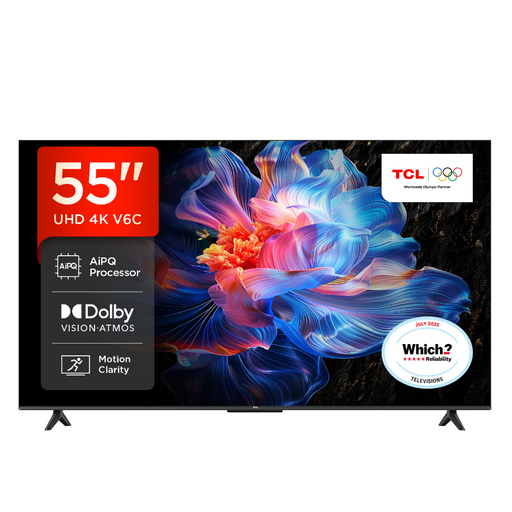
TCL 55V6C 55-inch Direct LED 4K HDR TV
Consider this model if a 55-inch shared-room TV suits your space and a lower-resolution high-refresh option meets your gaming needs.
The product name specifies Google TV and a 120Hz Game Accelerator at FHD. Do not treat that FHD mode as confirmation of 4K at 120Hz; check the exact TV input and console output mode.
View on Joybuy
 No image available
TCL 75Q7C 75-inch QD-Mini LED 4K HDR TV
Consider the 75-inch screen only after checking that it fits the available space and seating arrangement.
The product name specifies a 144Hz native refresh rate and audio by Bang & Olufsen. A native panel rate alone does not confirm VRR, ALLM or a particular console output mode; check the exact model and HDMI inputs.
View on Joybuy
Questions about console TVs
Do I need HDMI 2.1 to play on a PS5 or Xbox?
No, not for every console game or output mode. Xbox Support specifies an HDMI 2.1-capable TV and Ultra High Speed HDMI cable for Xbox Series X gaming at 4K/120Hz, while PlayStation says PS5 120Hz output requires a TV and game that support it. Check the mode you intend to use rather than relying on the HDMI label alone.
Does HDMI 2.1 mean every TV socket supports 4K120 and VRR?
No. Sony UK says that support for a feature does not mean it works on every HDMI input. Check the exact model’s port map and any signal-format setting before assigning a socket to the console.
What does VRR change when gaming?
Variable refresh rate lets a compatible display adjust to changing frame delivery; HDMI Licensing Administrator says it can reduce judder and frame tearing. Check that the TV input, console and game support the mode you want to use.
Which HDMI socket should a soundbar use?
Use the connection specified for the TV and soundbar when you want eARC to carry audio from TV-connected sources to the soundbar. Check that both devices support the intended connection and that the remaining TV inputs can accommodate the console’s gaming modes.


