Viewers sitting close to the screen
If your sofa is fairly close to the TV, measure that distance before choosing a diagonal size. Which? relates its screen-size guidance to viewing distance, rather than room size alone.


Start with the distance from your usual seat to the screen and the space available for the TV; the largest screen that fits on the furniture is not automatically the right choice. For daytime rugby, compare motion and reflection handling on the exact models you are considering, and check viewing angles if people sit to the sides. A 48-inch OLED is one compact option when reflections are manageable; consider a 55-inch Mini LED only if the viewing distance and furniture suit it.
If your sofa is fairly close to the TV, measure that distance before choosing a diagonal size. Which? relates its screen-size guidance to viewing distance, rather than room size alone.
If daylight or room lights are on during matches, look closely at reflections and fast-action picture quality. RTINGS identifies brightness and reflection handling as considerations for sports viewing.
If friends or family watch from off-centre chairs, assess how the picture looks from those positions as well as from the main sofa. RTINGS includes viewing angle among its sports-viewing considerations.
Settle on a screen size that suits the usual seat and available space, then judge the picture under your match-time lighting and from the seats people actually use.
| Concern | What to check | Who this matters to |
|---|---|---|
| Screen fit and viewing distance | Measure from the usual seat to the screen position and check the TV’s stand width. Which? gives around 2.6 m for 48–50-inch TVs and around 3.3 m for 55-inch TVs as starting points. | If I sit close to the screen, I want to follow play comfortably without a TV that dominates the room; around 42% of consumers would put screen fit first. |
| Daylight glare and fast action | Check where windows and lamps reflect during matches, then compare reflection handling and motion on the exact models. RTINGS identifies brightness, reflections and response time as sports-viewing factors. | When I watch afternoon rugby, I need the action to remain easy to follow with the room lit; roughly 33% of consumers would make glare and motion their main concern. |
| Side-seat viewing | Map the usual seats and assess the picture from off-centre positions; check the selected model’s viewing-angle evidence where available. | If people gather in chairs beside the sofa, I want them to see a usable picture too; about 25% of consumers would prioritise side-seat viewing. |
A TV can fit on a wall yet feel poorly suited to the usual viewing position. Which?’s size guidance changes with seating distance.
Measure the sofa-to-screen distance, stand width and available wall or furniture space before settling on a diagonal size.
A stated refresh feature does not, by itself, establish how broadcast rugby will look. RTINGS also points to brightness, reflection handling and response time for sports viewing.
Compare motion and reflections on the exact TV model rather than choosing from its refresh-rate label alone.
In the UK, TV Licensing says that streaming a TV programme live requires a TV Licence.
Check your household’s licence position before planning to stream a live rugby broadcast.
Mount compatibility depends on the particular TV. Samsung’s UK mount guidance asks buyers to identify the model, size and year of manufacture.
Check the selected TV’s mount guidance and the intended installation before ordering a mount.
These model ranges illustrate different sizes and features to investigate; a brand name alone does not establish how a particular TV will handle rugby in your room.
Samsung’s 55-inch QN70F is a Neo QLED Mini LED option to examine if the room can accommodate that size.
Sony has Mini LED models to compare when a larger screen fits the seating distance and furniture.
The 48-inch LG C5 provides an OLED size to consider for a closer seating position.
The 55-inch Z95A OLED is a model to compare if that screen size suits the room.
The 55C7K-UK is a QD-Mini LED model to examine where the measured room suits a 55-inch screen.
These choices span compact 43–48-inch TVs and 55-inch Mini LED models. Compare each one against your measured viewing distance, furniture space and match-time lighting rather than treating the list as a single screen-size recommendation.
 No image available
Consider this 43-inch option if a smaller screen suits your measured seating distance and furniture.
The product name specifies Direct LED, 4K HDR and Google TV. Its 120 Hz Game Accelerator is stated for FHD gaming, not as a measure of broadcast-rugby motion; check reflections under your usual lighting.
 No image available
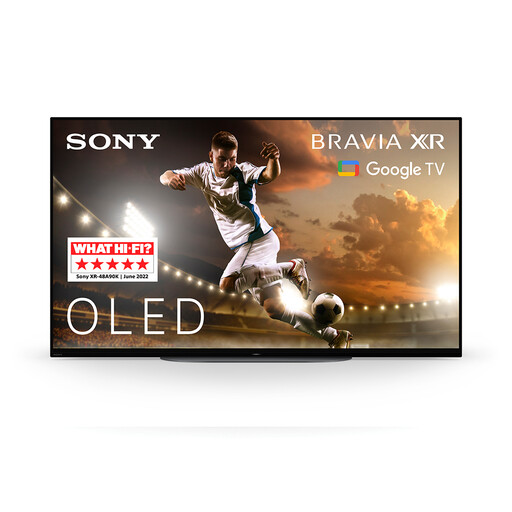
This is a 48-inch OLED option for a compact setup, provided the seating distance and screen position work for your room.
The product name specifies 4K HDR and Google TV. Assess reflections at match time and the picture from any side seats before choosing it.
 No image available
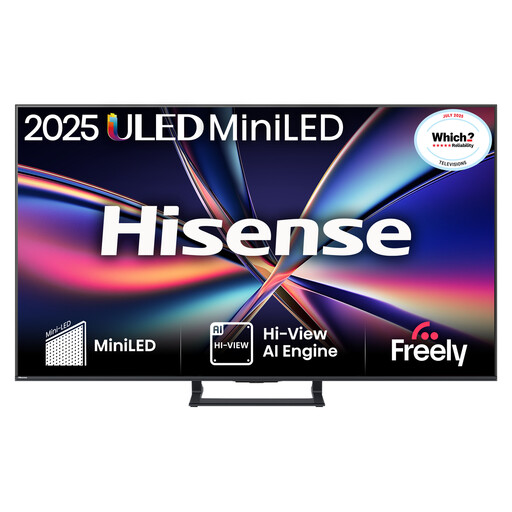
Consider this larger option only if the measured distance and furniture suit a 55-inch screen.
The product name specifies 4K HDR, VIDAA OS and 144 Hz Game Mode PRO. A gaming feature alone does not establish rugby motion clarity; compare reflections and side-seat viewing on this exact model.
 No image available
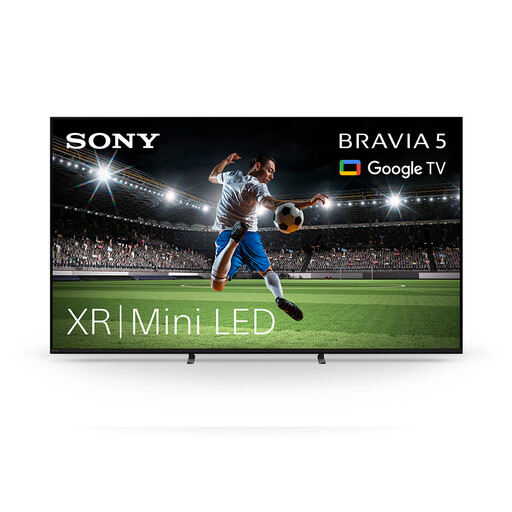
This 55-inch model is worth comparing if the viewing distance and available space accommodate the larger screen.
The product name specifies 4K HDR and Google TV; the Joybuy BRAVIA 5 listing also states 120 Hz. Check motion, reflections and side-seat viewing on the exact model rather than relying on that figure alone.
 No image available
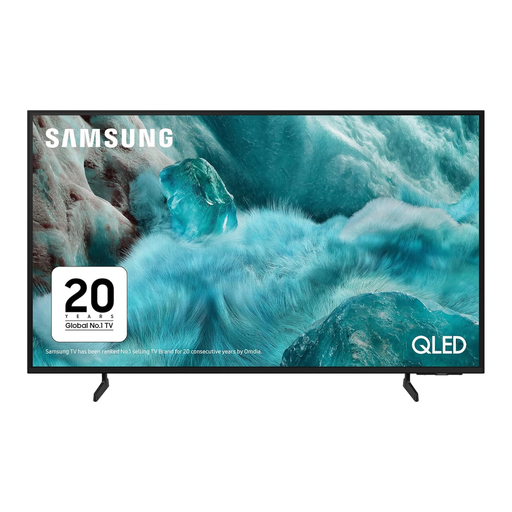
This is another 43-inch option if your measurements favour a compact screen.
The product name specifies 4K and smart-TV features. Check its motion, reflection handling and picture from side seats for the way you watch rugby.
Start by measuring from your usual seat to the intended screen position. Which? gives around 2.6 m for 48–50-inch TVs and around 3.3 m for 55-inch TVs as guides; also check stand width, wall space and the seats people use.
No specific refresh-rate label establishes how broadcast rugby will look. RTINGS identifies brightness, reflection handling, response time and viewing angle as sports-viewing considerations, so compare the exact models under conditions relevant to your room.
Yes, if you stream a TV programme live: TV Licensing says a TV Licence is required. Check your household’s licence position before relying on a live stream.
No; check compatibility with the exact TV before ordering a mount. Samsung’s UK guidance says the model, size and year of manufacture matter, and the intended wall installation needs checking too.