Who this choice affects

Daytime kitchen viewers

If you watch with daylight or kitchen lights on, reflections can interfere with dark space scenes, captions and fine detail. RTINGS notes that screen brightness can help with glare but does not replace good reflection handling.

Shared-table viewers

Watching from dining chairs, an island or elsewhere in the room makes the side view important. RTINGS identifies viewing angle as a consideration when seats are spread across a room.

Compact-room planners

Windows, furniture and walkways can limit where a TV fits. Measure from your usual seated eye position to the proposed screen location, as TCL’s UK size guidance recommends, and check the space the TV and its stand will occupy.

What matters when choosing

Mini LED/LCD

Consider it when: Daytime viewing and visible reflections make a model’s bright-room features a priority. Samsung lists an anti-reflection screen on its 50-inch QN90D, while Sony lists anti-reflection and local dimming on the K-65XR70.

Check: Those specifications apply to the named models; side-seat performance and reflection treatment should be checked for the exact TV and size you intend to buy.

OLED

Consider it when: Viewers sit at several angles and dark-scene contrast matters. LG describes individually controlled pixels and wide viewing angles across its OLED line-up.

Check: Reflection treatment varies by model. LG’s Reflection Free Premium claim concerns its named G6 range, not every LG OLED TV.

Concern What to check Who this matters to
Reflections and daytime detail Check reflection treatment for the exact model and size, and look at the proposed screen position relative to windows and lights. When light reflects across dark footage, I want to follow diagrams and captions without changing seats; around 42% of consumers put reflection control first.
Picture from side seats Identify the widest regular viewing position and check the model’s viewing-angle information or independent angle tests. If we watch from dining chairs and the kitchen island, I need the picture to hold up away from the centre; side-seat consistency comes first for around 33% of consumers.
Size and room fit Measure seated eye-to-screen distance, available wall or unit width, and stand depth before choosing a diagonal size. In a narrow dining area, I need readable captions without a screen crowding the furniture; room fit leads the choice for around 25% of consumers.

Buying pitfalls

  • Assuming brightness will overcome every reflection

    Windows and overhead lights can remain visible in dark documentary scenes. RTINGS advises considering reflection handling as well as brightness when assessing a TV for glare.

    Look at the proposed wall from your usual seats at the time you watch, and check the exact model’s reflection treatment before ordering.

  • Choosing for the centre chair alone

    A picture that looks right head-on may change from a dining chair or kitchen work area to the side. RTINGS highlights viewing angle for rooms with widely spaced seats.

    Mark out the furthest regular viewing position and assess viewing-angle performance for the model you are considering.

  • Using screen diagonal as the only room measurement

    A TV can suit the viewing distance yet overhang a unit or obstruct movement around dining furniture.

    Check the TV’s full width, stand depth and placement alongside your seated viewing distance. TCL’s size guidance recommends measuring to the intended screen position.

  • Treating a product page as proof of availability

    Product information can remain visible even when a particular model cannot be ordered; Joybuy’s page for the LG OLED55G45LW says it is no longer available.

    Before committing to a TV, check the exact model, current availability, seller, warranty information and applicable return terms at checkout.

Brands to consider

Samsung

Samsung’s UK specifications for the 50-inch QE50QN90DATXXU QN90D provide a model-specific starting point for assessing a Mini LED TV in a lit kitchen diner.

  • Samsung lists a wide viewing angle and an anti-reflection screen for this QN90D model.
  • Do not extend those features to every Samsung TV or even to another size without checking its specifications.

Sony

The Sony K-65XR70 is a named Mini LED/LCD model whose published features can help frame bright-room checks.

  • Sony lists local dimming, anti-reflection and four HDMI inputs for the K-65XR70.
  • This specification is for a 65-inch TV; check its physical fit and the features of any alternative size or model separately.

LG

LG’s OLED line-up is relevant when side-seat viewing and dark scenes matter alongside reflection handling.

  • LG describes its OLED pixels as individually controlled and its OLED line-up as offering wide viewing angles.
  • LG’s Reflection Free Premium claim applies to its named G6 range; check the reflection treatment of the exact OLED model under consideration.

TCL

TCL offers model specifications and UK screen-size guidance that can help with a measurement-led choice.

  • TCL lists QLED and Mini LED features for its 75-inch C805K and provides guidance on measuring viewing distance.
  • Features and installation dimensions need checking for the particular TCL series and size; the 75-inch C805K specification does not describe every TCL TV.

Joybuy TVs for documentary viewing

These Joybuy choices span 43-inch to 65-inch 4K TVs, including Direct LED and Mini LED models. Use your room measurements and the view from regular seats to narrow the size; check reflection handling on the exact model if the screen will face windows or lights.
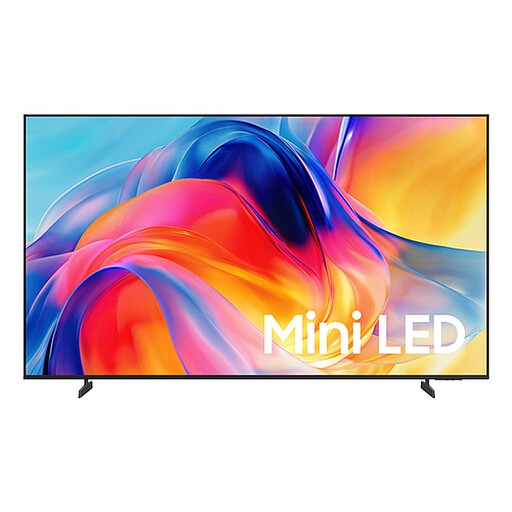
Samsung TU65M70H 65-inch 4K Mini LED TV

Samsung TU65M70H (2026), 65-inch 4K Mini LED TV

Consider this 65-inch option if your measured seating distance and available space accommodate it. Its listed configuration includes a 4K screen and Mini LED; check reflection handling and the picture from side seats for your layout.

View on Joybuy

TCL 43V6C 43-inch 4K Direct LED Google TV

TCL 43V6C, 43-inch 4K Direct LED Google TV

The 43-inch size is worth assessing where wall or unit space is limited, provided it also works from your usual seats. The title lists 4K, HDR and Google TV; check physical dimensions, reflection handling and side-seat performance for this model.

View on Joybuy
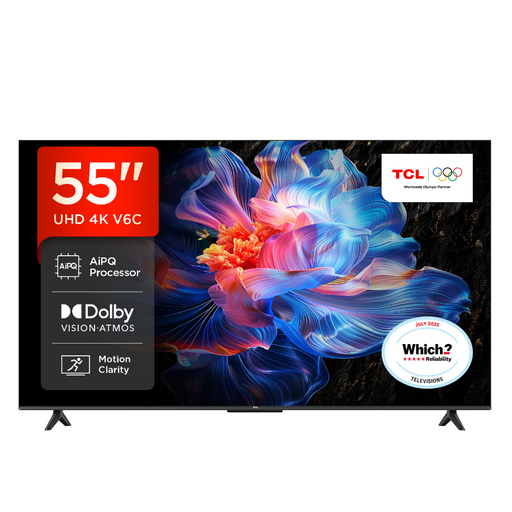
TCL 55V6C 55-inch 4K Direct LED Google TV

TCL 55V6C, 55-inch 4K Direct LED Google TV

Consider the 55-inch variant if it fits both your measured viewing distance and the furniture or wall available. Its title lists 4K, HDR and Google TV; check exact dimensions, reflections and the view from side seats before choosing it over another size.

View on Joybuy
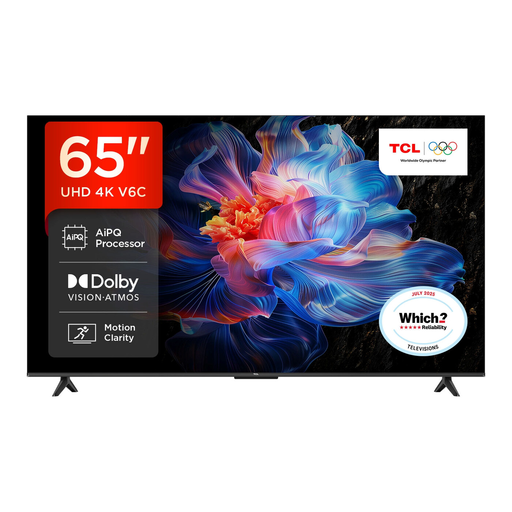
TCL 65V6C 65-inch 4K Direct LED Google TV

TCL 65V6C, 65-inch 4K Direct LED Google TV

This 65-inch variant calls for a careful check of seating distance, unit width and movement around the dining area. The title lists 4K, HDR and Google TV; assess reflection handling and side-seat viewing for the exact model.

View on Joybuy

TCL 65Q7C 65-inch 4K QD-Mini LED Google TV

TCL 65Q7C, 65-inch 4K QD-Mini LED Google TV

Consider this 65-inch Mini LED route if the screen fits the room and you want to compare local-dimming features for dark documentary scenes. The title lists 4K, QD-Mini LED and up to 2048 local dimming zones; check the exact dimensions, reflections and side-seat view independently of those features.

View on Joybuy

Common questions

Should I choose the largest TV that fits the wall?

No. Measure from your usual seated eye position to the screen, then check other viewing spots and the TV’s full dimensions. TCL’s UK size guide gives 43 inches at 1.3 m, 55 inches at 1.7 m and 65 inches at 2.0 m as examples, not universal sizes for every room.

Do anti-reflection and anti-glare mean the same thing?

Do not assume they describe identical screen treatment. Samsung’s UK buying guide distinguishes anti-reflection, which softens visible reflections from lamps and windows, from anti-glare, which diffuses incoming light across the screen surface. Check what the exact TV offers.

Do I need a TV Licence to watch science documentaries?

In the UK, TV Licensing says you need to be covered by a TV Licence to watch live TV on any channel or streaming service, or to use BBC iPlayer, on any device. You do not need one solely to watch on-demand programmes on other services, such as Netflix, ITVX or YouTube.

How should I dispose of the old TV in the UK?

Check an electrical-waste collection or take-back option rather than treating the TV as ordinary household waste. GOV.UK describes the UK’s WEEE rules as encouraging recovery, reuse and recycling of electrical equipment; ask your local authority or retailer what arrangements apply.