Off-centre animation viewers
If you normally sit at the end of a sofa or in an armchair to the side, judge colour, brightness and dark details from there. RTINGS identifies viewing angle as particularly important for wider seating arrangements.


Start with how the picture looks from your actual side seat: OLED is a useful starting point when off-centre viewing and dark-scene contrast matter most. RTINGS describes viewing angle as important for wide seating arrangements and notes that IPS LCD panels generally offer wider viewing angles than VA panels, though with lower contrast. In a bright room, compare each TV’s reflections and brightness as well; an LCD labelled QLED or Mini LED is not automatically suitable from the side.
If you normally sit at the end of a sofa or in an armchair to the side, judge colour, brightness and dark details from there. RTINGS identifies viewing angle as particularly important for wider seating arrangements.
If daylight or lamps reflect in the screen, you need to assess those reflections from your side seat as well as the picture itself.
If you mainly watch animation in a dim room, dark-scene contrast matters alongside a picture that remains convincing from your usual seat.
Check the picture from your side seat first, then assess the lighting conditions in which you normally watch. RTINGS notes that LCD panel types trade viewing angle against contrast; a technology label alone cannot settle how an individual TV will look in your room.
| Concern | What to check | Who this matters to |
|---|---|---|
| Off-centre picture | Compare exact-model viewing-angle results, or view bright and dark animation from an equivalent side position. | If I sit at the end of the sofa, I want colours and dark outlines to remain convincing without moving seats; around 50% of consumers put off-centre picture consistency first. |
| Daytime viewing | Check reflections from your seat and compare the exact model’s brightness and screen treatment. | With daylight or lamps in the room, I need to follow the film without distracting reflections; bright-room usability comes first for around 30% of consumers. |
| Dark-scene contrast | Watch a dark scene from the side and confirm the panel type; RTINGS notes that VA LCD generally offers higher contrast but narrower viewing angles than IPS LCD. | For evening films, I care most about how black backgrounds and shadowed scenes look, provided the side-seat picture remains acceptable; around 20% of consumers prioritise dark-scene contrast. |
RTINGS notes that IPS LCD generally offers wider viewing angles than VA LCD, while VA generally offers higher contrast. Neither panel label tells you everything about a particular TV.
Confirm the exact model’s panel type where possible, then compare its viewing-angle results or watch bright and dark scenes from your usual position.
A straight-on demonstration can conceal picture changes that become apparent at the end of a sofa.
Move to an equivalent side position in store, or consult independent viewing-angle measurements for the exact model.
Those labels do not establish how a specific screen handles reflections or how an LCD picture changes off-centre. Samsung UK describes bright-room and backlight-control features for its QLED and Neo QLED ranges, but those claims do not apply equally to every model.
Compare viewing angle, reflections and brightness for the exact TV and the conditions in which you watch.
A large screen may need collection arrangements if you return it, and removing the old TV is a separate practical decision.
Read the seller’s delivery and collection terms, check available recycling arrangements, and assess the new TV from your side seat after delivery.
Keeping the packaging while you assess the screen may make a subsequent collection easier to arrange.
LG’s OLED range is relevant if side-seat viewing and dark-scene contrast are your main priorities.
Samsung’s OLED, QLED and Neo QLED ranges offer different routes to assess for a shared living room.
Sony’s OLED range is relevant to viewers considering individually controlled pixels for film watching.
These OLED and Direct LED TVs are options to assess for animated films from a side seat. Check exact-model viewing angles and room reflections before choosing; the TCL listings’ wider-angle description is a seller claim, not a substitute for that check.
 No image available
Consider this OLED model if side-seat viewing and dark scenes are priorities, then check its picture from your intended position.
The listing identifies a 2.11 m (83-inch) 4K Ultra HD Smart TV. Compare exact-model viewing angles, brightness and reflections for your room.
 No image available
This OLED model is worth assessing if you watch films from the side and also value dark-scene contrast.
The listing specifies 4K HDR, Google TV and Dolby Vision. Check viewing-angle results and reflections for this exact model before deciding whether it suits your seat and room.
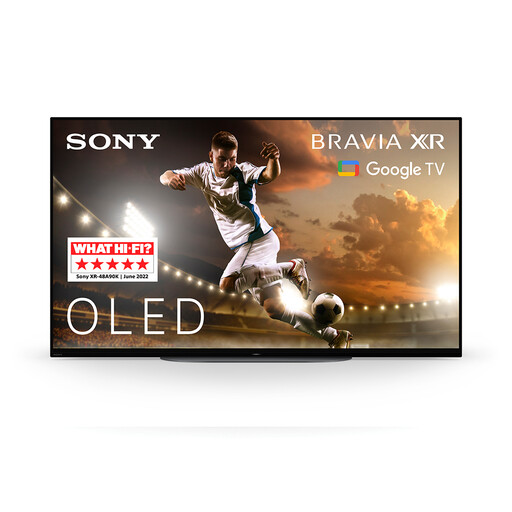 No image available
Consider this OLED option when you want to assess a 48-inch screen for side-seat film viewing.
The listing specifies 4K HDR, Google TV and Dolby Vision. Compare this exact model’s viewing angle and reflection handling from your usual seat.
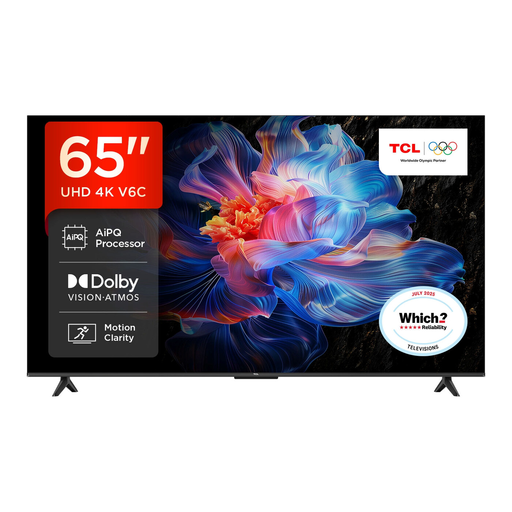 No image available
If you are considering an LCD for your side seat, test this model’s picture there rather than relying on the listing’s wider-viewing-angle claim.
The listing specifies 4K HDR and Google TV. Check reflections in your room as well as the exact model’s off-centre picture.
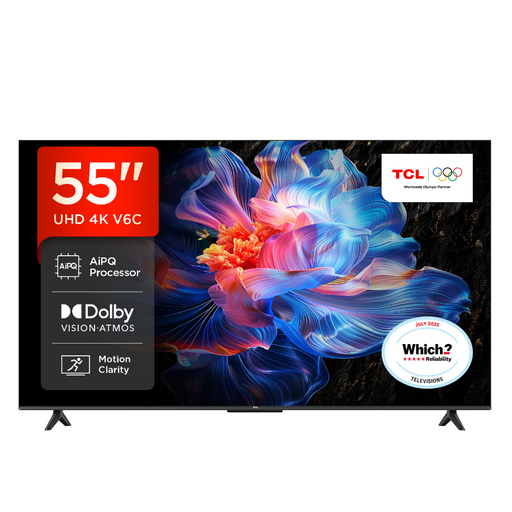 No image available
This 55-inch LCD is another model to assess from your intended side position, where its actual viewing angle matters more than the listing’s wider-angle claim.
The listing specifies 4K HDR and Google TV. Compare exact-model side-angle results and screen reflections before choosing it for your room.
No. OLED is a useful starting point for off-centre viewing and dark-scene contrast, but reflections and room lighting still matter. Compare the exact OLED model with any bright-room LCD you are considering from the position where you normally watch.
No. Those labels do not establish an individual LCD TV’s viewing-angle performance. RTINGS notes that IPS LCD generally favours wider angles while VA LCD generally favours higher contrast; check the exact model rather than relying on its display label.
For an eligible distance purchase, GOV.UK says you must tell the seller within 14 days of receiving the item that you want to cancel. Check the seller’s collection and return arrangements for a large TV before ordering; a change-of-mind cancellation is distinct from remedies for a faulty, damaged or misdescribed item.
Check the seller’s old-TV collection options and your local authority’s recycling arrangements before delivery. GOV.UK explains that UK waste electrical and electronic equipment rules address the recovery, reuse and recycling of electrical equipment; the collection option available to you needs checking separately.