What matters when choosing two screens?
Start with the artwork’s intended colour space, then check whether your computer can run the proposed two-display arrangement. Measure the desk before settling on a screen size or stand layout.
| Concern |
What to check |
Who this matters to |
| Colour consistency and output space |
Check coverage of the artwork’s intended colour space and whether both screens offer the same relevant colour mode. Treat factory calibration figures as model specifications, not proof that two units will match in your room. |
When approving colour across both screens, I need their settings to reflect the work’s actual destination rather than simply choosing the widest advertised gamut. Roughly 42% of consumers put output-relevant colour consistency first. |
| Two-display connectivity |
Check the exact computer’s external-display count and supported resolution and refresh rate for both screens. Confirm the required ports, dock and cables for your proposed connection plan. |
With a laptop at the centre of my desk, I need to know that it can drive both 4K displays before relying on a one-cable arrangement. Around 33% of consumers prioritise a workable two-screen connection. |
| Desk fit and alignment |
Measure the space for two panels and their stands, and check the adjustment range needed to align them. Match the operating system’s display arrangement to their positions. |
On a constrained desk, I want both screens positioned where I can review artwork without awkward gaps or an unsuitable stand layout. About 25% of consumers make desk fit and alignment their main concern. |
Brands and product lines to consider
These examples illustrate different specifications to assess for a two-screen vector-art desk; check the exact model and your computer rather than applying a product-line feature to every monitor from a brand.
BenQ
BenQ UK positions the 27-inch 4K PD2705U around sRGB and Rec.709 work. Its specifications list 99% coverage of each space, a factory calibration report and USB-C power delivery of 65W.
- The documented colour spaces give you a specific starting point for a matched pair reviewing sRGB or Rec.709 artwork.
- If approvals depend on Adobe RGB or DCI-P3, check for a model with documented coverage of the required space instead. A factory report does not establish that two units will match in your working environment.
ASUS
ASUS UK lists the 27-inch 4K ProArt PA279CRV with 99% Adobe RGB and 99% DCI-P3 coverage, factory pre-calibration to Delta E <2 and USB-C power delivery of 96W.
- Its documented colour spaces are relevant when the artwork workflow genuinely uses Adobe RGB or DCI-P3.
- Wider coverage is not a substitute for choosing the correct colour mode on both screens. Confirm host support before relying on the model’s stated daisy-chain capability.
Dell
Dell UK describes the UltraSharp U2725QE as a 27-inch 4K Thunderbolt hub monitor with operation up to 120Hz, making its connection arrangement worth examining for a laptop-centred desk.
- The Thunderbolt hub format may suit a desk where the laptop connection and display setup need to work together.
- Dell UK says display daisy-chaining requires Thunderbolt and cautions that some M-series chips may not support certain features. Check the exact computer before planning a two-screen chain.
Joybuy monitors for this setup
These 4K monitor choices include different screen sizes and panel types for a two-screen artwork-review desk. Select the colour mode your work needs, then check the space for a pair and whether your computer can drive both displays; a monitor listing USB-C or Thunderbolt does not settle the host-compatibility question.
 No image available
ASUS ProArt Display PA32UCG-K 32-inch 4K
Consider this larger screen if you have room for two panels and need to assess its colour modes against an Adobe RGB or DCI-P3 workflow. The product name lists an IPS Mini LED panel, Thunderbolt 3 and 120 Hz; check the computer’s two-display capabilities and assess the colour setup of both units together.
Joybuy
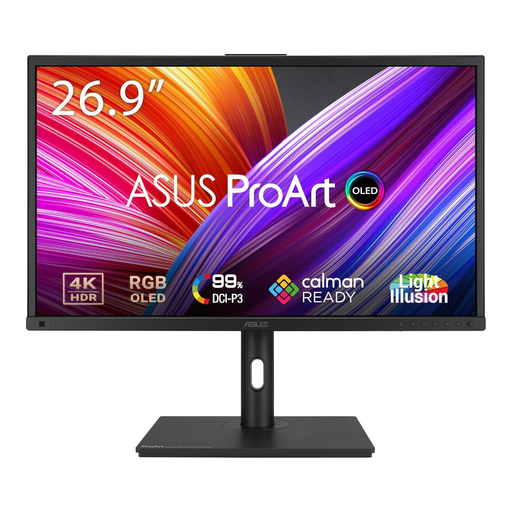 No image available
ASUS ProArt PA27DCE-K
For an artwork desk where an OLED display is under consideration, compare its available colour modes with the output space you use. This variant is listed as a 4K UHD OLED monitor; confirm the calibration details you need and the connection plan for two screens.
Joybuy
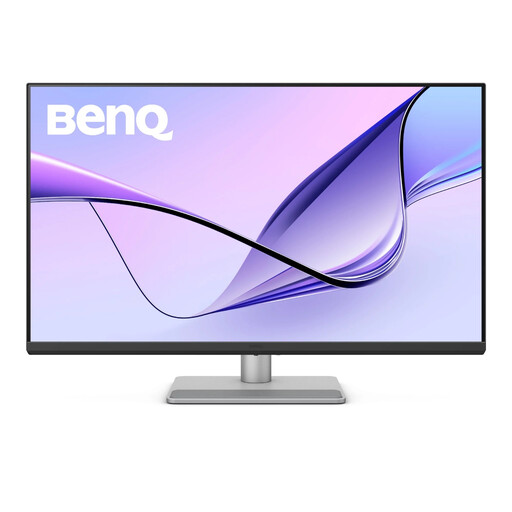 No image available
BenQ MA320UP 32-inch 4K
If you are considering two larger screens for a Mac-based workspace, measure their combined footprint and confirm the Mac’s external-display support. The product name lists a Nano Glossy IPS panel, USB-C and a height-adjustable stand; check the colour mode required for your artwork.
Joybuy
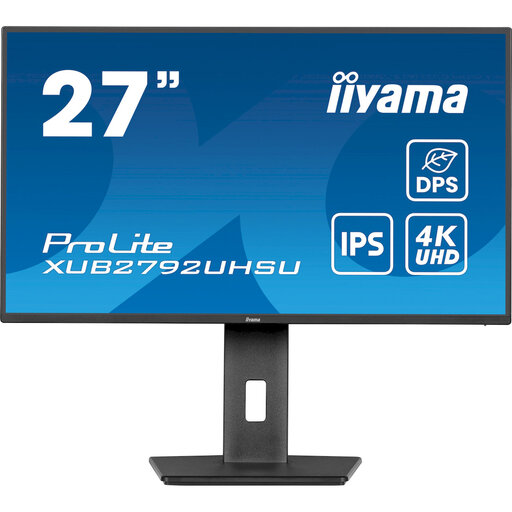 No image available
iiyama ProLite XUB2792UHSU-B6 27-inch 4K
For a desk planned around two 27-inch 4K screens, check the stand positions and the colour settings needed for your artwork. This variant’s name specifies a 16:9 LED monitor; confirm its calibration information if the pair will be used for colour-critical approval.
Joybuy
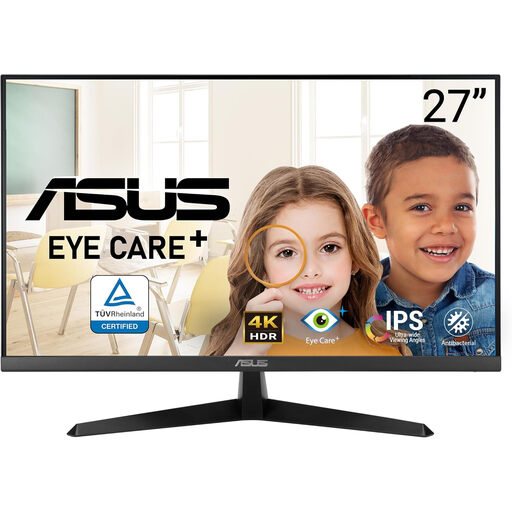 No image available
ASUS Eye Care VY27UQ 4K UHD
For sRGB artwork review, check that both screens offer the colour mode and calibration information your approval process requires. The product name lists a 60 Hz refresh rate; confirm the stand arrangement if aligning two panels is important to your desk setup.
Joybuy
Frequently asked questions
Can any USB-C laptop run two external 4K monitors?
No: USB-C alone does not establish support for two external 4K displays. Apple Support says the number of simultaneous external screens depends on the Mac model and each display’s resolution and refresh rate. Check your exact computer’s specification, then confirm that the proposed dock and cables support your connection plan.
Should I connect each 4K monitor separately or daisy-chain them?
Use separate connections if you cannot confirm that your computer supports the proposed chain. Dell UK says its display daisy-chaining route requires Thunderbolt; ASUS lists daisy-chain capability for the PA279CRV, but that feature does not establish what a particular computer can drive.
Do both screens need identical colour specifications?
A matched model and the same intended colour mode are a practical starting point, but specifications alone do not guarantee that two panels will look identical. Match the mode to the artwork’s destination, then assess both screens in your colour-managed workflow; Adobe notes that monitor calibration can affect how printed artwork appears.
What energy information should I check when buying a monitor online in the UK?
Check the energy label and product information sheet for the exact monitor variant. GOV.UK says products within the applicable energy-information rules must display a label at the point of sale, including on a website, and be accompanied by a product information sheet. Your electricity use will also depend on settings and usage.
What should I do with an old monitor in the UK?
Check the seller’s or your local authority’s current electrical-equipment collection and recycling arrangements. GOV.UK describes the UK waste electrical and electronic equipment framework as intended to reduce equipment sent to landfill or incineration through recovery, reuse and recycling measures.


