Viewport-and-tool multitaskers
If you keep a level editor open alongside scene panels, scripts, debugging tools or references, two independently addressable displays let you give each part of the workflow its own space.


If you need a separate 4K workspace for a level editor and another for tools or references, two matching 27-inch 4K monitors are a practical starting point—provided your computer can drive both and your desk fits them. A single 3840 × 1600 ultrawide avoids a centre bezel but is not a two-screen setup and has fewer vertical pixels than either 4K panel; USB-C charging and daisy-chaining also need host-specific checks.
If you keep a level editor open alongside scene panels, scripts, debugging tools or references, two independently addressable displays let you give each part of the workflow its own space.
If you review textures, materials, lighting references or UI assets, check the exact model’s stated colour-space coverage and calibration claims. BenQ and ASUS publish such specifications for the PD2705U and PA279CRV respectively; they should not be assumed for every model in those ranges.
If a laptop moves between locations and a two-monitor desk, USB-C or Thunderbolt connections may help organise the setup. Confirm the laptop’s external-display support before relying on either monitor to carry video, charge the laptop or connect a second screen.
For a two-screen level-design desk, decide how much separate workspace you need before choosing colour features and planning the connections and physical layout. If avoiding a centre bezel matters more than having two distinct displays, consider an ultrawide instead: Dell lists its U3824DW at 3840 × 1600, with less vertical resolution than a 3840 × 2160 monitor.
| Concern | What to check | Who this matters to |
|---|---|---|
| Separate workspace | Check each panel’s native resolution and dimensions, then confirm that the computer can drive two displays at the intended settings. | If I keep the editor visible while working with tools and references, I want each to have its own screen rather than continually moving windows. Around 42% of consumers put that separation first. |
| Colour confidence | Compare the exact models’ stated colour spaces and available colour modes; plan consistent settings if you compare assets across screens. | When I review textures or lighting across both panels, I want to understand how their colour settings compare. That is the primary concern for around 33% of consumers. |
| Connections and desk fit | Confirm laptop display support and video connections, then measure the space available for stands or compatible arms. | If I work from a laptop at a crowded desk, both screens need to connect and sit comfortably without an awkward viewing position. Roughly 25% of consumers prioritise that practical fit. |
A monitor’s USB-C video or charging feature does not establish how many external displays the laptop can drive. Daisy-chaining depends on the particular monitor and connection path too.
Check the computer’s supported external-display count, video capabilities and charging requirements against the monitors’ exact ports before ordering a pair.
Your chosen connection layout may also require a compatible dock or additional cables.
Two 27-inch 4K monitors may still have different colour modes, brightness controls, stand adjustments and connections. Those differences matter when you compare images or move work between panels.
Choose the same model where cross-screen consistency is important. If mixing models, check their physical heights and align the colour modes used for your workflow.
Two panels still need a layout that fits the desk and can be viewed comfortably. The UK Health and Safety Executive advises employers to assess display-screen-equipment workstations and reduce risks.
Measure the desk and plan screen positions before buying; reassess the workstation when its layout changes.
The U2725QE illustrates a 27-inch 4K hub-monitor route for a desk that also uses a laptop; its features should not be assumed across the UltraSharp range.
The PD2705U is a 27-inch 4K option for buyers assessing documented colour coverage in an SDR design workflow.
The PA279CRV illustrates a 27-inch 4K route for buyers whose work calls for its stated wider-gamut coverage.
These 27-inch 4K monitors are options to assess as individual screens in a level-design desk. Before buying a pair, check your computer’s two-display support, the available connections and how the two panels will fit side by side.
 No image available
Consider this model for one of two separate 4K workspaces for an editor and supporting tools.
Check the video connections against your computer; if you plan to use USB-C for laptop video or charging, confirm the functions available on this exact model.
 No image available
Consider this model where a separate 4K screen would keep level-design tools visible beside the editor.
The name specifies a 60 Hz refresh rate and 95% DCI-P3 coverage. Confirm the HDMI input count if your connection plan depends on it.
 No image available
Consider this Mac-focused model for a laptop-led desk where a 4K editor screen and USB-C connection are priorities.
Check which functions your particular computer supports, including its ability to run two external displays.
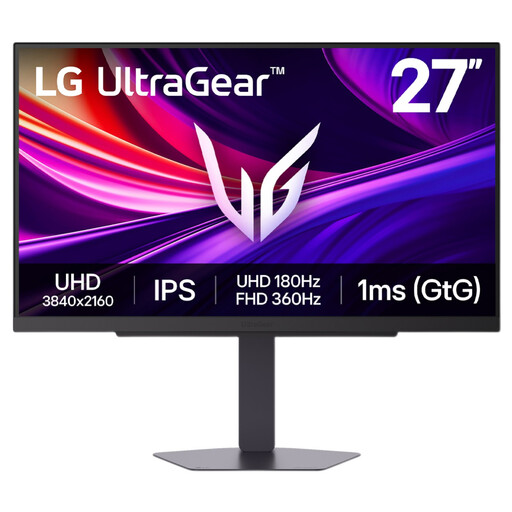 No image available
Consider this model if the desk needs a 4K level-design screen and will also be used for gaming.
Check which dual-mode setting retains 4K resolution for design work: the higher-refresh Full HD mode uses a lower resolution.
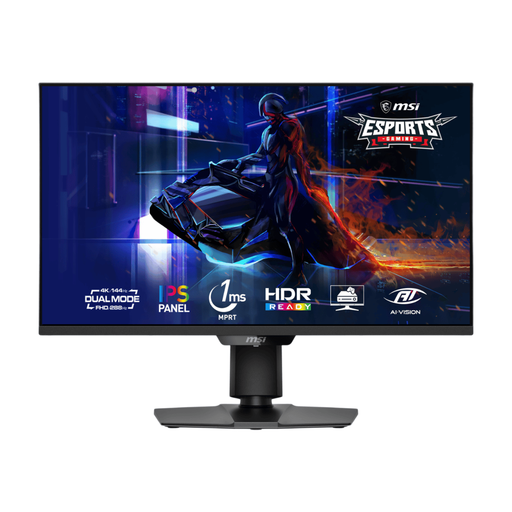 No image available
Consider this model as a separate 4K workspace if the same desk is also used for gaming.
Its named modes distinguish UHD 144 Hz from FHD 288 Hz; choose the resolution deliberately when returning to level-design work.
No, but matching models simplify the choice when you want similar resolution, physical height and colour controls on both screens. If you mix models, compare those features and plan how you will align their display settings.
Not necessarily. ASUS lists daisy-chain capability for the PA279CRV, but a two-screen connection still depends on the computer’s supported display count, video capabilities, cables and exact monitor connections. Check the complete connection path before purchase.
No; adjustable stands may give you the positioning your desk needs. If arms would help you place the screens, check each monitor’s mounting specification against the arms and measure the available desk space first.