Rota coordinators handling several workstreams
Two screens can keep a scheduling tool in view alongside spreadsheets, messages or reference material. Check that the computer can drive both displays and that the desk accommodates them.


For a fixed rota-planning desk, two matching 27-inch QHD monitors with adjustable stands are a practical starting point when staff need a rota and supporting information visible together. Connect them separately if the computer or dock has two suitable outputs; choose USB-C docking or daisy-chaining only after confirming the laptop, monitors and cables support the intended two-screen arrangement.
Two screens can keep a scheduling tool in view alongside spreadsheets, messages or reference material. Check that the computer can drive both displays and that the desk accommodates them.
Staff connecting a work laptop at a fixed desk may value monitor-based charging and peripheral connections. USB-C docking and daisy-chaining depend on the laptop and the exact monitor combination.
Screen position matters when rota planning is a regular part of the working day. The Health and Safety Executive advises assessing the whole workstation, including the task and individual user, rather than relying on monitor features alone.
Decide how the computer will connect to two displays before choosing docking features, then check screen position and desk space for the people who will use the workstation.
| Concern | What to check | Who this matters to |
|---|---|---|
| Readable workspace | Compare screen size and resolution across the pair; check whether rota and spreadsheet text remains comfortable to read at the intended scaling. | I need the rota visible while consulting a spreadsheet or messages, without making either screen hard to read. Around 36% of consumers put readable workspace first. |
| Laptop connections | Check the laptop’s supported external-display count, video-capable ports and charging requirement against the planned cables or dock. | When I arrive with a work laptop, I want both displays and my desk peripherals to connect without a complicated changeover. For around 29% of consumers, straightforward connectivity is the primary need. |
| Screen positioning | Check stand adjustment and desk depth, then assess the installed workstation for its user. | I spend long stretches working on the rota, so I need to position both screens without reaching or twisting awkwardly. This is the first concern for around 21% of consumers. |
| Shared-desk flexibility | Check how easily each screen can be repositioned and which approved peripherals the desk already provides. | If colleagues use the same desk on different shifts, I want a setup each person can adjust and reconnect readily. Around 14% of consumers prioritise that flexibility. |
A monitor’s USB-C port or daisy-chain feature does not establish what the work laptop can output. HP specifies a compatible HP Series 5 Pro monitor for daisy-chaining from its 527pu.
Check the laptop’s video-capable ports and external-display support, then confirm the exact monitor and cable arrangement before ordering a pair.
A separate dock, suitable video cable or adapter may be needed for the chosen connection method.
Two displays need room to be positioned for the user. The Health and Safety Executive advises assessing the whole workstation when it changes, including screen placement and the work being done.
Measure the desk and assess the arrangement after installation; HSE’s general guidance places the top of the screen around eye level and the screen about an arm’s length away.
Some desks may need a monitor arm or another workstation adjustment to achieve a suitable layout.
An eye-comfort feature does not settle whether both screens, the lighting and the working pattern suit the person using them.
Put screen placement, lighting, breaks and the workstation assessment ahead of an eye-comfort label when planning regular display-screen work.
Published power-delivery figures differ by model: BenQ lists 65W for the GW2790QT, Dell lists 90W for the P2725DE and HP lists 100W for the 527pu. None of those figures alone establishes suitability for a particular work laptop.
Compare the exact monitor’s stated power delivery with the laptop’s documented charging requirement.
A laptop that needs more power may still need its own charger or a suitable dock at the desk.
These examples describe particular monitor lines, not every model made by each brand. Check the exact model and laptop combination before standardising a desk setup.
The P2725DE is a 27-inch QHD USB-C hub monitor to consider for an adjustable, laptop-connected desk.
The 527pu offers a QHD USB-C route for a laptop-based rota desk.
The T27h-30 is a docking-monitor option for a fixed desk that needs peripheral and network connections.
The GW2790QT combines QHD, USB-C and stand adjustment for an office desk.
These monitors offer different screen sizes and connection features for a rota-planning desk. To make a two-screen setup, check that you can obtain the intended pair and that the work computer supports both displays; a USB-C listing alone does not establish a daisy-chain arrangement.
 No image available
Consider its QHD display for a separately connected rota-planning screen. Check the exact video connections, stand adjustments and availability of a matching second unit before planning the pair; do not rely on USB-C docking without confirming this variant’s capabilities.
 No image available
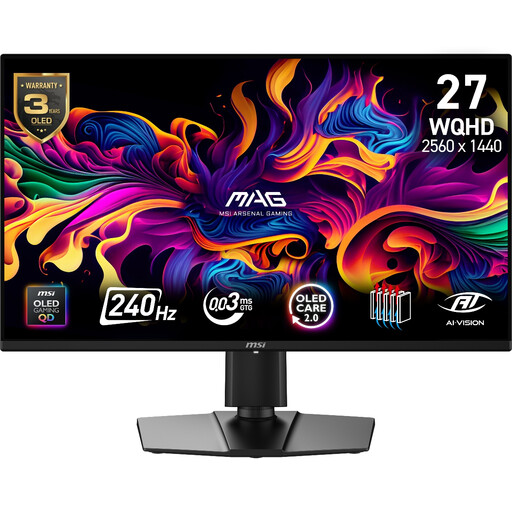
Its stated 2560 × 1440 resolution offers a QHD option for a rota and supporting windows. The title also specifies a 240Hz QD-OLED gaming display; assess the desk and intended office use rather than choosing on refresh rate alone, and check the connection method and matching second unit.
 No image available
Consider this larger 4K option if the desk can accommodate two displays of this size. Its title specifies a height-adjustable stand and USB-C; confirm the work laptop’s video and charging requirements, the full connection plan and availability of a matching unit.
 No image available
The stated 27-inch, 2560 × 1440 format matches the screen-size and resolution starting point for a rota desk. Its title lists 220Hz; check the stand adjustments, video inputs and availability of a second matching unit before choosing it for a two-screen workstation.
 No image available
This 31.5-inch 4K IPS option needs more careful desk-space planning than the 27-inch QHD starting point. Check the USB-C video and charging functions, stand adjustments, computer compatibility and availability of a second matching unit for the intended setup.
In the UK, the Health and Safety Executive says employers must assess workstations for workers who use display screen equipment daily as part of normal work for continuous periods of an hour or more. Assess the changed workstation when adding a second monitor, taking the task and individual user into account.
Position them for the person and the work rather than following one fixed dual-screen layout. The Health and Safety Executive’s general guidance puts the top of the screen around eye level and the screen about an arm’s length away; assess whether the main rota display can sit directly in front without repeated twisting.
Yes. The Health and Safety Executive says employers must arrange and pay for an eye and eyesight test when a DSE user requests one. Glasses are provided where the test shows that special glasses are needed solely for DSE work.
No. For regular screen work, the Health and Safety Executive’s guidance on positioning and the full workstation still matters; plan lighting and breaks alongside the monitor choice rather than treating a product feature as the complete solution.