
24/7 Customer Support

Free returns

Same-day & Next-day Delivery

Quality Guaranteed

Unlock Your Welcome Offers: FREE Delivery | Up to 80% OFF | Free 30-day JoyPlus trial
Download the APP
As an EV driver in the UK, you know that the right charging cable is as essential as the car itself. Yet, the market is filled with options that can be confusing. Choosing the wrong Type 2 EV charging cable can lead to slow charging, wasted money or even safety hazards. Before you buy, it's crucial to understand a few common pitfalls that many drivers fall into.
Here are three frequent mistakes to be aware of:
By understanding these key factors, you can make a more informed decision and find a cable that is safe, efficient and perfectly suited to your needs.
To select the right cable, you need to look past the marketing and focus on three core specifications. Getting these right ensures compatibility, safety and convenience.
The single most important factor is matching the cable's power rating to your vehicle's maximum AC charging capability. You can find this information in your car's manual under "On-Board Charger (OBC) capacity."
A Mode 3 charging cable is the technical term for these cables, designed to connect your car to a dedicated AC charging point.
Cable length directly impacts convenience. Consider where you'll be charging most often.
While most charging is done with a Type 2 to Type 2 cable, there's another important option for flexibility.
To help you navigate the options, we've matched some reliable products to common UK driver profiles. These selections are based on their specifications, safety certifications and suitability for specific use cases.
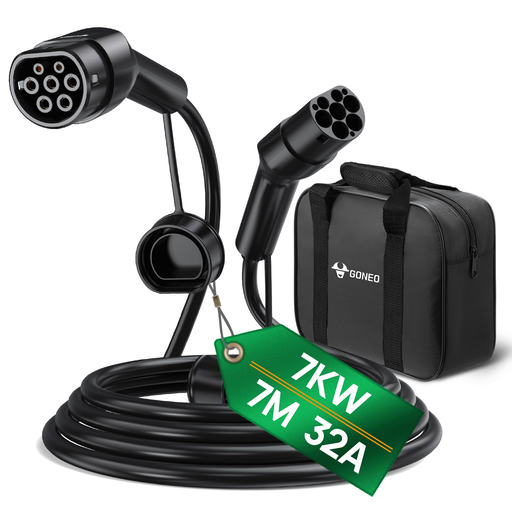
Why This Fits Their Persona: Perfect for the majority of UK drivers with a PHEV or a BEV that has a standard 7kW on-board charger. The 7-metre length is a practical choice, offering enough reach for most home and public charging scenarios without being unwieldy.
It avoids the power mismatch trap by perfectly matching the 7kW charging standard, preventing you from overspending. Its IP54 weather resistance and durable TPU jacket directly counter the durability deception of cheaper alternatives.
Features key safety certifications (T?V, UKCA and CE) for peace of mind. The versatile 7m length and robust build offer a great balance of convenience and longevity.
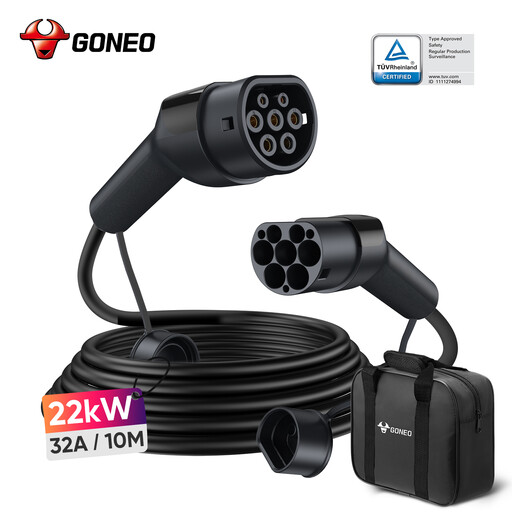
Why This Fits Their Persona: Designed for owners of high-performance BEVs with 11kW or 22kW on-board chargers. This cable allows them to take full advantage of the fastest public AC chargers, while the generous 10m EV charging lead ensures they can connect in even the most inconveniently designed car parks.
This cable is a perfect power match for capable vehicles, ensuring no charging speed is left on the table. The 10m length completely eliminates the "too short" cable fallacy, providing ultimate flexibility.
Maximises charging speed for compatible cars. The extra-long 10m cable provides unparalleled convenience and it is built to withstand a 2-ton drive-over, ensuring it survives real-world use.
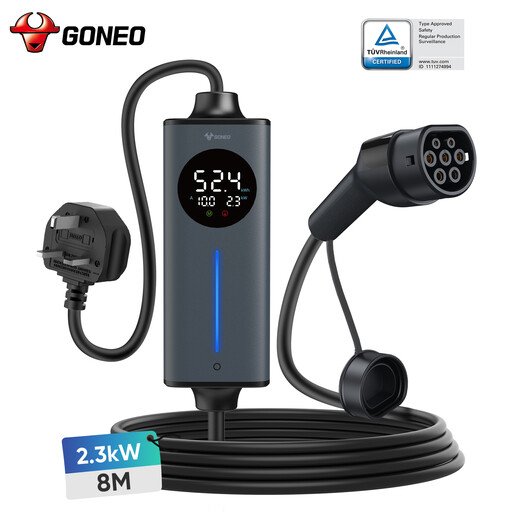
Why This Fits Their Persona: An essential backup for any EV driver. It's particularly vital for those who rent, travel frequently or can't install a permanent wallbox. This charger allows you to top up from any standard UK 3-pin socket, offering true plug-and-play convenience.
This charger provides a safe, certified way to charge without a wallbox. Its built-in safety features, like dual temperature monitoring and leakage protection, protect against the risks associated with uncertified, low-quality portable chargers.
Features a high IP66 waterproof rating for the control box, making it safe for outdoor use. The clear LED display provides real-time charging information and a delay function allows for charging during off-peak hours.
We have compiled a complete, real-time list of products that fully satisfy these strict selection criteria and UK safety regulations.
Here are answers to a few common questions UK drivers have about EV charging cables.
Yes, you can. The charging process is controlled by your car's on-board charger, which will only draw the maximum power it can handle. So, a 22kW cable will work perfectly fine with a 7kW car, but it will only charge at a 7kW rate. While it offers no immediate speed benefit, it can be a good way to "future-proof" your purchase if you plan to upgrade to a more capable EV in the future.
The Ingress Protection (IP) rating indicates how well the equipment is sealed against dust and water. The first digit is for solid particle protection (dust) and the second is for liquid protection (water).
They are critically important. These marks indicate that the product has been independently assessed to meet stringent safety, quality and performance standards.
Always prioritise cables that carry these certifications to ensure the safety of your vehicle, your property and yourself.