
24/7 Customer Support

Free returns

Same-day & Next-day Delivery

Quality Guaranteed

Unlock Your Welcome Offers: FREE Delivery | Up to 80% OFF | Free 30-day JoyPlus trial
Download the APP
As a Joybuy Product Recommendation Officer, my role is to help you navigate the crowded market of electric vehicle accessories. Choosing a new charging cable might seem straightforward, but a few common pitfalls can lead to slow charging, safety hazards or simply a product that doesn't last. This guide will walk you through the essential checks to ensure you get a reliable and correctly specified cable for your electric car.
The most frequent issues we see arise from three key areas:
To avoid these traps, focus on a few non-negotiable specifications. Getting these right ensures your cable is safe, efficient and built to last.
The power rating, measured in kilowatts (kW), determines your charging speed. For most UK homes with a standard single-phase electricity supply, a 7.2kW charging cable is the most common and effective option. This is typically a 32A EV charger cable.
The length of your electric car charging lead is crucial for day-to-day convenience. While a shorter cable is easier to store, it can be restrictive.
This is where you should never compromise. A quality Type 2 to Type 2 cable must have verifiable safety credentials and be constructed from robust materials.
Based on these essential criteria, we've matched some products to different user needs. This is not a ranked list but a guide to help you find the right fit for your specific situation.
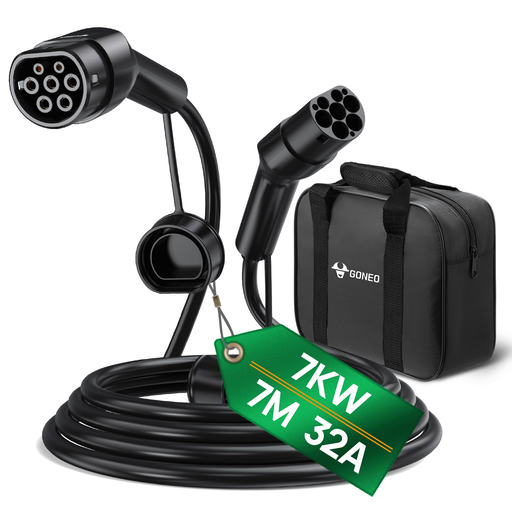
Why This Fits Their Persona: This cable is the ideal all-rounder for UK drivers. The 7-metre length is perfect for navigating typical public charging bays and home driveways, while the 7.2kW power rating matches the charging capacity of most EVs and PHEVs on the road.
It is independently certified by T?V Rheinland and has a durable TPU jacket, directly addressing the pitfalls of unsafe, uncertified cables and poor durability.
Versatile 7m length suitable for almost any charging scenario. Includes a carry bag for clean and convenient storage in your vehicle.
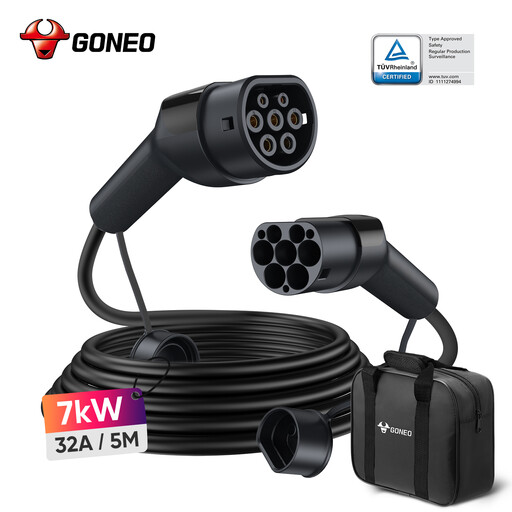
Why This Fits Their Persona: This is a practical choice for drivers who primarily charge on their own driveway and have a charge point conveniently located. The shorter 5m length is lighter, easier to manage and often more cost-effective.
It provides the correct 7.2kW power rating, ensuring you don't accidentally buy an under-specified cable that slows down your home charging routine.
More compact and easier to coil and store than longer cables. Carries the same high-quality build and safety certifications as its longer counterparts.
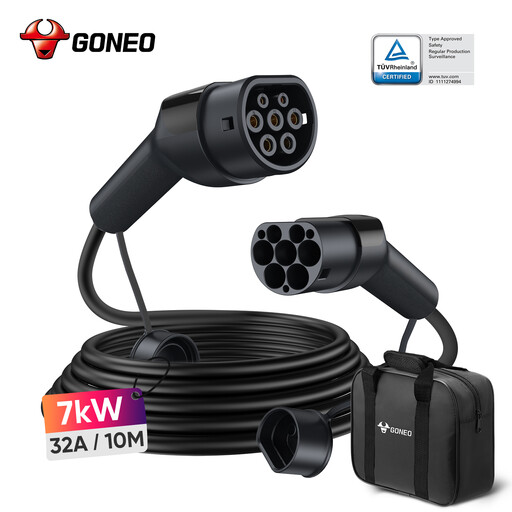
Why This Fits Their Persona: For those who frequently encounter poorly designed car parks, have a very long driveway or simply want to be prepared for any situation. This 10-metre cable removes any anxiety about being able to reach a charger.
Unlike some generic long cables that can be flimsy, this one maintains the robust TPU construction and full safety certifications, ensuring reliability is not sacrificed for length.
The 10-metre length provides ultimate reach for the most challenging charging spots. It is still rated for 7.2kW, making it fully compatible with standard UK chargers.
For most UK homes with a single-phase electricity supply, a 7.2kW charger is the fastest you can install. It will deliver power at a rate of approximately 7kW, adding about 25-30 miles of range for every hour of charging. This is more than sufficient for overnight charging for the vast majority of EV and PHEV drivers.
Cables with an IP54 rating or higher are designed to be resistant to water splashes. This means they are safe to use in typical British rain. However, it is always good practice to ensure the connector plugs do not sit in a puddle of water. Using the provided protective caps when the cable is not in use will help keep the contacts clean and dry, prolonging its life.
The connector type depends on your vehicle. Type 2 is the standard connector for all new electric cars sold in the UK and Europe, including brands like Tesla, Audi, BMW and VW. Type 1 connectors are found on some older models or vehicles imported from North America and Asia. This guide and the recommended products are for vehicles that require a Type 2 to Type 2 cable. Always check your car's charging port before purchasing.