
24/7 Customer Support

Free returns

Same-day & Next-day Delivery

Quality Guaranteed

Unlock Your Welcome Offers: FREE Delivery | Up to 80% OFF | Free 30-day JoyPlus trial
Download the APP
Buying a Type 2 EV charging cable should be straightforward, but technical labels and broad compatibility claims can make the choice confusing. A cable that looks suitable may charge more slowly than expected, fail to reach a public charging point or use a connector that does not fit your vehicle.
This guide explains the specifications that matter for UK drivers, including 11kW Type 2 EV cable, 22kW Type 2 EV cable, 7.2kW Type 2 EV cable and portable UK 3-pin charging options.
An 11kW or 22kW cable does not automatically make your vehicle charge at that rate. The maximum speed is limited by the car’s on-board charger (OBC), the charging station and the available electrical supply.
For example, a vehicle with a 7.2kW OBC will not charge at 11kW simply because you connect an 11kW cable. Check your vehicle handbook or manufacturer specifications before selecting the cable rating.
A Type 2 to Type 2 charging cable is generally used between a compatible public or home AC charging point and the vehicle’s Type 2 inlet. It is different from a cable for J1772, CCS1 or CHAdeMO connections.
Many European-market electric cars and plug-in hybrids use Type 2 or CCS2-compatible vehicle inlets, including selected Tesla, Audi, BMW, Mercedes-Benz, Volkswagen, Hyundai and Kia models. However, connector compatibility can vary by model and production year. Check the vehicle inlet rather than relying only on the brand name.
A longer cable can help when a parking bay does not line up neatly with the charge point, but it also adds weight and takes up more storage space. A 5m cable may suit direct home or station parking, while 7m can provide more flexibility at public chargers. A 10m version is useful for more complex parking positions, provided it can be stored safely without creating a trip hazard.
The main categories are:
A 3-phase EV charging cable can support three-phase AC charging where the vehicle and charge point both allow it. A single-phase EV charging cable is commonly appropriate for domestic charging arrangements and cars limited to around 7kW.
The cable rating should match your vehicle and intended charging points. Higher capacity can be useful for future flexibility, but it may add cost, thickness and weight without increasing the charging rate of a car with a lower-capacity OBC.
A Mode 3 EV cable is designed for AC charging from a dedicated charging station or wallbox. It is not the same as connecting an EV directly to an ordinary household socket.
When comparing products, look for clearly stated information about:
The GONEO Type 2 cable range states TÜV Rheinland safety certification and compliance with CE, UKCA, RoHS, ISO and IEC standards. These are product credentials supplied in the listing; buyers should still check the individual product page and vehicle guidance before purchase.
A cable used outdoors needs protection from rain, dirt, temperature changes and repeated bending. An IP rating describes resistance to dust and water under specified test conditions; it does not mean the cable should be submerged or left in standing water.
The listed GONEO Type 2 cables use a TPU outer jacket, have an IP54 rating and are specified for operation from -40°C to +50°C. The product information also states testing for more than 20,000 bends, plus protection against a 1-metre drop and a 2-tonne vehicle drive-over. Treat these as stated product-test specifications, and avoid deliberately driving over a connected cable.
A protective cap, ergonomic handle and carry bag are practical additions for drivers using public charging points throughout the UK.
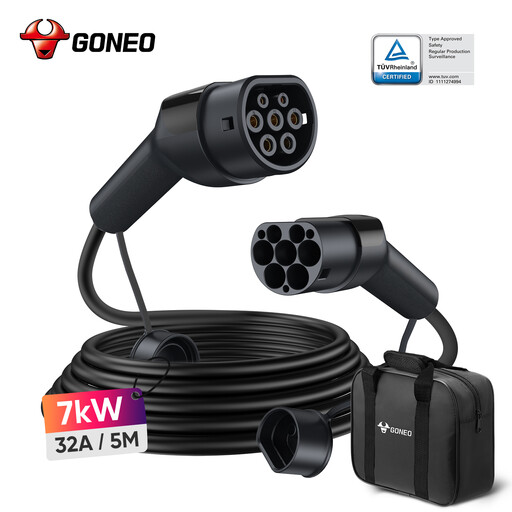
Why This Fits Their Persona: A practical choice for a Type 2 EV or PHEV owner whose car uses a single-phase 6–7.68kW OBC and who usually parks close to the charger.
Its stated 7.2kW, 32A and single-phase specification makes it easier to compare with the vehicle’s OBC instead of paying for unused three-phase capacity.
5m length, 32A rating, Type 2 to Type 2 design and included carry bag.
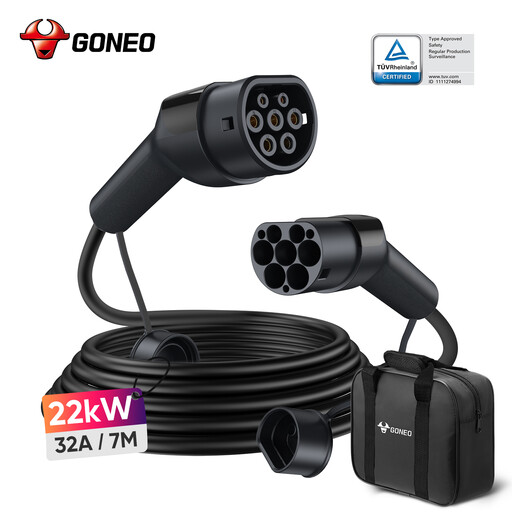
Why This Fits Their Persona: Suitable for drivers whose vehicles and regular public or home charge points support 22kW three-phase AC charging.
The 22kW, 32A and three-phase details are stated clearly, helping prevent a mismatch between cable capability and charging hardware.
7m reach, Mode 3 configuration, IP54 rating and protective carry bag.
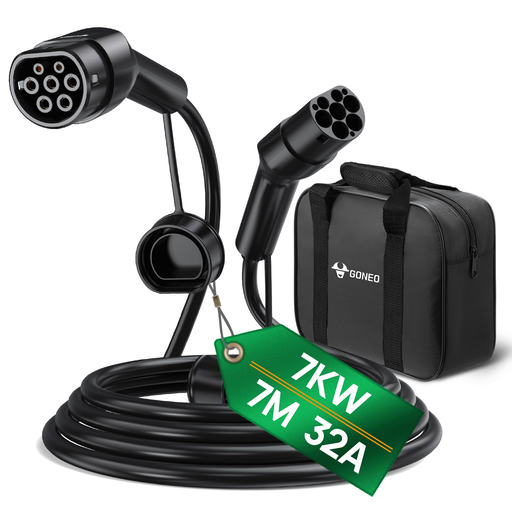
Why This Fits Their Persona: The 7m length suits public charging bays where the socket may not sit beside the vehicle’s charging inlet.
It offers extra reach without moving to a heavier 22kW cable when the vehicle only requires single-phase charging.
7m length, 32A single-phase rating, TPU jacket and stated IP54 protection.
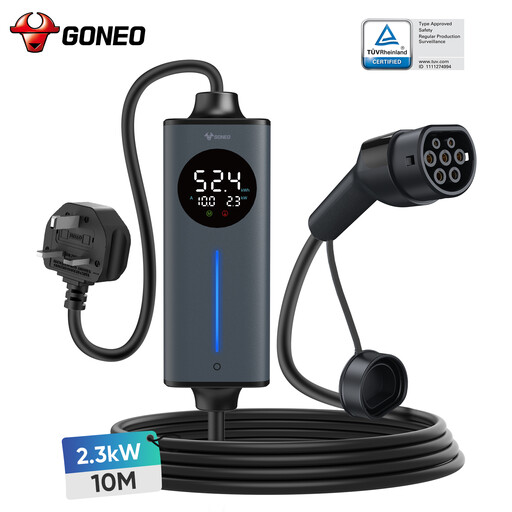
Why This Fits Their Persona: A portable Type 2 EV charger for occasional home, holiday or roadside use where a dedicated wallbox is unavailable.
Its 2.3kW maximum is clearly different from an 11kW or 22kW AC cable, reducing the risk of expecting rapid charging from a standard socket.
UK 3-pin plug, adjustable 10A current, LED display, delay charging and IP66 rating.
We have compiled a complete, real-time list of products that fully satisfy these strict selection criteria and UK safety regulations.
A CCS2 vehicle normally has a Type 2-shaped AC section alongside two additional DC contacts. A Type 2 AC cable may be suitable for the AC section, but it will not provide DC fast charging. Confirm the inlet and the charging station connector before buying. The listed cables are described as compatible with Type 2 and CCS2 vehicles, but not CCS1, J1772 or CHAdeMO.
A UK 3-pin EV charger can work as a convenient backup or travel charger, but its maximum output is typically around 2.3kW. Charging will take longer than with a dedicated home wallbox. Use a suitable socket and follow the charger and vehicle instructions; avoid extension leads unless the manufacturer specifically permits them.
Lifespan depends on bending, storage, moisture, dirt and handling. Keep the cable loosely coiled, cap the connectors and store it away from standing water and direct heat. Features such as a TPU jacket, stated bend testing, connector protection and an EV charger with carry bag can make regular storage and transport easier. Always inspect the cable for cuts, exposed conductors, overheating or damaged connectors before use.