
24/7 Customer Support

Free returns

Same-day & Next-day Delivery

Quality Guaranteed

Unlock Your Welcome Offers: FREE Delivery | Up to 80% OFF | Free 30-day JoyPlus trial
Download the APP
Navigating the world of electric vehicle accessories can feel unnecessarily complex, especially when it comes to something as fundamental as a Type 2 EV charging cable. Many new EV and PHEV owners in the UK fall into common traps, leading to wasted money, slow charging or even safety hazards. Before you buy, let's cut through the marketing jargon and focus on what truly matters.
The most frequent pitfalls we see are:
This guide will help you understand the core specifications to check, ensuring you select a cable that is safe, efficient and perfectly suited to your vehicle and lifestyle.
To make an informed choice, you only need to focus on three key parameters. Getting these right ensures compatibility and safety.
The charging speed of your cable is limited by the lowest-rated component in the chain: the charging station, the cable itself and your car's On-Board Charger (OBC). For a Mode 3 charging cable (used at wall boxes and public AC stations), you must match the cable to your car's OBC.
Action: Check your vehicle's handbook or online specifications for its maximum AC charging rate (OBC power) before you buy.
The length of your Type 2 to Type 2 cable directly impacts its usability.
An EV charging cable handles high electrical currents, often outdoors in all weather conditions. Its construction is paramount.
Based on these critical criteria, we've matched some options to common user profiles.
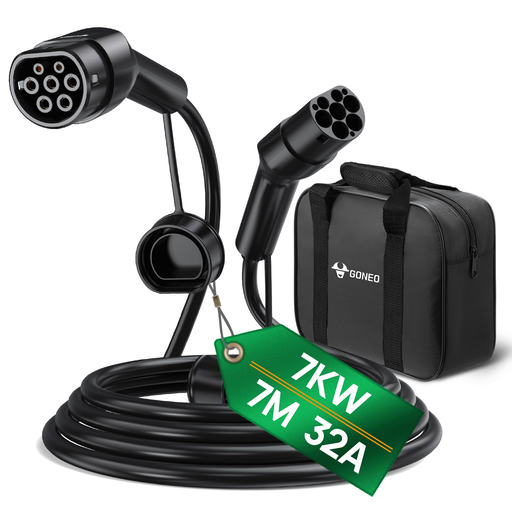
Why This Fits Their Persona: This is a versatile workhorse for the majority of UK drivers. The 7.2kW power rating is perfectly matched for most home wall boxes and the OBCs of many popular BEVs and almost all PHEVs. The 7-metre length offers a good balance between home convenience and public charging flexibility.
It avoids the trap of overspending on a higher-rated cable when your car can only accept 7kW, delivering the maximum safe speed without unnecessary cost.
T?V Rheinland certified for safety and features a durable TPU jacket. The 7m length is a practical upgrade over standard 5m cables.
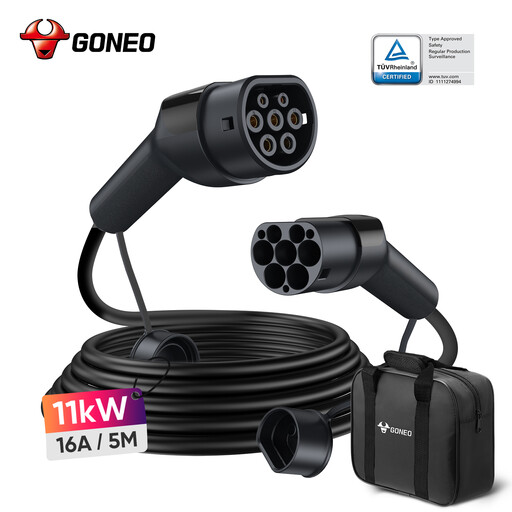
Why This Fits Their Persona: For owners of BEVs with an 11kW on-board charger (like many Tesla, Audi and VW models). This cable allows them to take full advantage of faster three-phase public or workplace chargers, significantly reducing charging times compared to a 7kW cable. The 5m length is ideal for a dedicated home setup.
It correctly matches the vehicle's higher charging capability, ensuring the driver isn't leaving charging speed on the table when using a compatible three-phase station.
Unlocks faster 11kW charging speeds where available. The compact 5m EV cable is lightweight and easy to manage for daily use.
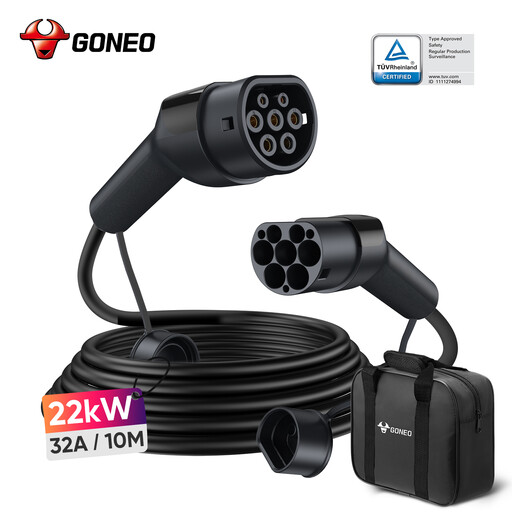
Why This Fits Their Persona: This cable is for the driver who wants to be prepared for any situation. The generous 10-metre length eliminates worries about reaching awkwardly placed charge points, while the 22kW rating ensures it can handle the fastest AC charging speeds for high-end EVs and is fully backward-compatible with 11kW and 7kW cars.
It permanently solves the "cable is too short" problem, which can be a major point of failure for EV owners relying on the varied UK public charging network.
Maximum reach with its 10m EV cable length. The 22kW rating provides future-proofing and compatibility with the fastest AC chargers.
A quality cable deserves proper storage. Keeping your new electric car charger cable safe and tidy in the boot, along with other essentials, prevents damage and clutter.
We have compiled a complete, real-time list of products that fully satisfy these strict selection criteria and UK safety regulations.
Yes, you can. The charging process is designed to be safe and the car's on-board charger will only draw the power it can handle (7kW in this case). You will not damage your car, but you will not gain any charging speed either. The main downside is that 22kW cables are typically thicker, heavier and more expensive than their 7kW counterparts.
A Mode 2 charging cable is the type that plugs into a standard 3-pin domestic socket at one end. These are for occasional or emergency use and offer very slow charging speeds (around 2.3kW). A Mode 3 charging cable, the focus of this article, is designed to connect your car to a dedicated EV charging station (a wall box or public charger) and enables much faster and safer charging.
It is extremely important. Certification from an independent body like T?V Rheinland verifies that the product has undergone rigorous testing for electrical safety, durability, material quality and manufacturing consistency. It's a reliable indicator that the cable is built to last and, most importantly, to operate safely under high electrical loads.