
24/7 Customer Support

Free returns

Same-day & Next-day Delivery

Quality Guaranteed

Unlock Your Welcome Offers: FREE Delivery | Up to 80% OFF | Free 30-day JoyPlus trial
Download the APP
Switching to an electric vehicle is an exciting step, but it introduces a new set of considerations, starting with a fundamental accessory: the charging cable. With a flood of options online, it is easy to fall into common traps that lead to slow charging, wasted money or even safety hazards. Many EV owners discover too late that their new cable is impractical or incompatible.
Before you make a purchase, be aware of these frequent pitfalls:
To make an informed choice, focus on these three non-negotiable parameters. Getting them right ensures your cable is safe, efficient and built to last.
The charging speed of your EV is determined by the lowest-rated component in the chain: the car's on-board charger, the charging station and the cable itself. A Type 2 EV charging cable is essentially a conduit for power.
A higher-rated cable is backwards-compatible. For instance, you can safely use a 22kW cable on a 7kW car; it will simply deliver power at the 7kW rate.
The physical properties of your EV charging lead are just as important as its electrical specifications.
Never overlook safety certifications. These marks are not just marketing logos; they are your assurance of quality and safety.
A certified public charging station cable has been tested to withstand its stated current, resist overheating and protect against electrical faults.
To help you navigate the options, we have matched some products to common UK driver profiles.
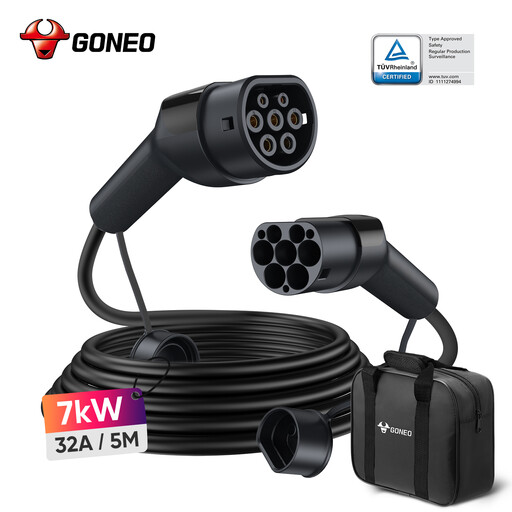
Why This Fits Their Persona: This cable is a practical choice for drivers who primarily charge at a home wallbox or use standard 7kW public chargers for top-ups. The 5-metre length is manageable and easy to store, perfect for daily use.
Its 7.2kW rating is correctly matched for the majority of UK home chargers and many BEVs/PHEVs, avoiding the 'Power Mismatch Trap' and ensuring efficient charging without overspending on an unnecessarily high-spec cable.
Independently certified by T?V Rheinland for safety. The durable TPU jacket ensures it remains flexible and avoids the cracking common with cheaper PVC cables.
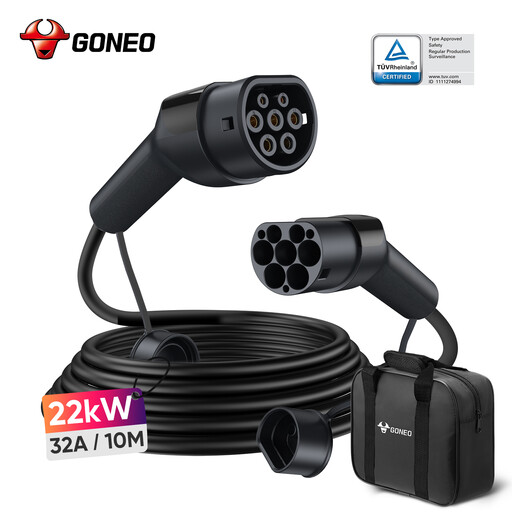
Why This Fits Their Persona: For the driver with a 22kW-capable EV who frequently relies on the public charging network. The generous 10-metre length provides crucial flexibility for reaching awkwardly positioned charge points in tight car parks.
This cable is built for performance and longevity. The 22kW rating ensures you can take full advantage of fast AC chargers, while the robust TPU material avoids the 'False Economy' trap of a flimsy cable failing prematurely.
Supports maximum AC charging speeds for compatible vehicles (including many EV cable for Tesla applications). The IP54 rating and wide operating temperature range make it a reliable all-weather tool.
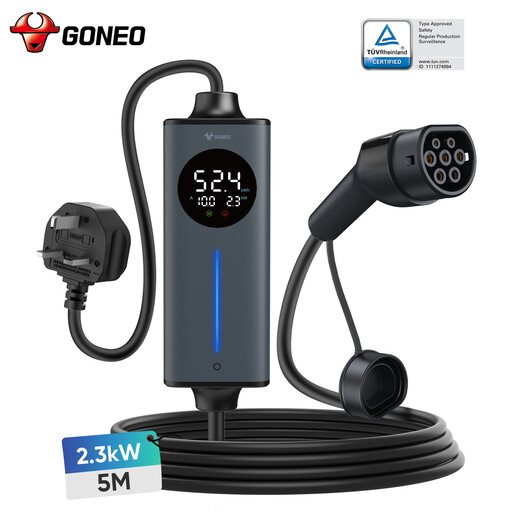
Why This Fits Their Persona: This is the essential backup plan. It allows you to charge your Type 2 vehicle from any standard UK 3-pin domestic socket, making it invaluable for overnight stays with family or in rural locations without dedicated charge points.
This is not a standard Type 2 to Type 2 cable, but a specialised tool that solves a specific problem. It prevents you from being stranded by turning any household socket into a viable, albeit slower, charging point.
Features adjustable current settings and a clear LED display for monitoring. Its IP66 waterproof rating and built-in temperature sensors provide a high degree of safety for portable use.
We have compiled a complete, real-time list of products that fully satisfy these strict selection criteria and UK safety regulations.
Yes, absolutely. The charging system is designed to be safe and backwards-compatible. Your car's on-board charger will only draw the maximum power it can handle, so a 22kW cable connected to a 7kW car will simply charge at 7kW. This makes a higher-rated cable a future-proof investment if you plan to upgrade your vehicle later.
This depends entirely on your typical parking situation.
No. While they share the same connector, they differ significantly in three key areas: power rating (7kW, 11kW, or 22kW), length (from 3m to over 10m) and build quality. The most important differentiator for longevity, especially in the UK, is the cable jacket material. A flexible, weather-resistant TPU jacket is far superior to a cheaper, stiffer PVC one. Always check for these specifications and safety certifications before buying.