
24/7 Customer Support

Free returns

Same-day & Next-day Delivery

Quality Guaranteed

Unlock Your Welcome Offers: FREE Delivery | Up to 80% OFF | Free 30-day JoyPlus trial
Download the APP
Buying ULANZI camera lights can seem straightforward until you compare mini flashes, LED panels, RGB video lights and selfie accessories. The right choice depends less on the most impressive-looking specification and more on how you plan to use the light with your camera, phone or action camera.
A compact light can improve a dim indoor recording, brighten a subject during a video call or add colour to a product shoot. However, the wrong model may be incompatible with your mounting system, difficult to control or limited by battery and heat management. This guide covers the main pitfalls and the practical specifications worth checking before you buy.
A camera flash produces a short burst of light when the shutter is released. It can freeze movement and brighten still photographs, but it is not automatically suitable for video.
An ULANZI LED video light stays illuminated while recording, making it easier to see the effect before filming. It is generally more useful for vlogging, livestreaming, interviews and smartphone photography. Some products, such as mini flash units with video light modes, combine both functions, but you should still check how each mode is controlled.
A single-contact hot shoe does not necessarily provide TTL communication between the camera and flash. For example, a manual flash may require you to adjust shutter speed, aperture and flash power yourself. This can be useful for photographers who want direct control, but less convenient for quick snapshots.
Before ordering a mini camera flash, confirm whether your camera needs TTL, a universal single-contact connection or a specific system-compatible accessory.
Small rechargeable camera lights are convenient, but their compact housings have limited space for heat dissipation. Brightness settings, repeated full-power flashes and long recording sessions can make the housing warm.
Also check whether the product is waterproof, splash-resistant or simply intended for dry conditions. IPX4 and IPX5 ratings have different limits and do not mean a light can be submerged. In the UK, where outdoor shoots may encounter rain and high humidity, this distinction matters.
Choose the technology according to your content:
A rechargeable camera light with continuous output is usually more flexible for video, while a flash may offer a stronger short burst for still images.
Colour temperature is measured in Kelvin (K). Lower values, such as 2500K or 2700K, create a warmer amber appearance. Around 5500K or 5600K is closer to neutral daylight, while 8000K and above appears cooler and bluer.
A light with adjustable colour temperature can match household lamps, daylight from a window or existing studio equipment. For natural-looking product and skin tones, look for a stated CRI rating. A CRI of 95 or above indicates a high colour-rendering specification, although the final appearance also depends on camera settings and surrounding light.
Check whether the light includes a cold shoe, 1/4-inch screw hole, magnetic back, phone clip or handheld form. A magnetic camera light can be quick to attach, but magnets should be kept away from magnetically sensitive equipment.
For battery-powered models, consider:
Do not use an unsuitable high-wattage charger where the instructions specify a standard 5V supply. Built-in lithium batteries should not be dismantled, exposed to extreme heat or disposed of with ordinary household waste.

Why This Fits Their Persona: A compact option for photographers beginning to learn manual flash control with compatible Canon, Fuji, Sony, Nikon and other SLR digital cameras.
It provides both flash and continuous video light functions, reducing the need to buy two separate accessories for basic content creation.
GN8 output, 6500K colour temperature and four power levels from 1/8 to 1/1.
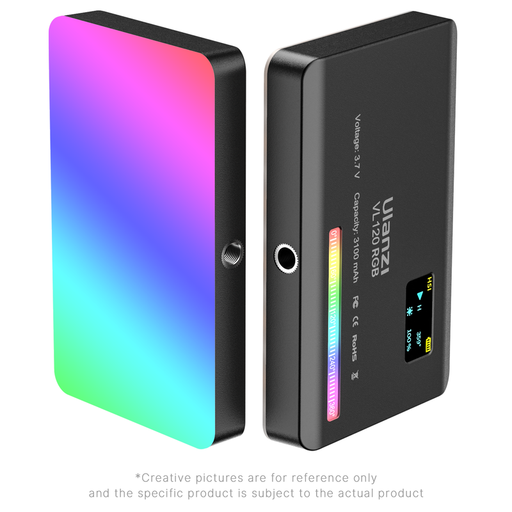
Why This Fits Their Persona: Designed for creators who want adjustable white light and colour effects for portraits, product shots, vlogs and social content.
Its stated operating range and colour functions make the lighting effect adjustable rather than fixed to one white balance.
3100mAh integrated battery, 2500–9000K range, 360° colour control and 20 lighting effects.
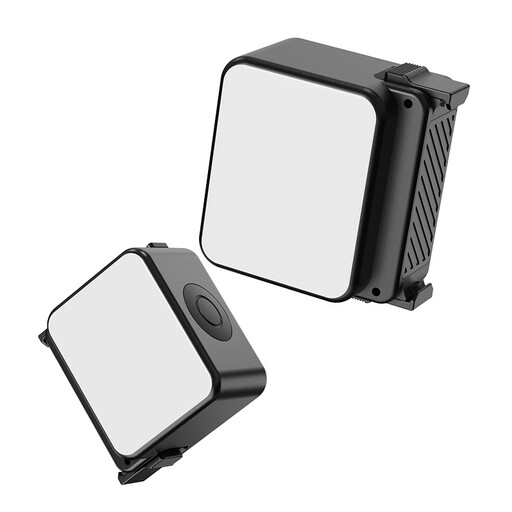
Why This Fits Their Persona: A targeted choice for action-camera owners filming cycling, travel or outdoor clips with a compatible camera cage.
It states an IPX5 water-resistance rating, while clearly not being designed for submersion or underwater use.
Magnetic mounting, mini LED design and compatibility with DJI Osmo Action 3, 4 and 5 Pro camera cages.
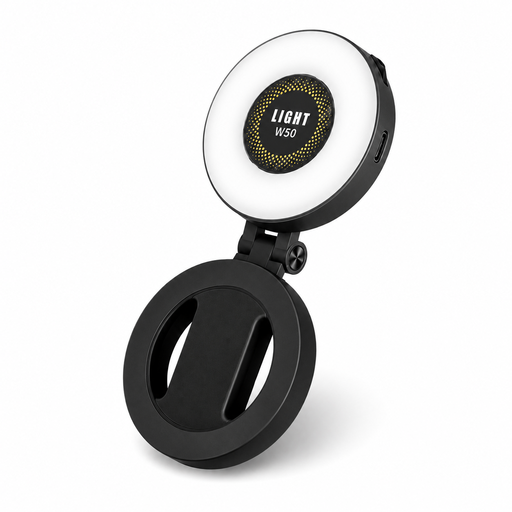
Why This Fits Their Persona: Suitable for phone selfies, TikTok videos, Zoom calls and mobile photography where a pocket-sized light is more practical than a camera-mounted panel.
It includes a metal ring adapter for non-MagSafe phones, so attachment is not limited to one handset ecosystem.
CRI95+, three colour temperatures from 2700K to 7500K, adjustable brightness and a built-in mirror.
We have compiled a complete, real-time list of products that fully satisfy these strict selection criteria and UK safety regulations.
Place the light slightly above or to one side of the subject rather than pointing it directly at the eyes. Use a diffuser or lower brightness where possible, particularly in a small room. Do not cover ventilation openings, leave a bright light unattended or continue using it if there is smoke, an unusual smell or excessive heat.
For flash units, avoid repeated full-power firing beyond the stated guidance. For rechargeable models, use the supplied USB-C cable or a suitable certified 5V charger. Keep equipment dry and allow it to cool before storing it in a camera bag.
Some are. A selfie fill light with a magnetic ring, phone clip or handheld design is more suitable for smartphones than a standard hot shoe flash. Check whether your phone supports magnetic attachment or whether the product includes an adapter. Camera-mounted LED panels may also work with a phone cage or grip that provides a cold shoe.
An LED video light provides continuous illumination, so you can preview shadows and brightness while recording. A camera flash delivers a brief burst for still photography. Manual flash models may require exposure adjustments, while a continuous LED light is generally simpler for vlogging, livestreaming and video calls.
The electricity used to recharge a small built-in battery is generally modest, but practical running time depends on brightness, colour mode and battery capacity. Maximum brightness uses more power than a low-output fill light. Switching the unit off between takes and carrying a USB-C power bank can help reduce interruptions during longer shoots.