Choose a 40-inch 5K2K ultrawide if keeping frames, a long timeline and reference panels visible together matters most, provided your desk and computer can accommodate it. A 34-inch 3440 × 1440 creator monitor is a smaller-size route when physical fit matters more than pixel area; check its colour modes, connections and positioning options against your workflow. For a quiet study, check the exact model’s operational noise rather than assuming either size is silent.
Who these monitors suit
Timeline-first animators
If frame thumbnails, references and tool panels compete for space beside a long timeline, a 40-inch 5K2K display offers more pixels than a 34-inch 3440 × 1440 display. The larger screen still needs a suitable desk position and a computer connection that supports the intended display mode.
Colour-conscious motion designers
Animators working to a defined delivery colour space can compare documented sRGB, Rec.709 or P3 coverage and the exact model’s calibration information. Manufacturer gamut and accuracy claims are starting points for a colour-managed workflow, not a guarantee of the final appearance.
Compact-study laptop users
A smaller screen-size class and an adjustable stand may help with positioning in a limited study. If one-cable laptop use matters, check video output and charging compatibility as well as desk fit. The Health and Safety Executive advises placing the display directly in front of you, with its top near eye level and the screen about an arm’s length away.
What to check when buying
Decide how much frame and timeline space must remain visible at once, then check colour requirements and whether the screen and connections fit your study.
40-inch 5K2K workspace
Choose it when: A long timeline, frame browser and references need to stay visible together; Dell and LG list 5120 × 2160 displays in this size class.
Trade-off: Allow room to centre the larger screen and confirm that your computer and cable support the display mode you intend to use.
34-inch WQHD creator screen
Choose it when: A smaller screen-size class suits the desk and documented creator colour features matter; BenQ and ASUS list 3440 × 1440 models with sRGB and Rec.709 specifications.
Trade-off: Its 3440 × 1440 canvas has fewer pixels, including fewer vertical pixels, than the cited 5120 × 2160 models.
| Concern |
What to check |
Who this matters to |
| Room for frames and timelines |
Compare native resolution and physical screen dimensions; confirm the computer supports the intended resolution and refresh rate. |
If I need frame thumbnails, references and a long timeline visible without constantly rearranging windows, usable single-screen space comes first. Around 42% of consumers place this need first. |
| Colour-managed work |
Match documented colour-space modes and calibration information to the project’s delivery requirements. |
When I review animation assets for a defined colour space, I need to know which display mode and colour information I can work with. Colour confidence is the primary concern for around 33% of consumers. |
| Study fit and laptop setup |
Measure desk and stand space; check screen positioning and the laptop’s video-output and charging requirements. |
On a limited study desk, I need to position the screen comfortably and connect my laptop without assuming its port can do everything. Around 25% of consumers put workstation fit and connectivity first. |
Buying pitfalls
-
Choosing by diagonal size alone
Screen size does not tell you the native resolution or whether the monitor and stand will fit at a comfortable viewing distance.
Measure desk width and depth, compare the exact stand dimensions and plan a position directly in front of you before choosing a size.
-
Assuming USB-C covers every laptop requirement
A monitor’s USB-C connection or power-delivery rating alone does not establish that your laptop can use its intended resolution, refresh rate and charging mode through one cable.
Check the laptop port, cable, supported video mode and charging requirement against the exact monitor specification.
-
Treating a gamut figure as a complete colour workflow
Colour-space coverage, accuracy claims and display modes describe different things. A gamut percentage or HDR label alone cannot establish how a finished animation will appear.
Start with the project’s target colour space, then check the matching monitor mode and calibration information; profile or calibrate where your workflow requires it.
-
Assuming a study monitor will be silent
A display’s suitability for a quiet room cannot be judged from its screen size or creator-focused description.
If operational noise matters, check information for the exact monitor and consider other equipment on the desk, including the computer and dock.
Brands to consider for these monitor types
Dell
Dell’s UltraSharp range includes a 40-inch 5K2K hub monitor and a 34-inch WQHD curved hub monitor for different workspace sizes.
- Dell lists 5120 × 2160 at 120 Hz, specified colour-space coverage, an adjustable stand and up to 90 W USB-C power delivery for the U4025QW. Its U3425WE is listed at 3440 × 1440 and 120 Hz.
- These are model specifications, not independent colour or noise measurements. Check desk fit and the computer’s supported connection mode.
LG
LG’s UltraFine 40U990A-W offers a 40-inch 5120 × 2160 screen with Thunderbolt 5 connectivity for a large single-screen canvas.
- LG lists a Nano IPS Black panel and states that its 5K2K resolution has 33% more pixels than 4K UHD.
- Confirm the computer, operating system and cable support the connection and display mode you want to use.
BenQ
BenQ’s PD3420Q is a 34-inch 3440 × 1440 creator monitor with documented colour modes and adjustment features.
- BenQ lists 100% sRGB and Rec.709 coverage, 98% P3 coverage, Animation mode, a calibration report and 150 mm height adjustment for this model.
- Its stated 60 Hz resolution mode has fewer pixels than the cited 40-inch 5K2K models; match its colour claims to your delivery workflow.
ASUS
ASUS’s ProArt PA34VCNV is a 34.1-inch 3440 × 1440 ultrawide with documented colour specifications and USB-C docking features.
- ASUS lists 100% sRGB and Rec.709 coverage, a Delta E < 2 accuracy claim, up to 96 W USB-C power delivery and 130 mm height adjustment.
- The stated 60 Hz WQHD mode has less pixel area than 5K2K; check the exact connection and colour-management requirements before choosing it.
Joybuy product choices
These choices include two 49-inch 32:9 screens for broad frame-and-timeline layouts and a 34-inch 3440 × 1440 screen for a smaller-size setup. Their screen sizes do not settle desk fit, colour-work suitability or quiet operation on their own.
 No image available
Acer X Predator X49X 49-inch QD-OLED DQHD monitor
The 49-inch 32:9 format is a choice for arranging a long timeline beside frame panels, if the screen fits your desk and viewing position.
The product title specifies a curved QD-OLED display, DQHD resolution, a 1800R curve, 240 Hz and USB-C. Check the laptop’s video and charging requirements if you want a single-cable setup.
Joybuy
 No image available
CRUA 49-inch curved 5120 × 1440 monitor
The 49-inch 32:9 screen provides a broad layout for frames and adjacent panels; measure the monitor and stand against your desk before choosing it.
The product title lists 165 Hz, a 1500R VA panel, HDMI 2.1, DisplayPort 1.4 and VESA 75 × 75 mounting. Confirm the exact stand’s adjustment options if height control matters, and assess colour requirements beyond the stated gamut claim.
Joybuy
 No image available
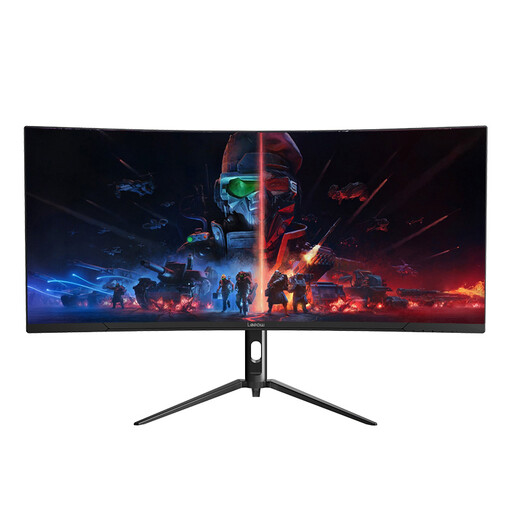
Lepow HC-SJ34MZ5 34-inch curved ultrawide monitor
This 34-inch ultrawide is a smaller screen-size option for arranging frames and a timeline, though its actual dimensions still need to fit your study.
The product title specifies 3440 × 1440 resolution and 165 Hz. If your work depends on a defined colour space or a particular mounting position, check the exact model’s options before choosing it.
Joybuy
Frequently asked questions
Is a 40-inch 5K2K monitor always the right choice for animation frames?
No: its extra pixel area helps when frames, a timeline and references need to remain visible together, but a 34-inch 3440 × 1440 monitor may suit a more limited desk. Check the screen’s physical fit and your computer’s display mode; the Health and Safety Executive advises positioning a display directly in front of you, with its top near eye level and the screen about an arm’s length away.
Which colour specifications matter for animation work?
Start with the project’s delivery colour space, then check the exact monitor’s documented mode and calibration information. BenQ lists sRGB, Rec.709 and P3 coverage for the PD3420Q, while ASUS lists sRGB and Rec.709 coverage and a Delta E < 2 claim for the PA34VCNV; neither a gamut figure nor an HDR label establishes the whole colour-managed workflow.
Can one USB-C cable drive an ultrawide and charge my laptop?
It can if the laptop port and cable support the required video mode and the monitor’s power delivery meets the laptop’s charging needs. Dell lists up to 90 W for the U4025QW, ASUS lists up to 96 W for the PA34VCNV and BenQ lists 65 W for the PD3420Q; check your laptop documentation before relying on a single connection.
What electrical-product information should I check before ordering?
Ask the seller to identify the exact monitor model and the product documentation and markings applicable to the item supplied in Great Britain. Do not assume that an image or documentation for a similar overseas variant describes the monitor you will receive.


