Album designers checking full spreads
You want to see a two-page layout, photo detail and editing controls together, so native resolution and usable screen space matter.


Choose a 5K2K ultrawide if you need a detailed two-page preview with editing panels visible alongside it. A 34-inch 3440 × 1440 creative monitor is worth considering when a smaller screen format and documented colour modes matter more than maximum pixel workspace. In either case, match the model’s colour specifications to your output workflow and check your laptop connection and desk dimensions before ordering.
You want to see a two-page layout, photo detail and editing controls together, so native resolution and usable screen space matter.
You need to compare a monitor’s stated colour spaces and calibration information with the files and output process used for your albums.
You want an ultrawide workspace without unnecessary desk clutter and need to check whether your computer can use the monitor’s video, data and charging connections.
Decide how much of the spread and editing interface you need to see at once, then check colour documentation, laptop compatibility and desk fit.
Consider it when: A detailed spread must remain visible beside editing tools; Dell UK lists its 39.7-inch U4025QW at 5120 × 2160.
Trade-off: Allow room for the large screen and confirm that your computer can drive the intended resolution.
Consider it when: A smaller format and named colour modes are priorities; BenQ UK lists sRGB, Rec.709 and P3 coverage and a factory calibration report for the PD3420Q.
Trade-off: Its 3440 × 1440 resolution leaves less native pixel workspace than the cited 5K2K model.
Consider it when: You favour a taller ultrawide workspace and dock-style connectivity; EIZO lists USB-C docking, LAN and Picture-by-Picture for the EV3895.
Trade-off: Its 3840 × 1600 resolution does not match 5K2K detail; check its colour documentation against your proofing needs.
| Concern | What to check | Who this matters to |
|---|---|---|
| Spread detail and workspace | Compare native resolution, aspect ratio and screen size together; confirm your computer’s output capability. | If I inspect image detail while keeping layout tools open, the available pixels could decide which format I choose. Around 34% of consumers would put spread detail first. |
| Colour confidence | Match the stated colour spaces and calibration information to your files and output process; a monitor specification does not guarantee a printer or lab match. | When I judge photographs before album production, I need to know what a colour claim applies to. For around 33% of consumers, colour confidence would be the primary concern. |
| Laptop and desk connections | Check the laptop’s video mode and charging needs against the monitor’s inputs, USB-C functions and power delivery. | I want to connect my laptop without building a complicated desk setup, but the connection must support the display I choose. That need would come first for around 20% of consumers. |
| Placement and energy information | Check stand depth, screen finish and placement; consult the model’s energy label and product information sheet where applicable. | If the screen dominates my study or catches reflections, its placement matters as much as its size. Around 13% of consumers would prioritise these practical checks. |
A monitor’s USB-C video capability does not establish what a particular laptop or cable can output. The intended resolution or refresh rate may depend on the complete connection.
Check the laptop’s external-display specification, the monitor’s input modes and the cable or dock before ordering.
Width, HDR wording and a stated gamut do not, by themselves, establish how a monitor will match your album-production workflow.
Start with your working colour space, then examine calibration information for the exact model. Assess printer, lab, paper and room-light conditions separately.
Ultrawides of different formats can place different demands on desk width, stand depth and viewing position.
Measure the usable surface, including space behind the stand for cables, and check the exact model’s dimensions before deciding whether to use its stand or a compatible mount.
For electronic displays in scope, GOV.UK sets out energy-information requirements. GOV.UK also explains retailer responsibilities for taking back eligible electrical waste of the same type as a new purchase.
Consult the new model’s energy information and the seller’s take-back instructions before replacing your current screen.
The U4025QW is a large 5K2K option for a detailed spread-and-tools workspace.
The PD3420Q offers a 34-inch route centred on documented colour spaces and factory calibration information.
The EV3895 is a 37.5-inch, 24:10 option for a multi-app workspace and laptop docking.
The 40WP95C-W provides another 39.7-inch 5K2K specification to compare with a creative-desk setup.
These 49-inch and 34-inch ultrawides offer different canvas sizes for arranging an album spread and other windows. Check each model’s colour documentation and your connection requirements before treating it as a proofing display.
 No image available
Consider this wide format if you want to arrange a spread and other windows across one screen and have room for a 49-inch display.
 No image available
Consider this 32:9 format if a broad spread-and-windows layout matters more to you than the vertical resolution of a 5K2K screen.
 No image available
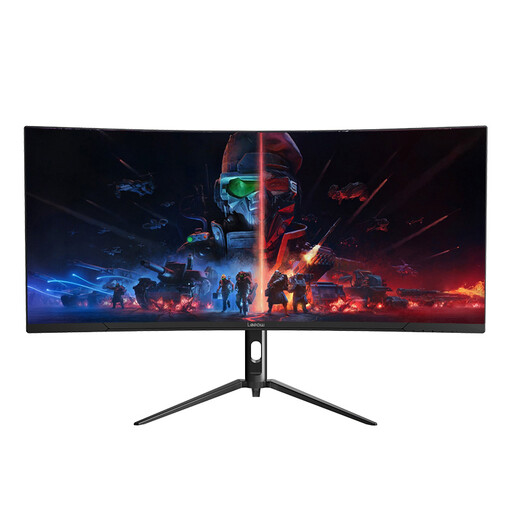
Consider the 34-inch format if you want an ultrawide spread preview without choosing a 49-inch screen.
No: a 3440 × 1440 or 3840 × 1600 ultrawide may suit a layout workflow if its visible spread and tool space meet your needs. Dell UK, BenQ UK and EIZO list those different native resolutions for the U4025QW, PD3420Q and EV3895 respectively; choose 5K2K when the extra pixel workspace is important, not as a substitute for checking colour suitability.
Only when the laptop supports the required video mode and can use the monitor’s power-delivery arrangement. Check the exact laptop, monitor input and cable specifications together rather than relying on the presence of a USB-C socket.
For an electronic display within the UK energy-information rules, consult its model-specific energy label and product information sheet. GOV.UK identifies electronic displays as a covered product category; use the applicable documents when comparing models.
Check the retailer’s electrical-waste take-back route before arranging disposal. GOV.UK explains that retailers subject to the relevant duty must offer take-back for eligible waste equipment of the same type as the item purchased; check how the seller operates its scheme and any collection conditions.
No. Citizens Advice distinguishes a voluntary warranty from legal rights you may have against the seller for faulty or misdescribed goods. Keep the listing and delivery record, and check the warranty’s separate terms if you are considering a warranty claim.