What to check before choosing
Start with the space your frames and timeline need, then check colour requirements and the practical fit of the monitor with your computer and desk.
| Concern |
What to check |
Who this matters to |
| Canvas and pixel workspace |
Compare native resolution and usable screen space, then measure the monitor and stand against your desk. |
When I arrange frames beside a timeline and references, I want to leave those panels visible rather than keep switching between them; around 42% of consumers put usable canvas first. |
| Colour and calibration |
Identify the project’s colour space, then check the exact model’s stated coverage, calibration provision and relevant modes. |
If I have to judge artwork for a specified output colour space, width matters less to me than a suitable colour workflow; roughly 33% of consumers make colour and calibration their primary concern. |
| Connections and desk setup |
Check computer video output, cable and charging compatibility alongside stand placement or mounting requirements. |
At my home-office desk, I need the display to connect to my laptop and sit where I can work comfortably; about 25% of consumers prioritise the connection and setup. |
Joybuy ultrawides for frame-arranging desks
These Joybuy options include a 34-inch screen for a timeline and supporting windows, plus wider 49-inch screens for arranging more windows across the desk. Check vertical workspace, colour requirements and desk fit against your own animation setup.
 No image available
Acer X Predator X49X 49-inch curved QD-OLED monitor
The 32:9 format is relevant if you want to spread frames and supporting windows across a wide canvas.
The product name specifies Double Quad HD, 240 Hz and USB-C. Compare its native vertical resolution with a 5120 × 2160 model if frame detail matters, and confirm desk fit, colour-workflow features and laptop compatibility before choosing it.
Joybuy
 No image available
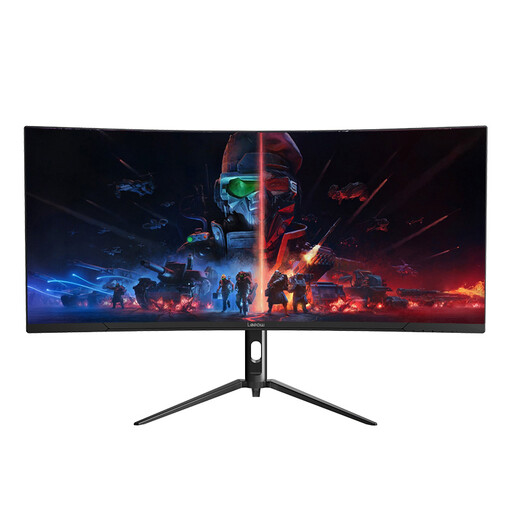
Lepow HC-SJ34MZ5 34-inch curved ultrawide monitor
The 34-inch format suits a desk where you want a timeline and supporting windows without moving to a 49-inch screen.
Its product name specifies 3440 × 1440 resolution and 165 Hz. Check its colour-space and calibration details against your project, along with its physical dimensions and intended laptop connection.
Joybuy
 No image available
CRUA 49-inch curved 5120 × 1440 monitor, black
The 32:9 screen is an option for placing many windows across one wide desktop, but its 1440-pixel vertical resolution differs from the 2160-pixel 5K2K models discussed above.
The product name specifies 165 Hz, HDMI 2.1, DisplayPort 1.4 and a 75 × 75 mm VESA mount. Check mount and desk capacity, required colour-workflow features and the connection your computer needs.
Joybuy
Questions about ultrawides for animation
Should I choose a 34-inch ultrawide or a 39.7-inch 5K2K screen?
Choose a 34-inch 3440 × 1440 format if a timeline and supporting windows fit your workflow and you prefer a smaller screen. A 39.7-inch 5120 × 2160 model gives you more pixel workspace for frames and creative panels, provided your desk has room and your computer supports the intended display mode.
Is a wide colour gamut enough for animation work?
No: the stated gamut must be relevant to your project’s required colour space, and you should check calibration provision and workflow settings too. BenQ lists sRGB, Rec.709 and P3 coverage plus a factory calibration report for the PD3420Q; LG lists P3 coverage and hardware-calibration readiness for the 40WP95CP-W but says the calibrator is not included.
Can one USB-C or Thunderbolt cable run the screen and charge my laptop?
It can when the monitor, laptop and cable support the required video and charging arrangement. LG specifies Thunderbolt 4 and up to 96 W charging for the 40WP95CP-W, while Dell specifies USB-C video and data with power delivery up to 90 W for the U4025QW; compare those limits with your laptop’s requirements.
Do UK home-office rules call for a particular ultrawide size?
No particular ultrawide size is prescribed in the Health and Safety Executive’s display-screen equipment guidance. The guidance says employers must assess and reduce workstation risks for workers who use display-screen equipment daily in continuous periods of an hour or more, including when they work from home; buying a monitor does not replace that assessment.
What should I check before putting an ultrawide on a monitor arm?
Check the exact monitor’s mounting pattern and weight without its stand against the arm’s supported load, as well as the available desk space. BenQ specifies a 100 × 100 mm VESA mount and a 6.9 kg weight without the base for the PD3420Q; those figures do not apply to other models.


