
24/7 Customer Support

Free returns

Same-day & Next-day Delivery

Quality Guaranteed

Unlock Your Welcome Offers: FREE Delivery | Up to 80% OFF | Free 30-day JoyPlus trial
Download the APP
A close-fitting training top can make a noticeable difference to comfort during lifting, running, HIIT or team sport sessions. However, choosing the right Under Armour men's HeatGear compression short sleeve shirt requires more than selecting a familiar logo and your usual T-shirt size.
The main risks are an overly loose fit that rides up, fabric that feels too warm during hard sessions, and vague “performance” claims that do not tell you the fabric weight, composition or ventilation details. Use the checks below to compare the options more practically before buying.
A standard athletic T-shirt may be close-fitting but is not necessarily designed to sit against the skin. A proper men's gym compression shirt should specify a compression or ultra-tight fit and provide enough stretch for movement.
If the garment hangs away from your chest or bunches beneath a second layer, it may not work well as a short sleeve baselayer. Conversely, sizing down simply to make a loose top tighter can create uncomfortable pressure and restrict movement.
A lightweight shirt is not automatically cooler, while a thicker fabric is not automatically more supportive. Fabric weight needs to be considered alongside ventilation, stretch and the activity you plan to do.
For example, a 155gsm HeatGear top is designed as a lightweight performance layer, while the 220gsm HeatGear OG version offers a thicker construction. The latter may suit users who prefer more fabric coverage and a denser feel, whereas the lighter option may be more practical for hot indoor gym sessions.
Moisture-wicking fabric helps move perspiration away from the skin, but it cannot prevent sweating. Your environment, session intensity and outer layers still affect comfort. Look for clear information about quick-drying fabric, ventilation panels and the material composition rather than relying only on phrases such as “cooling” or “performance”.
Most of the options in this range use a polyester-elastane blend. Polyester is commonly used for quick drying, while elastane provides stretch and recovery. The standard HeatGear compression shirts listed here use 83% polyester and 17% elastane; the Carbon Heather style uses 84% polyester and 16% elastane.
A four-way stretch sports shirt should move with the shoulders, chest and torso during presses, rows, sprints and overhead movements. Check that the product description specifically mentions four-way stretch instead of assuming that every sports fabric has the same flexibility.
Compression clothing should fit closely without causing sharp pressure, numbness or restricted breathing. Measure around the fullest part of your chest while keeping the tape level, then compare the result with the product’s own chart.
The 155gsm HeatGear compression short sleeve styles cover XS to 3XL, with chest measurements from 33–35 inches for XS through to 49–52 inches for XXL in the supplied chart. The HeatGear OG compression style extends from XS to 5XL, with chest measurements from 31–34 inches to 60–64 inches.
Charts differ between styles, so do not transfer a size from one model to another without checking the relevant listing.
Flatlock seams can reduce raised edges where fabric panels meet, which may help limit rubbing beneath a football shirt, running top or training vest. Strategic mesh panels, such as those listed under the arms and across the back on selected 155gsm designs, can provide targeted airflow.
If you intend to wear the shirt beneath other clothing, also check the neckline and sleeve length. A mock-neck design offers additional coverage, while a conventional crew neck may feel less noticeable under a training top.
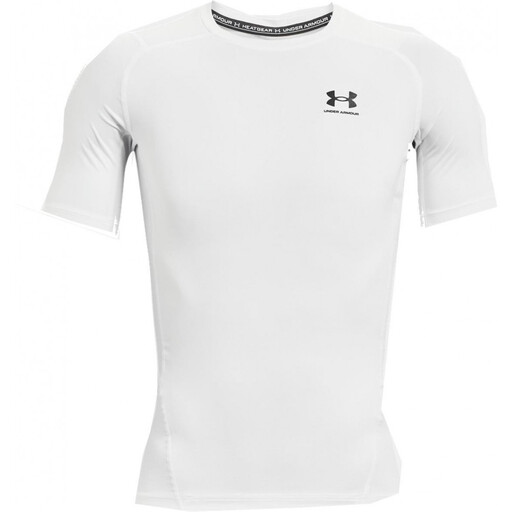
Why This Fits Their Persona: A straightforward lightweight option for gym newcomers who want an ultra-tight training layer for weights, cardio or indoor classes.
Its listed compression fit, 155gsm construction and four-way stretch make the intended fit clearer than a generic fitted tee description.
83% polyester and 17% elastane; lightweight HeatGear fabric with listed underarm and back ventilation.
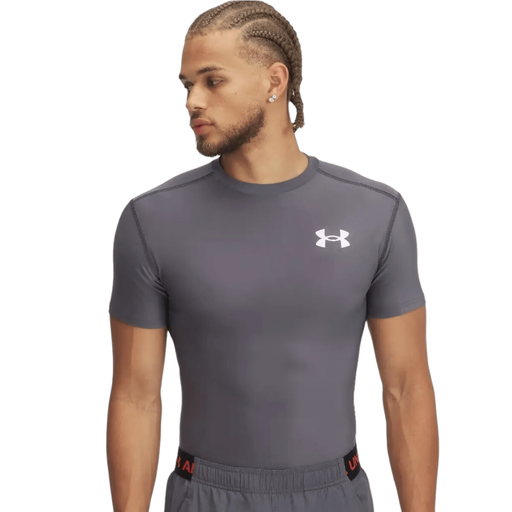
Why This Fits Their Persona: Suits regular lifters and athletes who prefer a denser-feeling shirt for demanding sessions or as a standalone training top.
The product listing states the fabric weight, flatlock seams, four-way stretch and quick-drying properties, giving useful details beyond general marketing language.
220gsm HeatGear fabric; available sizing listed from XS to 5XL.
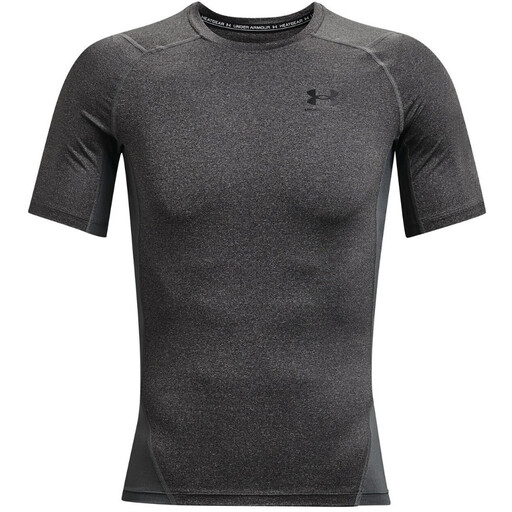
Why This Fits Their Persona: A practical choice for frequent training, commuting to the gym and users who want a muted Carbon Heather/Black colourway.
The listing identifies the 150gsm fabric, material blend, compression fit and anti-odour treatment, making it easier to compare with other HeatGear styles.
150gsm lightweight fabric; listed sizes S to XXL with chest and waist measurements.
Follow the care instructions for the specific colour and model. Several styles specify a cold machine wash, washing inside out, avoiding bleach and not ironing or dry-cleaning. Some recommend low tumble drying, while the lighter 155gsm versions specify line drying in the shade.
Avoid fabric softener where the product instructions prohibit it, as residue can affect the feel of technical fabrics. Rotate between more than one shirt if you train frequently; this allows each garment to dry fully between uses and reduces unnecessary wash-and-wear stress.
We have compiled a complete, real-time list of products that fully satisfy these strict selection criteria and UK safety regulations.
Yes, it can work as a short sleeve baselayer for indoor or outdoor running. In cooler weather, wear it beneath a lightweight running top; in warmer conditions, check for ventilation panels and choose a fabric weight that suits your pace and environment.
Not necessarily. Compression garments are intentionally close-fitting, so use the chest and waist measurements on the individual product page. If your measurements fall between sizes, consider how much compression you prefer and check the retailer’s returns information before ordering.
Lifespan depends on washing frequency, friction from equipment, drying method and how often the garment is rotated. Following the care label, avoiding excessive heat and allowing the fabric to dry completely can help preserve stretch and fit. Inspect the seams and elastane recovery periodically; persistent sagging or pulled stitching indicates that replacement may be sensible.