
24/7 Customer Support

Free returns

Same-day & Next-day Delivery

Quality Guaranteed

Unlock Your Welcome Offers: FREE Delivery | Up to 80% OFF | Free 30-day JoyPlus trial
Download the APP
An under-counter fridge can solve a genuine storage problem in a small kitchen, flat, office or utility room. However, compact refrigeration comes in several forms, from a full-height larder fridge to a tabletop fridge or portable mini fridge. Choosing by appearance or capacity alone can lead to an appliance that does not fit, costs more to run than expected or cannot store the food you actually buy.
This guide highlights the common buying traps, the measurements that matter and suitable options for different UK households.
A fridge may be advertised as compact while still being too deep for your worktop, cupboard run or walkway. Check the complete width, depth and height, not just the headline capacity. Also allow space for ventilation, the power cable and door opening.
A model measuring 545 × 562 × 850 mm, for example, needs more room than its 55 cm width alone suggests.
A compressor refrigerator designed for household food storage is different from a small thermoelectric cooler. Portable mini fridges can be convenient for cans, snacks or skincare, but cooling depends on the surrounding temperature and they may not reach the same performance as a conventional fridge.
The AstroAI 4-litre and 6-litre models are designed to cool below ambient temperature and cannot freeze. They are therefore more suitable for drinks, snacks and personal items than for replacing a main food refrigerator.
UK refrigeration appliances use the A–G energy label. An E-rated fridge is not automatically the cheapest to operate in every comparison. Check the stated annual energy consumption in kWh, alongside capacity and intended use. A larger fridge may use more electricity overall but provide more useful storage per appliance.
Noise also matters. A model listed at 39–41 dB may be more suitable for an open-plan kitchen, bedroom or office than a louder appliance, although placement and flooring can affect perceived sound.
Measure the available opening in three directions:
Freestanding under-counter fridges are not automatically suitable for built-in installation. Integrated models require compatible cabinetry, ventilation and door-fixing arrangements.
Capacity should match your shopping habits. An 88L fridge may suit one person, a bedroom or an office, while a 122–126L fridge offers more practical room for household groceries. A 241L larder fridge is a taller option for families or as a dedicated fresh-food appliance.
Look beyond litres and check the internal layout:
A freezerless fridge provides more dedicated fresh-food space, but it will not suit households that need frozen storage. If that is your priority, compare models with an icebox or consider a separate freezer.
A thermostat with several settings gives more control over different loads and room conditions. Reversible doors can make a major difference in a narrow kitchen or student room. Adjustable feet help level the appliance on uneven floors, while removable shelves and door seals simplify cleaning.
Before first use, place the fridge upright on a stable surface and follow the supplied settling-time instructions after transport. Keep air circulation clear, avoid overloading shelves and do not use sharp objects to remove ice.
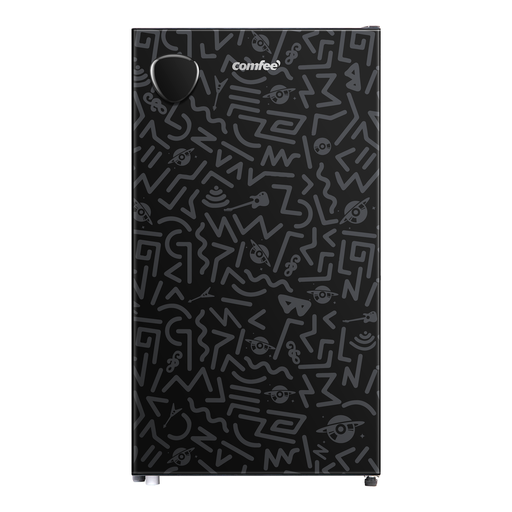
Why This Fits Their Persona: Its 44.5 cm width and 82.7 cm height suit smaller kitchens, studio flats, offices and bedrooms where a small footprint is important.
The stated dimensions and 88L household-food capacity make it easier to assess fit and purpose than a generic portable cooler.
Reversible door, removable glass shelves, crisper drawer, interior light and E energy class.
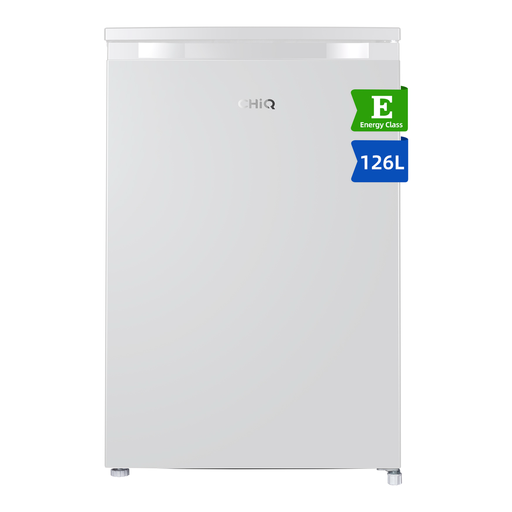
Why This Fits Their Persona: It combines a compact freestanding footprint with more fresh-food storage for couples, small families and utility rooms.
Its 55 cm width, 850 mm height and 39 dB noise specification provide useful information for planning a small kitchen.
126L capacity, seven temperature settings, two shelves, crisper drawer, three door bins and LED lighting.
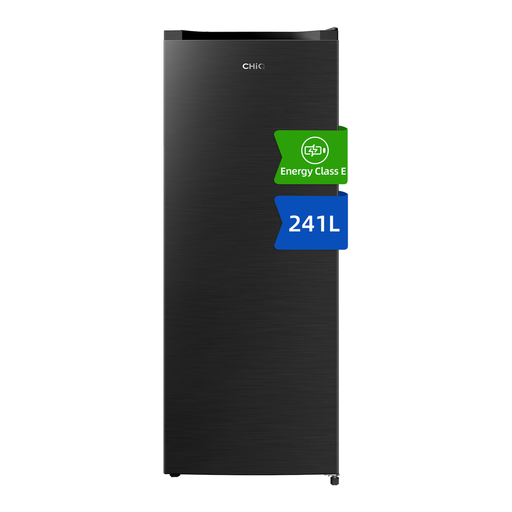
Why This Fits Their Persona: This taller 54 cm-wide appliance is intended for households needing substantial fresh-food storage without a standard-width footprint.
The listed 1,440 mm height and 550 mm depth make clear that this is not a conventional under-worktop model.
241L larder capacity, adjustable glass shelves, salad crisper, reversible door and E energy class.

Why This Fits Their Persona: Its compact format suits a bedroom, desk, car journey or skincare station where a full household fridge would be impractical.
The 6L capacity and thermoelectric design clearly identify it as a personal cooler, not a substitute for a food-storage fridge.
Holds up to eight cans, offers AC and 12V DC power options and includes cooling and warming modes.
We have compiled a complete, real-time list of products that fully satisfy these strict selection criteria and UK safety regulations.
No. Check the appliance height, depth, ventilation requirements and door clearance. A freestanding model should not be enclosed unless the manufacturer specifically permits that installation. Also confirm that the worktop and floor can support the appliance securely.
The energy class alone does not provide the full running-cost estimate. Compare the stated annual kWh consumption, capacity and how often the door will be opened. Keeping the appliance level, maintaining clear ventilation and checking the door seal can support efficient operation.
Lifespan depends on build quality, usage, ventilation, room temperature and maintenance. Regular cleaning, avoiding overloading and allowing adequate airflow can reduce unnecessary strain. Always follow the manufacturer’s installation, cleaning and disposal instructions.