
24/7 Customer Support

Free returns

Same-day & Next-day Delivery

Quality Guaranteed

Unlock Your Welcome Offers: FREE Delivery | Up to 80% OFF | Free 30-day JoyPlus trial
Download the APP
Finding the right under-counter fridge can feel like a puzzle, especially when you're trying to maximise storage in a compact UK kitchen, a student flat or a busy office. While many models look similar, their internal design and performance can vary dramatically. As a Joybuy Product Recommendation Officer, my role is to help you see past the marketing jargon and focus on what truly matters for your space and needs.
Before you buy, be aware of a few common pitfalls that can lead to disappointment. Many buyers find their new compact fridge isn't as practical as they'd hoped due to these overlooked issues:
To avoid these issues, focus on a few core specifications. Getting these right will ensure your new appliance is a help, not a hindrance.
The most common mistake is measuring only the width of the space. A standard 55cm wide fridge might seem to fit perfectly, but all refrigeration appliances require adequate ventilation to function efficiently and safely. Without it, the compressor works harder, increasing energy consumption and shortening the appliance's lifespan.
Since 2021, the UK has used a simpler A-G energy rating scale, where A is the most efficient. Many older A+ or A++ models now fall into the D, E or F categories. An E rated fridge is a very common sight on the market today, representing a solid balance between purchase price and running costs. It offers reliable efficiency without the premium price tag of the highest-rated models, making it a sensible choice for most households.
Your choice here directly impacts your usable storage space.
To help you match an appliance to your specific needs, here are a few recommendations based on common UK user profiles.

Why This Fits Their Persona: This is a pure freestanding larder fridge, perfect for small families or couples in compact kitchens who need to maximise fresh food storage. Its design prioritises usable space for groceries, not frozen goods.
By dedicating its entire volume to refrigeration, it directly counters the "unusable capacity" pitfall. The layout is straightforward, with fixed shelves and a large crisper, ensuring the stated capacity is practical.
Generous Capacity: Offers a large internal space for its under-counter footprint.
Practical Layout: Includes a full-width vegetable crisper to keep produce fresh.
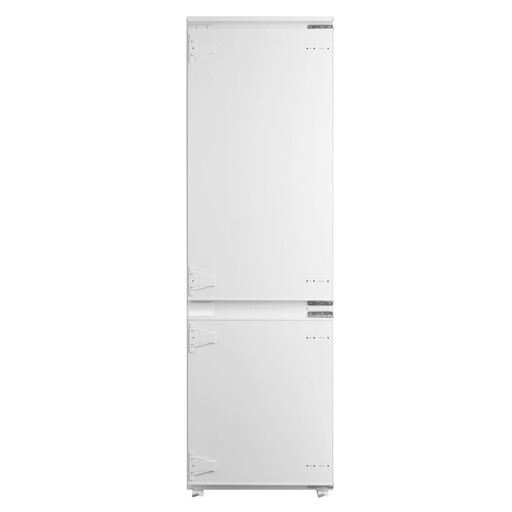
Why This Fits Their Persona: Ideal for a student fridge or for those in studio flats. This model provides both refrigeration and a 4-star rated ice box for storing frozen essentials, offering all-in-one convenience in a single small fridge.
With a specified noise level of just 39 dB(A), it directly addresses the "disruptive hum" pitfall. This makes it suitable for open-plan living spaces, bedrooms or quiet offices where noise is a primary concern.
4-Star Ice Box: Provides genuine short-term freezing capability, unlike basic cooler compartments.
Quiet Operation: Low noise output is ideal for living and working spaces.
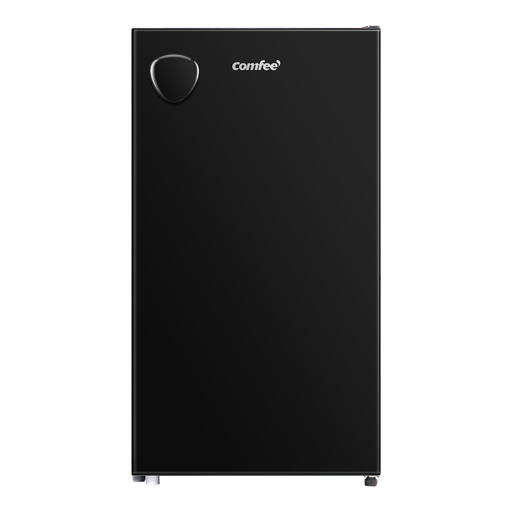
Why This Fits Their Persona: A highly practical and compact 88L fridge for those needing a simple, effective solution for an office, bedroom or first flat. It focuses on core functionality and flexibility at an accessible price point.
This model tackles the "impractical features" trap with a user-focused design. The removable handle and easily reversible door make installation and relocation genuinely straightforward for the average user.
Flexible Installation: The combination of a reversible door, adjustable feet and a removable handle simplifies fitting it into tight or awkward spaces.
Compact Design: Its smaller 44.5cm width is ideal for very narrow gaps.
We have compiled a complete, real-time list of products that fully satisfy these strict selection criteria and UK safety regulations.
The running cost of an E rated fridge depends on its exact size, usage and your electricity tariff. However, as a general guide, a typical E-rated under-counter model uses around 100-150 kWh of electricity per year. Based on current average UK electricity prices, this translates to a very manageable annual running cost, often in the range of ?30-?50. Always check the specific kWh/annum figure on the energy label for a more precise estimate.
For optimal performance and energy efficiency, it is crucial to leave adequate space for air to circulate. A good guideline is to leave at least 5cm at the back for the heat exchange coils and 2-3cm on both sides and the top. Blocking these gaps can cause the fridge to overheat, work harder and consume more energy.
An under-counter fridge with an ice box typically has a 1-star or 2-star rating. This means it's designed for making ice and storing pre-frozen food for a few days to a week. A proper freezer compartment, often found in larger fridge-freezers, will have a 3-star or 4-star rating, meaning it can safely freeze fresh food and store it for several months. For long-term frozen storage, an ice box is not a suitable substitute.