
24/7 Customer Support

Free returns

Same-day & Next-day Delivery

Quality Guaranteed

Unlock Your Welcome Offers: FREE Delivery | Up to 80% OFF | Free 30-day JoyPlus trial
Download the APP
Under-counter fridges can solve several space problems: they fit beneath a worktop, suit compact kitchens and studio flats, and provide useful extra storage in offices, utility rooms or rental properties. However, a low price or polished product description does not always tell you whether an appliance will fit your room or suit your shopping habits.
The most common buying mistakes are straightforward:
Start by measuring the available recess, including:
A typical built-under fridge is approximately 82cm high, but widths and depths vary. A freestanding under-counter refrigerator may have adjustable feet and a finished exterior, allowing it to stand independently beneath a worktop. An integrated model may require a matching furniture door and either a sliding hinge or fixed-door fitting.
Do not rely on the phrase “under-counter” alone. Always compare the manufacturer’s stated appliance dimensions with the actual opening.
Capacity should reflect how often you shop and how much fresh food you store. Small models may be described as an 88L fridge, while larger appliances can provide 122L, 134L or 170L of fresh-food space. A tall larder fridge can offer considerably more capacity but will not fit beneath a standard worktop.
Consider the usable layout rather than litres alone:
For a small kitchen fridge used by one person, an 88L model may be sufficient. Couples or small families may prefer a 122L, 134L or 170L larder fridge, depending on the available space.
The UK energy label runs from A to G, with E-rated fridges appearing frequently in the compact-appliance market. Compare the stated annual kWh consumption where available, rather than assuming two E-rated models will use the same amount of electricity.
Noise is also worth checking in open-plan homes, bedrooms and offices. Models listed at around 35–40dB may be more suitable for quiet surroundings than an appliance with a higher stated noise level.
A reversible-door fridge can be installed with a left- or right-hand opening, but check whether the change is user-installable or requires a qualified technician. For integrated appliances, confirm that the hinge type matches your cabinet design. A sliding hinge allows the furniture door and appliance door to move on connected runners, but the fitting must be aligned correctly.
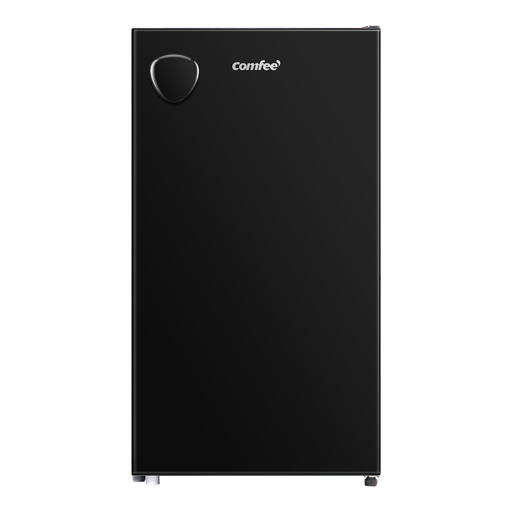
Why This Fits Their Persona: Its compact 44.5cm width and 82.7cm height suit renters, students, bedrooms, offices and studio flats where space is limited.
The stated dimensions make space planning easier, while the reversible door avoids being locked into one opening direction.
88L capacity, removable glass shelves, interior light, crisper drawer and a separate cooler zone.

Why This Fits Their Persona: This built-under larder fridge is designed for a fitted kitchen beneath the worktop, with electronic controls and a clean integrated appearance behind a furniture door.
Its 820mm height and 598mm width are clearly specified, helping buyers check a standard under-worktop opening before ordering.
134L capacity, 35dB stated noise level, adjustable safety-glass shelves, MultiBox XXL drawer and SuperCooling function.
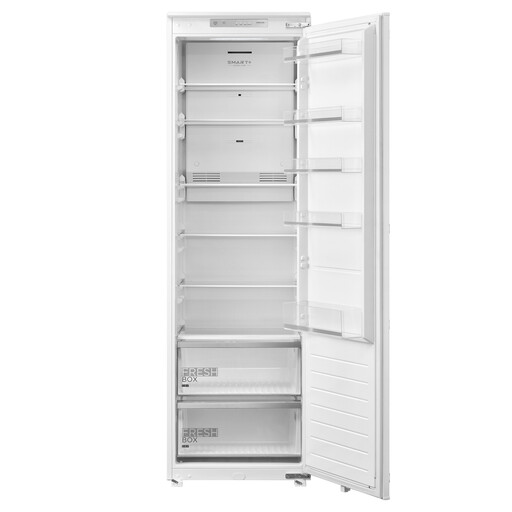
Why This Fits Their Persona: Its tall 178.5cm format is intended for larger households, frequent fresh-food shoppers and cooks who need dedicated refrigeration rather than an under-worktop appliance.
The product is identified as a tall integrated larder fridge, so buyers are less likely to mistake its capacity for a compact under-counter format.
304L net capacity, Total No Frost, Multi-Air Flow, five glass shelves, humidity-controlled crisper and reversible sliding-hinge door.
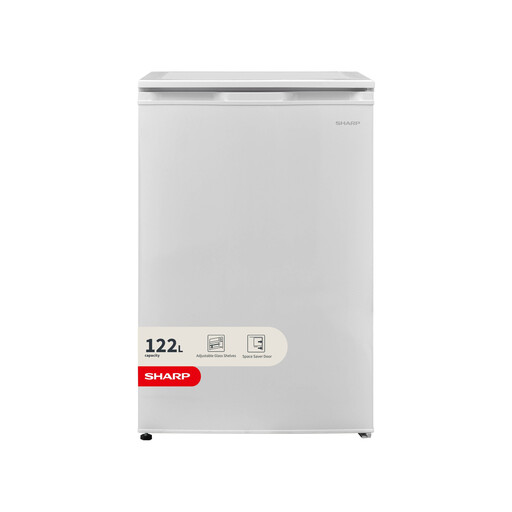
Why This Fits Their Persona: It combines a compact 54cm width with an icebox, making it suitable for couples, flats and secondary kitchen use where occasional frozen storage is useful.
The listing separates total capacity from the 105L fridge capacity and identifies the appliance as manual-defrost, clarifying what the icebox can and cannot do.
122L total capacity, reversible door, two adjustable glass shelves, LED lighting and stated annual consumption of 145kWh.
Before delivery, confirm that the electrical socket is accessible and that ventilation openings will remain clear. Integrated and built-under appliances should be installed according to the manufacturer’s instructions, with the cabinet, plinth and hinge arrangement correctly prepared. Never block ventilation or place the fridge beside a significant heat source.
For ongoing efficiency, allow hot food to cool before refrigeration, avoid overfilling shelves and check that the door seal is clean and undamaged. Manual-defrost models should be defrosted when ice build-up becomes noticeable, following the appliance instructions. These steps help maintain airflow and reduce avoidable strain on the appliance.
We have compiled a complete, real-time list of products that fully satisfy these strict selection criteria and UK safety regulations.
A built-under fridge is designed to sit beneath a worktop and may use a recessed plinth for ventilation. An integrated under-counter fridge is fitted inside kitchen cabinetry and is concealed by a furniture door. Check the installation instructions and hinge type before purchasing.
Running cost depends on annual electricity consumption, appliance size, usage, room temperature and energy rating. Compare the stated kWh-per-year figure on the energy label or product specification rather than relying on the energy class alone.
Lifespan varies according to construction, installation, cleaning, ventilation and usage. Keeping the appliance level, maintaining clear airflow, cleaning the door seal and following the manufacturer’s maintenance guidance can help support reliable operation. Always check the warranty terms for parts, labour and registration requirements.