
24/7 Customer Support

Free returns

Same-day & Next-day Delivery

Quality Guaranteed

Unlock Your Welcome Offers: FREE Delivery | Up to 80% OFF | Free 30-day JoyPlus trial
Download the APP
As a Joybuy Product Recommendation Officer, my role is to help you navigate the crowded market of home fitness equipment. With the rise of remote and hybrid work, many of us are looking for ways to stay active without sacrificing productivity. The under desk treadmill has emerged as a popular solution, but choosing the right one can be tricky. This guide will help you sidestep common purchasing mistakes and identify the key features that truly matter for a home office setup.
Before you add a walking pad to your basket, it's important to be aware of a few common issues that can turn a promising purchase into a piece of clutter. Many models on the market are plagued by design flaws that aren't obvious from a product photo.
under desk walker is its ability to be stored away easily. While many are short in length, their height is often overlooked. A machine that is more than 15cm tall is unlikely to slide under a standard desk or sofa, defeating its primary purpose as a space-saving device.home office treadmill if it's too loud to use during a video call or while concentrating on a report. Many manufacturers don't prominently display the noise level (measured in decibels), and a loud motor can quickly make the treadmill an unwelcome distraction for you and anyone else at home.To ensure you get a machine that fits your workspace and lifestyle, focus on these non-negotiable specifications. Analysing these details will help you find a reliable walking treadmill that serves you well for years.
treadmill for standing desk, the dimensions are paramount. Measure the clearance under your desk and sofa. A genuinely slim treadmill should have a folded or flat height of under 15cm. Also, check for built-in transport wheels, which are essential for moving the machine without straining your back.Instead of a simple list, we match products to specific user needs. Based on the criteria of durability, genuine compactness and practicality for a home office, here is a standout option.
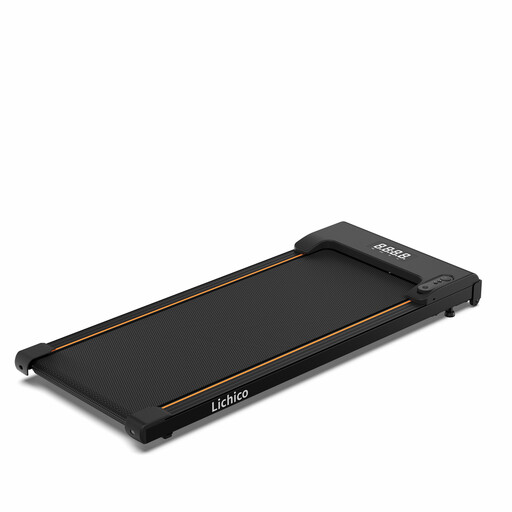
Why This Fits Their Persona: This user works primarily from home, often at a standing desk, and lives in a flat or house where space is at a premium. They need a reliable way to increase their daily step count without dedicating a large area to fitness equipment.
It directly counters the "strong frame" myth with a specified steel frame and a clear 130kg maximum user capacity. It also avoids the "compact illusion" with a genuinely slim height of just 10.5cm, making it easy to store under most desks and sofas.
Its main advantage is the combination of a robust, high-capacity frame with a truly low-profile design, a pairing not always found in this price range. It is built specifically for walking while working.
We have compiled a complete, real-time list of products that fully satisfy these strict selection criteria and UK safety regulations.
Here are answers to a few common questions UK buyers have about integrating a compact treadmill for home into their daily routine.
The running cost is surprisingly low. A typical walking pad motor uses between 500 and 750 watts. If you were to walk for two hours a day, you would use approximately 1 to 1.5 kilowatt-hours (kWh) of electricity. Based on average UK electricity prices (around 28p per kWh as of mid-2026), this works out to just 28p to 42p per day, a small price for a significant boost in daily activity.
Yes, but it depends on the task. Walking at a slow, steady pace (e.g., 2-3 km/h) is ideal for activities that don't require intense concentration or fine motor skills. This includes reading documents, answering emails or listening in on webinars. For tasks that require typing detailed reports or precise mouse movements, you may find it easier to pause the treadmill.
With proper care, a good quality under desk treadmill should last for several years of regular use. The key to longevity is maintenance. This involves keeping the belt clean from dust and debris, checking the belt alignment periodically and lubricating the deck according to the manufacturer's instructions (usually every few months). Storing it in a dry, flat location also prevents unnecessary wear and tear.