
24/7 Customer Support

Free returns

Same-day & Next-day Delivery

Quality Guaranteed

Unlock Your Welcome Offers: FREE Delivery | Up to 80% OFF | Free 30-day JoyPlus trial
Download the APP
Working from home has its perks, but the line between the living room and the office has blurred, often leading to a more sedentary day. If you're looking to combat the negative effects of sitting for hours, an under desk treadmill can seem like the perfect solution. However, the market is filled with options, and it's easy to make a purchase you'll later regret.
As a Joybuy Product Recommendation Officer, my role is to help you see past the marketing clutter. Before you invest in a piece of home office exercise equipment, let's look at the common pitfalls that catch many UK buyers out and how you can avoid them.
To ensure you get a machine that genuinely enhances your workday, focus on these non-negotiable specifications.
The heart of any treadmill is its motor. For consistent use, look for a model with a durable motor designed for steady, low-speed operation. The most critical factor for a shared home or office environment is the noise output, measured in decibels (dB). A lower dB rating is essential for a machine that won't disrupt your concentration or phone calls. A quality under desk walking treadmill should operate at a noise level that blends into the background.
This is a direct indicator of durability and stability. A frame made from heavy-duty steel will provide a much more secure and lasting platform than one made from cheaper materials. Pay close attention to the maximum user capacity. A higher rating, such as 130 kg, generally signifies a more robust build quality overall, providing a stable experience even for lighter individuals and ensuring the machine can handle years of daily steps.
Before you click "buy," get out a tape measure. Check the treadmill's exact dimensions (length, width and height) to confirm it will fit under your standing desk and in your intended storage space. For a truly practical compact treadmill, look for features like built-in wheels, which make it far easier to move and store when your workday is done. This is a key feature for anyone searching for a slim treadmill in the UK where living space can be at a premium.
Instead of a one-size-fits-all approach, we match equipment to different needs and spaces. Here are some recommendations based on common user profiles.
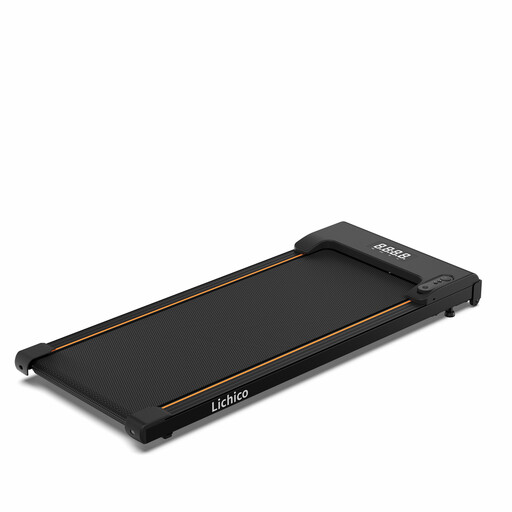
Why This Fits Their Persona: This is for the user whose primary goal is walking while working. Its slim profile is specifically designed to be used with a treadmill for standing desk setups, allowing for easy integration into a productive home office.
It directly counters the flimsy frame pitfall with its durable steel frame and a high maximum capacity of 130KG, indicating robust construction that promises stability and longevity.
The combination of a high weight limit and a compact 120cm x 50cm x 10.5cm footprint makes it a reliable and practical choice for daily use in a typical UK home or flat.
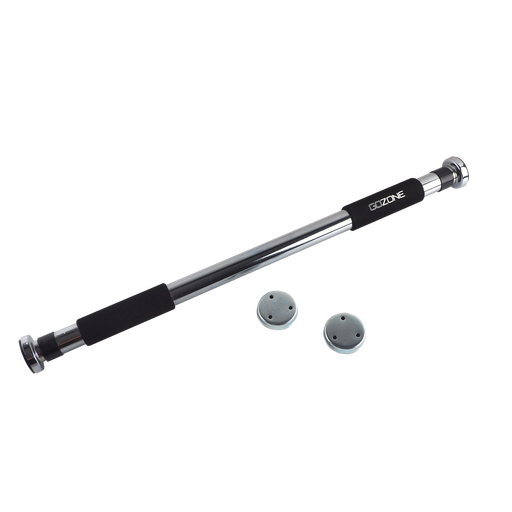
Why This Fits Their Persona: For those who want to build strength between meetings but have zero floor space for equipment. This bar uses the existing structure of your home, offering an effective workout without the clutter.
It completely sidesteps the "compact deception" pitfall. As a no-screw, portable bar, it requires no permanent installation or floor space, making it a genuinely practical tool for small living areas.
The adjustable width (62-91cm) fits most UK doorframes, and its heavy-duty steel construction supports up to 300 pounds (approx. 136 kg), offering a secure and versatile upper-body workout.
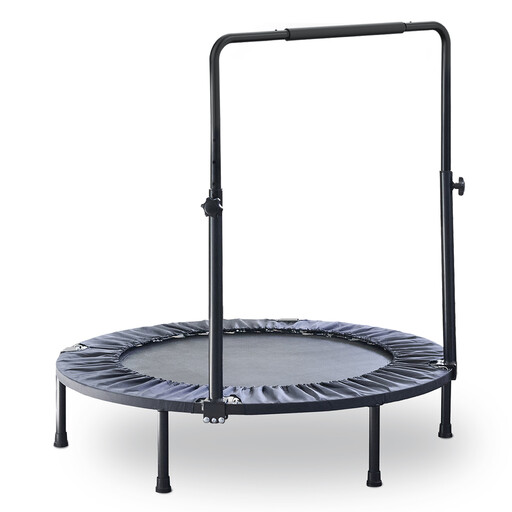
Why This Fits Their Persona: Ideal for someone who finds walking monotonous and wants a fun, low-impact cardio machine. Rebounding is excellent for light cardio and can be less stressful on the knees and ankles than walking on a hard surface.
Its foldable design directly addresses the storage pitfall. Unlike bulky equipment that becomes a permanent obstacle, this can be easily tucked away, making it perfect for multi-use living spaces.
It comes pre-assembled, removing setup frustrations. The adjustable handrail provides extra stability for users of different heights, making it a safe and accessible option for home fitness.
We have compiled a complete, real-time list of products that fully satisfy these strict selection criteria and UK safety regulations.
The energy consumption of a walking pad is surprisingly low. At a typical walking speed, most models use a similar amount of electricity to a small desk fan or a laptop. You can expect the running cost to be just a few pence per hour, so it will not have a noticeable impact on your electricity bill.
Yes, absolutely. The key is to maintain a slow and steady pace, typically between 1 and 3 kilometres per hour. At this speed, the motion becomes automatic, much like breathing and does not require active concentration. Many users find that the gentle movement can actually improve focus and combat afternoon slumps. It's about introducing light activity, not performing an intense workout.
The lifespan depends heavily on the build quality and how it's used. A model with a robust steel frame, a quality motor and a high maximum weight capacity will last significantly longer than a cheaper, lighter-duty alternative. With regular, simple maintenance—such as keeping the belt clean and aligned as per the user manual—a well-chosen machine can provide many years of reliable service.