Narrow-gap kitchen organisers
If under-worktop space is tight, the fridge needs to fit the opening while leaving room for its door to open. The arrangement of bottles and jars matters as much as the stated capacity.


Choose a slimline freestanding undercounter larder fridge if a narrow gap is the main constraint, then check whether its shelves and door storage accommodate your dressing bottles and jars. A wider or integrated model makes sense only if the measured space and installation allow it; choose an icebox only if frozen storage matters enough to give up some chilled space.
If under-worktop space is tight, the fridge needs to fit the opening while leaving room for its door to open. The arrangement of bottles and jars matters as much as the stated capacity.
If you prepare several bottles or jars at once, look at shelf adjustment, door storage and the chilled space left for other food.
If the fridge needs to sit behind a furniture door, an integrated undercounter model requires compatible cabinetry and an installation plan, not just enough room beneath the worktop.
For dressing storage in a small kitchen, establish the available appliance space and your container layout before deciding whether a freezer compartment is worth the chilled space it occupies.
| Concern | Buying checks | Who this matters to |
|---|---|---|
| Fit and installation | Measure width, height and depth; check the door swing, socket position and ventilation clearances in the model instructions. | If my under-worktop gap is narrow, I need a fridge whose full dimensions and door movement work in that space. Around 40% of consumers would put fit and installation first. |
| Chilled organisation | Compare adjustable shelf positions and door storage with the height and number of your bottles and jars. | When I make several dressings, I want their containers upright and accessible without crowding everyday food. Roughly 40% of consumers would prioritise chilled organisation. |
| Freezer flexibility | Check chilled and frozen compartment volumes separately before choosing an icebox model. | If I also need frozen storage, I can accept less room for chilled ingredients and dressing. About 20% of consumers would make freezer flexibility their primary concern. |
Undercounter does not describe one width. Montpellier lists its MDAUCL48W at 475 mm wide, while Beko lists its integrated BLS4682 at 595 mm wide; neither figure tells you whether the door can open in your kitchen.
Measure the route into the kitchen and the full appliance bay, then check door-opening and ventilation requirements against the chosen model’s installation instructions.
A freezer compartment changes how much room remains for chilled containers. Hotpoint lists a 13 L frozen compartment and 101 L chilled volume for its H55V1 112W UK.
If dressing, fresh ingredients and other chilled food are the priority, compare the chilled volume and layout with an all-larder model before choosing an icebox.
Ingredients and preparation differ between recipes, so a single number of refrigerated days is not suitable for every dressing. NHS guidance says a fridge used for chilled ready-to-eat food should be set to 5°C or below.
Follow recipe-specific storage instructions where available, label batches with their preparation date and take particular care with ingredients that require chilling.
A tight installation still needs the airflow specified for the appliance. Electrical Safety First advises placing a fridge near a wall socket rather than using an extension lead.
Check the model’s installation instructions, keep required ventilation space clear and plan for a nearby wall socket.
These brands offer different undercounter formats; compare the particular model and its installation requirements rather than assuming one layout applies across a brand.
A reference point for a narrow freestanding undercounter larder fridge.
Another narrow freestanding undercounter option to compare for bottle storage.
Models to compare when a wider undercounter space permits either an all-larder layout or a small freezer compartment.
Separate slim freestanding and wider integrated undercounter options.
These choices cover a compact freestanding fridge, a wider freestanding larder fridge and a built-under fridge. Match the format to your measured space, then check how your dressing containers will fit inside.
 No image available
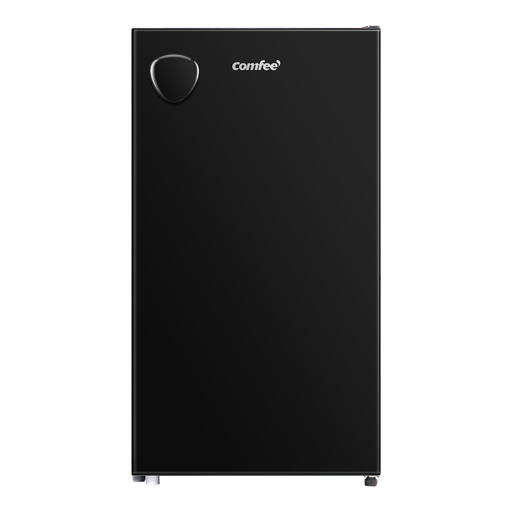
Consider this freestanding model if a compact under-worktop arrangement is your priority; check the available space and whether your bottles fit upright.
The product name specifies 88 L capacity, removable glass shelves and a reversible door.
Its cooler zone is for short-term cooling: the product information says not to leave items there for more than two hours.
 No image available
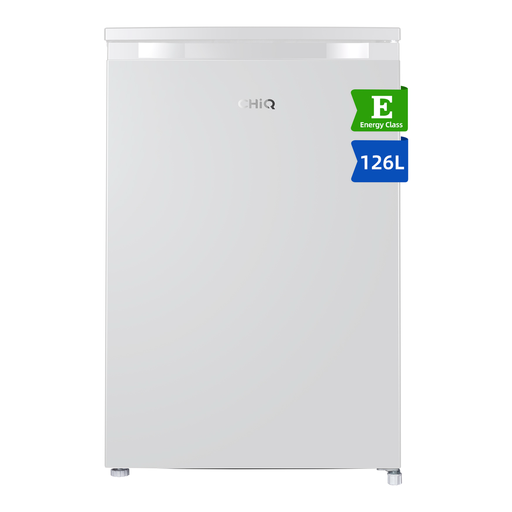
Consider this model if you have room for a wider freestanding fridge and want chilled space for dressing alongside other food; check bottle height and installation clearances.
The product name specifies 126 L capacity and describes it as a 55 cm undercounter larder fridge.
 No image available
Consider a built-under fridge if you are planning a compatible cabinet installation rather than filling a narrow freestanding gap.
Confirm the furniture-door arrangement, cabinet dimensions and required clearances before ordering, and compare the internal layout with your bottles and jars.
NHS guidance says a fridge used for chilled ready-to-eat food should be working properly and set to 5°C or below. Use a fridge thermometer to check the temperature if the appliance does not display it, and follow any recipe-specific storage instructions.
It can be if the space is tight and the chilled load is modest. Montpellier lists its 475 mm-wide MDAUCL48W at 90 L, while Fridgemaster lists its 475 mm-wide MUL4892E at 92 L; check the full appliance dimensions and whether your bottles and jars fit the internal layout.
Electrical Safety First advises installing a fridge near a wall socket rather than using an extension lead. Follow the chosen model’s installation instructions and keep its required ventilation space clear.