Small-kitchen batch cooks
If you make vegetable stock in batches, accessible space for labelled, meal-size portions may matter more than space for one large container.


Start with an under-counter upright freezer if you want to keep labelled portions of cooled vegetable stock separate without finding space for a tall appliance. A freestanding model suits a measured opening without cabinet-door fittings; an integrated model makes sense only when its housing, hinge and ventilation requirements match your fitted kitchen. Compare the actual footprint and internal storage before deciding how much capacity you need.
If you make vegetable stock in batches, accessible space for labelled, meal-size portions may matter more than space for one large container.
If the freezer sits behind a cupboard door, the housing dimensions and hinge arrangement are essential checks before you order a replacement.
If you would rather minimise defrosting, compare the exact model’s frost-management method as well as its fit and storage layout.
Choose when: You have a suitable measured space but no cabinet door to attach to the freezer.
Allow for: The full appliance depth, door swing and ventilation specified for the model.
Choose when: You want the freezer behind an existing kitchen cabinet door and can match the housing and hinge system.
Allow for: Cabinet and installation compatibility; an integrated appliance is not a direct freestanding substitute.
| Concern | What to check | Who this matters to |
|---|---|---|
| Fit and door clearance | Measure height, width and depth at the final position; check door swing and the model’s ventilation instructions. | If a freezer obstructs a cupboard or cannot fit beneath my worktop, its capacity is beside the point. Around 36% of consumers put physical fit first. |
| Portion storage | Compare freezer volume with the drawer or shelf layout and the size of your labelled containers. | I want to find a meal-size portion without moving a batch of other frozen food. For around 29% of consumers, organised portion storage is the primary need. |
| Cooling and batch freezing | Plan to cool and divide stock before freezing; if you regularly add large batches, check the exact model’s freezing capacity. | When I make several portions at once, I need a workable cooling routine and enough freezing capacity for the load. Batch handling comes first for around 21% of consumers. |
| Upkeep and running information | Check the defrost method, stated noise and energy-label information for the exact model. | If the freezer is near where I cook or sit, defrosting and noise affect daily use. Around 14% of consumers prioritise upkeep and running information. |
The cited Beko, Bosch and Liebherr examples span widths from 54 cm to 60 cm. Depth and door swing also affect whether a freezer works in a compact kitchen.
Measure the final position and compare it with the exact model’s dimensions, door clearance and ventilation instructions.
An integrated freezer needs compatible housing and cabinet-door fittings; a freestanding unit is not a like-for-like replacement behind that door.
Check the housing and whether the existing door uses a sliding or fixed hinge. General freezer buying guidance advises matching the hinge type when replacing a built-in appliance.
An incompatible housing or hinge arrangement can mean additional fitting work.
The Food Standards Agency advises cooling warm food before freezing it and dividing food into smaller portions so it cools more quickly.
Cool the stock promptly, then use labelled, freezer-safe containers or bags in portions you are likely to use at one time.
Defrost methods differ even among under-counter models: the cited Beko BSF4682 lists manual defrost, while the Bosch GUN21VFE0G lists Full NoFrost.
Check the defrost method of the exact freezer you are considering and decide how much manual upkeep fits your routine.
Beko lists both freestanding and integrated under-counter models, which are worth comparing as distinct installation choices.
Bosch provides a compact freestanding option and a separate built-under option for a fitted kitchen.
The Fci 1624 Plus is an under-counter option to consider where the opening can accommodate a wider appliance.
These models offer two installation routes for storing portions of cooled stock: one built-under freezer for a compatible fitted kitchen, followed by two freestanding under-counter options. Check the space and storage arrangement that applies to your kitchen before choosing.
 No image available
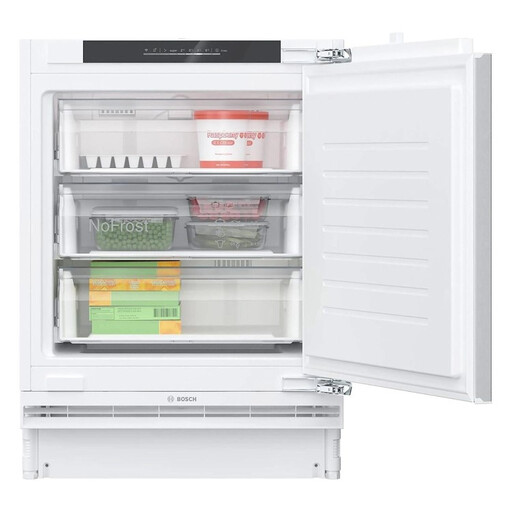
Consider this model if you want portion storage behind a fitted kitchen door and can confirm that the housing and hinge are compatible.
Bosch states an 85-litre compartment, Full NoFrost, dimensions of 82 × 59.8 × 54.8 cm and a freezing capacity of 8.0 kg/24 h for the GUN21VFE0G. Check its ventilation and cabinet-door requirements before ordering.
 No image available
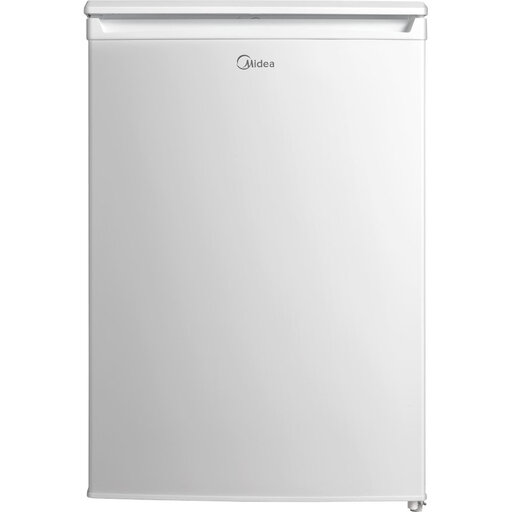
This freestanding under-counter format is a choice for a kitchen without an integrated freezer housing, provided the full appliance fits the available space.
The product title states an 85 L capacity and 55 cm width. Check the full dimensions and the arrangement of the space you plan to use for stock portions; if you routinely freeze large batches, check the model’s freezing-capacity figure too.
 No image available
This freestanding under-counter model is worth considering if its dimensions and internal arrangement suit the portions you intend to store.
Confirm the compartment capacity before comparing it with other models: the listing title says 83 L, while its description and specifications say 86 litres. Measure the kitchen opening and check the model’s freezing capacity if you regularly add large batches.
Cool it first. The Food Standards Agency advises cooling warm food before freezing and dividing it into smaller portions in containers or freezer bags so it cools more quickly.
The Food Standards Agency advises keeping a freezer at around -18°C. Check the appliance’s temperature setting as part of your routine when storing homemade stock.
Choose a freestanding model if you do not need it attached to a cabinet door; choose an integrated model only when its housing dimensions, hinge and installation requirements match your kitchen. General freezer buying guidance specifically advises matching hinge types when replacing a built-in appliance.
Compare the energy label and product information sheet for the exact model, rather than judging running use from capacity alone. UK guidance from the Department for Energy Security and Net Zero and the Office for Product Safety and Standards says that products within the scope of its energy-labelling rules must be supplied with an accurate printed label and accompanied by a product information sheet.
Only choose a model whose stated operating conditions cover the temperatures at that location. Beko describes FreezerGuard operation down to -15°C for named compatible models; that claim should not be applied to every under-counter freezer.