
24/7 Customer Support

Free returns

Same-day & Next-day Delivery

Quality Guaranteed

Unlock Your Welcome Offers: FREE Delivery | Up to 80% OFF | Free 30-day JoyPlus trial
Download the APP
A reliable waterproof jacket is a non-negotiable part of any UK wardrobe. Whether you're commuting through a drizzly city, hiking in the Peak District, or simply walking the dog, staying dry is key to comfort. Yet, the market is flooded with options, and it's easy to make a costly mistake. As a Joybuy Product Recommendation Officer, my role is to help you see past the marketing jargon and choose a jacket that genuinely performs.
This guide will walk you through the common pitfalls to avoid and the essential features to look for in a unisex waterproof jacket, ensuring your money is well spent.
Before we look at what makes a great jacket, let's identify the common traps that catch out unsuspecting buyers.
breathable rain jacket membrane. During any physical activity, from a brisk walk to a steep climb, you'll feel clammy and uncomfortable.unisex waterproof jacket is often just a scaled-down men's jacket. This can result in a poor fit for many body types, with narrow hips, overly long sleeves or restricted shoulder movement. For an outdoor jacket for hiking, this isn't just uncomfortable—it can hinder your mobility on the trail.To avoid these pitfalls, you need to understand a few key technical specifications. This will empower you to choose a genuine all-weather jacket that meets your needs.
A truly waterproof jacket is more than just its fabric. The weakest points are the seams where the fabric panels are stitched together. Without protection, water will seep through these tiny holes.
Breathability is just as important as waterproofing. It's measured as a Moisture Vapour Transmission Rate (MVTR), in units of g/m?/24hr. This indicates how many grams of water vapour can pass through a square metre of the fabric over 24 hours.
technical shell jacket will balance high waterproofing with high breathability.You will often see jackets described as either a hardshell jacket or a softshell.
For reliable, all-year protection in the UK, a hardshell is the most versatile choice.
Instead of a generic list, we've matched our recommendations to specific user needs. This ensures you get the right features for how you'll actually use your jacket.
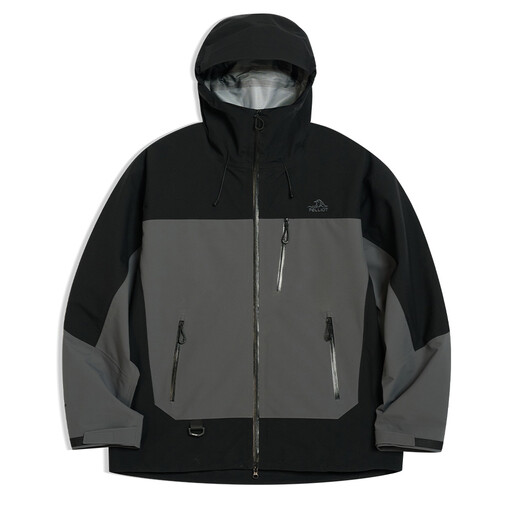
Why This Fits Their Persona: This jacket is designed for all-scenario versatility, making it ideal for transitioning from a rainy city commute to a weekend walk. Its colour-blocked styling is more modern than traditional outdoor gear, so it doesn't look out of place in an urban environment.
It offers storm-proof waterproof performance, not just water resistance, and features high breathability to prevent the "boil-in-the-bag" feeling during a brisk walk to the station.
Its main advantage is its balance of true performance (waterproof, windproof and breathable) with a versatile style suitable for both city and trail use.
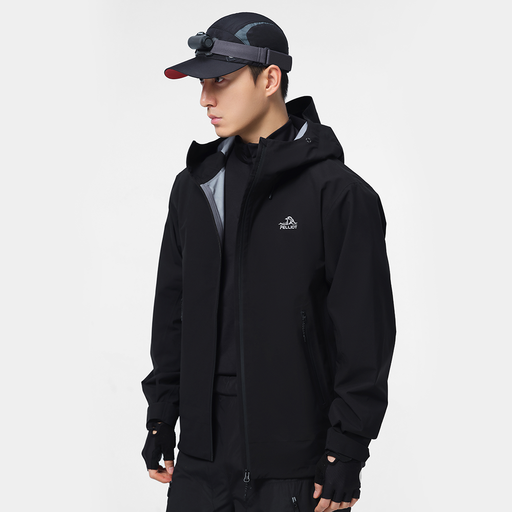
Why This Fits Their Persona: This jacket is engineered specifically for mountain trekking. It prioritises durability and function over fashion, with an abrasion-resistant fabric designed to handle contact with rocks and branches on the trail.
It addresses the fit issue with a "utility-fit, clean silhouette" designed for movement. Its high moisture breathability is crucial for intense activity, preventing internal dampness during a strenuous hike.
The primary advantage is its robust, abrasion-resistant construction, offering superior durability for harsh outdoor environments compared to a standard commuter jacket.
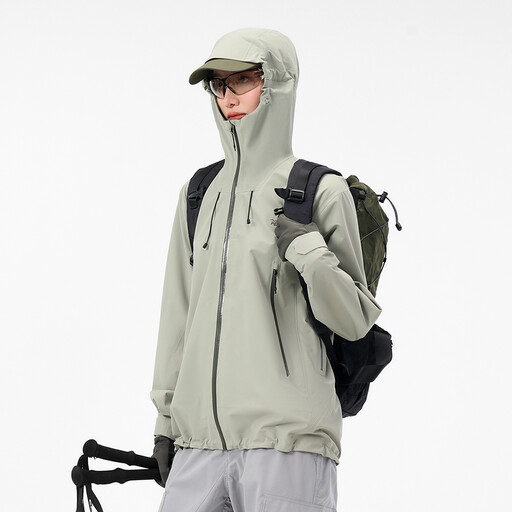
Why This Fits Their Persona: This is a high-performance `technical shell jacket` for those venturing into extreme environments. It's built for snow mountains, forests and rocky terrain, with features that go beyond standard waterproofing.
It offers a full performance upgrade, including extended underarm zippers (pit zips) for maximum temperature regulation, directly solving the "boil-in-the-bag" problem during high-output activities.
The inclusion of a RECCO avalanche rescue reflector is a critical safety feature for backcountry and mountain explorers, a detail not found in standard jackets.
We have compiled a complete, real-time list of products that fully satisfy these strict selection criteria and UK safety regulations.
Here are answers to a few common questions we receive about waterproof jackets.
Always check the care label first. As a general rule, close all zips and Velcro fastenings. Wash on a gentle, cool cycle (30°C) using a liquid detergent specifically designed for technical outerwear. Avoid standard detergents and fabric softeners, as they can clog the pores of the waterproof membrane and strip the DWR (Durable Water Repellent) coating. Air dry the jacket; do not tumble dry unless the label explicitly permits it on a low heat setting.
While a unisex waterproof jacket aims to fit everyone, there are traditional differences in gender-specific fits. A women's waterproof jacket is often designed with a narrower waist, more room at the hips and a shorter torso and sleeve length. A men's waterproof jacket typically has a straighter cut through the body and broader shoulders. When choosing a unisex model, pay close attention to the size chart's chest, waist and length measurements to find the right fit for your body shape.
Refer to the manufacturer's size chart, which usually provides measurements for chest, length and sometimes shoulder width. Measure yourself and compare. Crucially, consider what you will wear underneath. If you plan to layer with a thick fleece or mid-layer for winter hikes, it is often wise to size up to ensure you have enough room for movement without compressing the insulation of your other layers.