Hosts planning a lighter Easter Sunday breakfast
A simple, unsweetened porridge base can be useful before a larger Easter lunch. Check for plain oats rather than flavoured porridge, granola or syrup sachets.


For an unsweetened Easter-morning porridge base, choose a product with plain wholegrain or rolled oats on the ingredient list rather than assuming that flavoured sachets or oat cereals are sugar-free. Standard and jumbo oats suit a more substantial bowl or baking, while quick oats suit a short preparation window; choose specifically labelled gluten-free oats where that requirement applies.
A simple, unsweetened porridge base can be useful before a larger Easter lunch. Check for plain oats rather than flavoured porridge, granola or syrup sachets.
When lunch preparation leaves little time for breakfast, quick-cut or microwave-oriented oats can be a more practical choice than selecting by brand name alone.
Choose oats specifically labelled gluten-free when this is required. Plain oats alone do not establish gluten-free suitability because contamination controls and labelling matter.
Start with the ingredient list, then match the oat format to your available cooking time, preferred texture and any dietary requirement.
| Priority | What to check | Your needs |
|---|---|---|
| Sweetness control | Look for an ingredient list based on wholegrain or rolled oats. Check whether the pack says “no added sugar” or “sugar-free”, as the terms have different meanings. A UK sugar-free claim requires no more than 0.5g sugars per 100g or 100ml under Regulation (EC) No 1924/2006. | I want a plain base that works with savoury toppings or only the toppings chosen at home. |
| Cooking time and texture | Quick-cut and lighter-milled oats are intended to absorb liquid and cook faster. Compare this with jumbo or thicker flakes if a more textured bowl and baking versatility matter. | Breakfast needs to fit around Easter lunch preparation, without accidentally choosing a sweetened convenience product. |
| Wholegrain oats | Check for wholegrain oats or wholegrain rolled oats in the ingredients. If considering oat-bran blends, inspect the full ingredient list because they are not the same as plain oats alone. | I want a wholegrain oat product as one breakfast option within a varied diet. |
| Gluten-free suitability | When gluten-free oats are needed, look for the specific gluten-free label and read the current allergen statement. Coeliac UK notes that standard oats can be contaminated with wheat, barley or rye. | I need an option suitable for a guest who requires gluten-free oats, rather than relying on oats being the main ingredient. |
These terms have different legal meanings. A product can have no added sweetening ingredients without meeting the sugar-free maximum of 0.5g sugars per 100g or 100ml.
Where a strict sugar-free requirement applies, check both the total-sugars figure and the exact claim on the pack. Otherwise, plain 100% oat products offer an unsweetened base without assuming a sugar-free claim.
Convenience formats and oat-based cereals can include flavourings, syrups, dried fruit, nuts or other ingredients. A brand name or the word “oat” does not establish that a product is plain and unsweetened.
Read the exact ingredient list and prioritise products identified as wholegrain or wholegrain rolled oats when you want the greatest flexibility for breakfast toppings.
Ordinary oats can be contaminated with gluten-containing cereals during growing or milling, and some packs carry allergen information for other gluten sources or nuts.
For coeliac-safe food, choose a product specifically labelled gluten-free and check the allergen statement on every current pack.
Convenience packs can help with portioning and speed, but they may cost more per kilogram than standard rolled oats.
Compare the unit price and then decide whether quicker preparation or individual portions are worthwhile for your household.
A broad porridge range covering traditional rolled oats, jumbo oats, gluten-free oats and no-added-sugar options.
A UK oat miller offering traditional, organic, superfast and instant porridge formats.
An Irish oat brand with plain organic rolled oats, quick oats, jumbo oats and natural oat sachets in the UK market.
Offers traditional and organic wholegrain rolled-oat porridge alongside a wider cereal and granola range.
A UK retailer own-label route with essential, Scottish, instant and gluten-free porridge-oat options.
Most relevant here as a breakfast-cereal brand to distinguish from plain porridge oats.
These Joybuy options cover quick plain oats, gluten-free oats, thicker rolled oats and larger plain-oat packs for Easter Sunday breakfast and Easter-weekend cooking.
 No image available
A quick single-serve option for a busy Easter morning, with toppings chosen separately.
The stated ingredient is wholegrain rolled oats only; each sachet is 38.5g and the listed microwave method takes 2½ minutes. The nutrition panel lists 1.0g sugars per 100g, so it does not meet the 0.5g-per-100g sugar-free threshold.
 No image available
A plain oat route for porridge or baking when a gluten-free-labelled product is required.
The listing describes 100% gluten-free oat flakes in a resealable 1kg pack, with 8.6g fibre per 100g. It lists 1.1g sugars per 100g, so it does not meet the 0.5g-per-100g sugar-free threshold; check the delivered pack’s gluten-free claim and allergen statement before serving a person with coeliac disease.
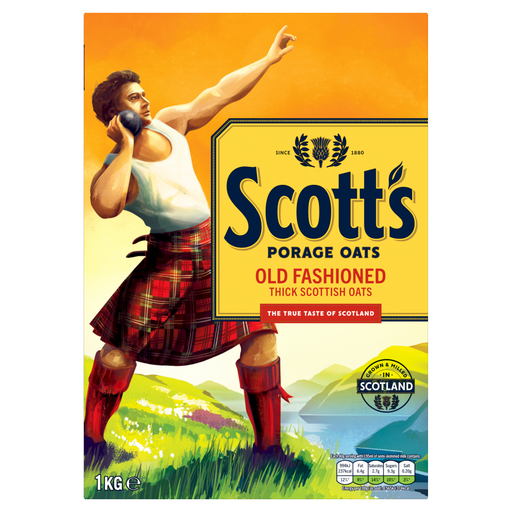 No image available
Choose this option if a thicker, more substantial texture matters but a short microwave method is still useful.
The listing states 100% rolled oats, with cooking guidance of 4–5 minutes on the hob or 2–3 minutes in a microwave. It lists 1.1g sugars per 100g and may contain wheat and barley, so it is not a substitute for certified gluten-free oats.
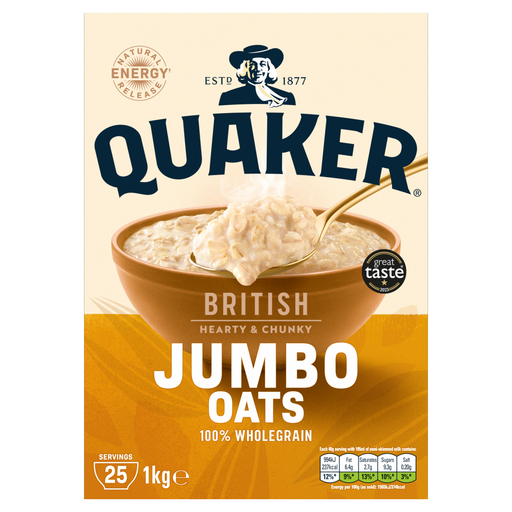 No image available
A jumbo-oat choice for a customisable breakfast and for porridge, overnight oats or Easter-weekend baking.
The stated ingredient is 100% wholegrain oat flakes, and the listing gives 9.0g dietary fibre per 100g. It lists 1.0g sugars per 100g, may contain traces of wheat, and has no stated cooking time in the product record.
 No image available
A larger plain organic oat pack for households planning several breakfasts or baking sessions.
The stated ingredient is 100% organic wholegrain oat flakes, with 8.3g fibre per 100g. The nutrition panel lists 0.9g sugars per 100g, so it does not meet the 0.5g-per-100g sugar-free threshold; the record does not state cooking guidance or gluten-free certification.
No. Under Regulation (EC) No 1924/2006, a sugar-free claim requires no more than 0.5g sugars per 100g or 100ml, while no added sugar means that sweetening ingredients have not been added. Check both the ingredient list and the wording of any nutrition claim on the pack.
Do not assume so. Coeliac UK states that many standard oats are produced alongside wheat, barley and rye and can be contaminated. Choose oats specifically labelled gluten-free where gluten-free suitability is required; oats carrying that label must contain no more than 20ppm gluten.
Quick-cut, superfast or instant plain oats are the practical route when rapid preparation matters. Mornflake says smaller flakes absorb liquid more quickly, and Flahavan's says its quick oats are milled lighter for quicker microwave preparation. Choose an unflavoured version if controlling added sweeteners remains the priority.
Choose jumbo oats when you prefer a thicker, more textured porridge or want one pack for breakfast and baking. Quaker describes its jumbo oats as whole uncut oats rolled to a thicker specification, while Flahavan's describes its Organic Jumbo Oats as larger and thicker.
Yes. NHS guidance identifies porridge oats as a good source of fibre. Treat porridge as one part of a varied diet and compare the nutrition panel when fibre content is important to your choice.