
24/7 Customer Support

Free returns

Same-day & Next-day Delivery

Quality Guaranteed

Unlock Your Welcome Offers: FREE Delivery | Up to 80% OFF | Free 30-day JoyPlus trial
Download the APP
Buying an upper arm blood pressure monitor can make routine tracking more convenient, but attractive packaging and long feature lists do not always mean a device will suit your household. The practical details matter more: cuff fit, display readability, memory capacity and power requirements.
This guide from the Joybuy Product Recommendation Officer explains the common buying traps, the specifications worth checking and a selection of devices matched to different home-use needs.
A cuff that is too small or too loose can affect the result and make the monitor uncomfortable. Many standard cuffs cover only a limited arm circumference, while a large cuff blood pressure monitor may be more suitable for several adults sharing one device.
Check the stated range in centimetres rather than relying on descriptions such as “adult size” or “universal cuff”. For example, a 22–42 cm cuff offers a wider fitting range than a 22–32 cm cuff.
An automatic blood pressure monitor is convenient, but consistent technique is still important. Look for clearly stated conformity information, such as CE marking and, where listed, compliance with recognised standards including ESH or AAMI. CE marking indicates conformity with applicable requirements; it is not, by itself, a guarantee that every reading will suit every person.
A monitor should also provide clear instructions. Arrhythmias, movement, talking and poor cuff positioning may affect readings. A device with a cuff-placement check or movement warning can help users identify technique problems before relying on the result.
Voice prompts, Bluetooth and app functions may sound useful, but they can add complexity if you only need a simple digital blood pressure machine for morning and evening readings. Conversely, a device with only 30 stored results may be limiting for a family or someone recording readings over several weeks.
Prioritise the functions you will actually use: a readable screen, straightforward controls, suitable memory and a power option that works in your home.
An upper-arm device is normally positioned around the upper arm, with the arm supported at approximately heart level. Follow the supplied instructions and measure on bare skin rather than over clothing. Sit quietly for around five minutes, keep your feet flat and avoid speaking or moving during the reading.
A wider cuff is useful for larger arms and households with different users, but it must still be positioned correctly. A loose Velcro fastening or a cuff that sits too close to the elbow can reduce consistency.
When comparing a medical-grade blood pressure monitor with a basic home model, inspect the product information for conformity marks, named manufacturers and responsible-person details where applicable. Some listings also state alignment with ESH or AAMI requirements. Treat these as product information to verify against the manual and packaging rather than as a medical endorsement.
Irregular heartbeat detection is a notification feature, not a diagnosis. Likewise, a hypertension indicator shows how a reading is categorised by the device’s programmed scale; it does not determine whether you have a medical condition.
For older users, a large LCD or HD display with high-contrast numbers may be more practical than a compact design. A blood pressure monitor with memory can save readings automatically, reducing the need for handwritten notes. Two-user storage is useful when relatives share one monitor.
Also check whether the package includes batteries, a mains adapter or USB cable. A battery-only model may be convenient for travel, while an included power adapter can be preferable for a monitor kept beside a chair or bedside table.
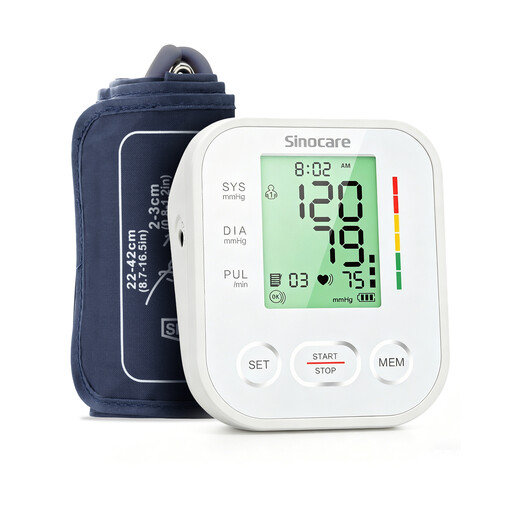
Why This Fits Their Persona: One-button operation and a 3.6-inch LCD make this a straightforward option for adults starting a home monitoring routine.
The listing specifies an upper-arm cuff, intelligent inflation and arrhythmia detection rather than relying on a wrist-style format or manual pumping.
One-button control, 3.6-inch LCD and included AAA batteries.
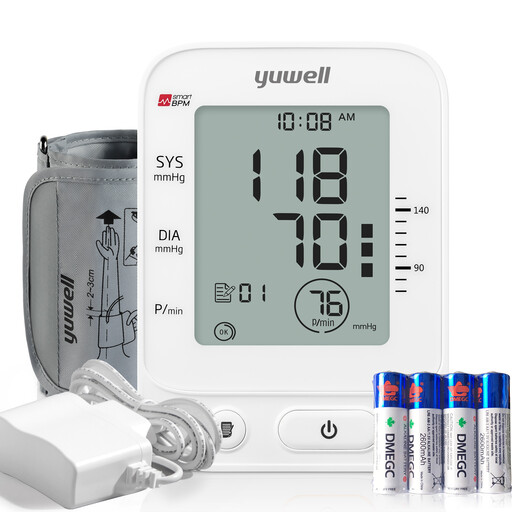
Why This Fits Their Persona: Suits users who want a larger display, wide-range cuff and mains power for regular monitoring at home.
The listing states CE certification and ESH/AAMI standards compliance, while the wide cuff addresses the common fit problem.
3.6-inch HD display, 99-reading memory, smart inflation and included power adapter.
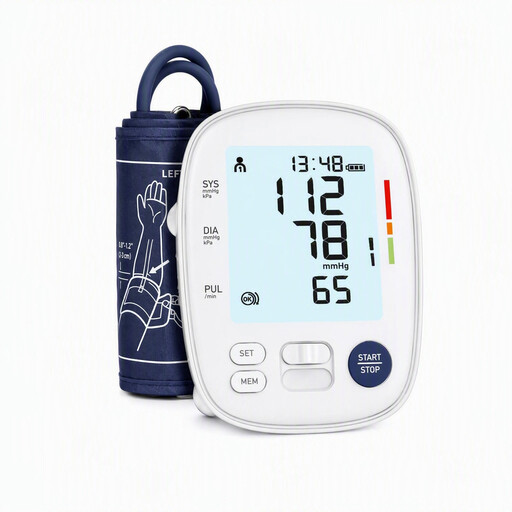
Why This Fits Their Persona: Designed for households needing separate records, a wide cuff and flexible power for frequent home use.
Its 22–42 cm cuff, cuff-placement and movement reminders help address fit and technique issues.
Two sets of 120 memories, last-three-reading average, Type-C USB or battery power and irregular heartbeat alerts.
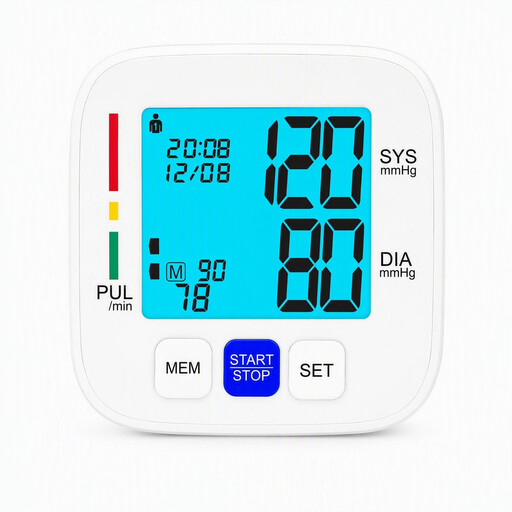
Why This Fits Their Persona: A compact choice with a small footprint for a table, cupboard or travel bag while retaining a wide family-friendly cuff.
The specification clearly states the cuff range and memory arrangement, avoiding vague “universal” claims.
Two user profiles with 90 records each, automatic three-reading average and approximately 213 g main-unit weight without batteries.
We have compiled a complete, real-time list of products that fully satisfy these strict selection criteria and UK safety regulations.
Use the same arm and a similar time of day where possible. Before starting:
A monitor’s irregular heartbeat detection or hypertension indicator should not be used to self-diagnose or change medication. If readings remain unusually high or symptoms are concerning, seek appropriate medical advice.
Upper-arm monitors are commonly selected for home tracking because the cuff is positioned around the upper arm and can be used with a supported arm at heart level. Whichever format you choose, correct positioning and a suitable cuff size remain essential.
Lifespan varies by model, handling, storage and frequency of use. Keep the device dry, avoid extreme temperatures and follow the manufacturer’s cleaning and battery instructions. Check the cuff regularly for worn Velcro, cracks or damage, as the cuff is central to operation.
It can reduce manual recording, but check the storage capacity and whether it supports one or two users. A 99-reading memory may suit one person, while two-user storage is more practical for couples or family members. Take the stored readings to appointments only as a reference, alongside any guidance from your healthcare professional.