
24/7 全天候客户支持

免费退货

当日/次日达

品质保障

开启新人专享福利: 全场免邮 | 低至 2 折 | 免费试用 30 天 JoyPlus 会员
下载 Joybuy
Buying an upper arm blood pressure monitor should make routine health tracking simpler, not create more uncertainty. However, many shoppers focus on a large screen or a low price without checking the details that affect everyday use.
For UK households, the most important considerations are cuff fit, measurement guidance, memory capacity and power requirements. A suitable automatic blood pressure machine should also be easy to operate correctly, particularly when it is being used by an older person or shared by family members.
A cuff that is too tight or too loose may affect comfort and measurement consistency. A standard adult cuff is not automatically suitable for every user. Check the stated arm circumference range before buying, especially when looking for a large cuff blood pressure monitor.
A wide-range arm cuff, such as one covering 22–42 cm, can be more practical for a shared household. It may fit several adults, but it should still be wrapped according to the instructions and positioned on the upper arm rather than over clothing.
Features such as irregular heartbeat detection and a hypertension indicator can draw attention to readings or pulse patterns that may need further attention. They are not a diagnosis and should not replace advice from a GP or other healthcare professional.
Likewise, terms such as “medical grade” or “clinically accurate blood pressure monitor” should be checked against the product information. For example, the Yuwell model is described as meeting European Society of Hypertension and AAMI standards and having CE certification. These are stated product credentials, not a guarantee that every home reading will be accurate in every situation.
A monitor can have sophisticated functions but still be inconvenient if the user cannot read the screen, remember the operating sequence or review previous measurements. Look for one-touch operation, clear instructions, a large display and memory storage that suits the household.
Users should sit quietly for around five minutes, keep both feet on the floor, support the arm at heart level and avoid talking or moving during measurement. Consistent technique matters as much as the device’s advertised features.
Measure around the middle of the upper arm and compare this measurement with the cuff range. Common options include:
The cuff should sit around 1–2 cm above the elbow, with the tube aligned as described in the manual. A correct fit helps avoid unnecessary discomfort and reduces the risk of inconsistent readings.
A large LCD screen with clear digits can make a noticeable difference for older users or anyone with limited vision. A 3.6-inch display is included on several listed models, while the Treesmile FC-BP100 specifies a 63 × 81 mm LCD with large lettering.
One-button operation is useful when the monitor is intended for daily use. Automatic inflation and automatic shut-off can also reduce the number of steps required.
A digital blood pressure monitor may store anywhere from 30 to 240 readings, depending on the model. Consider whether the monitor is for one person or a couple:
Memory readings are for reference and should not be used to alter prescribed medication without professional advice.
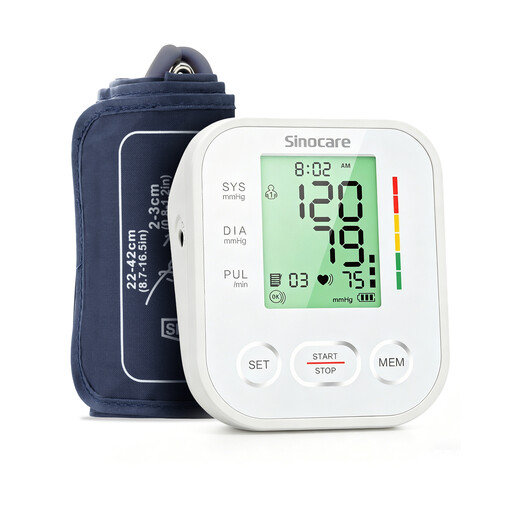
Why This Fits Their Persona: A straightforward option for adults beginning regular monitoring at home, with one-button operation and a large 3.6-inch LCD screen.
Its adult large-size cuff and simple controls address two common barriers: poor fit and complicated operation.
Arrhythmia heartbeat detection, four-colour backlight and four AAA batteries included.
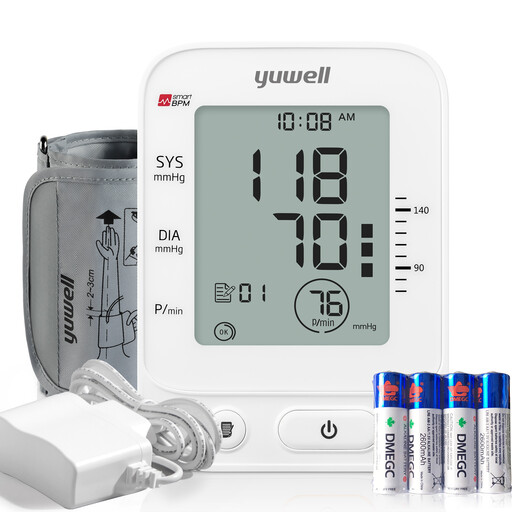
Why This Fits Their Persona: Designed for shoppers prioritising documented standards, a wide cuff and convenient review of readings for ongoing home tracking.
The listing specifies CE certification and ESH/AAMI standards compliance rather than relying only on vague accuracy language.
99-reading memory, 3.6-inch display, wide-range cuff and included power adaptor.
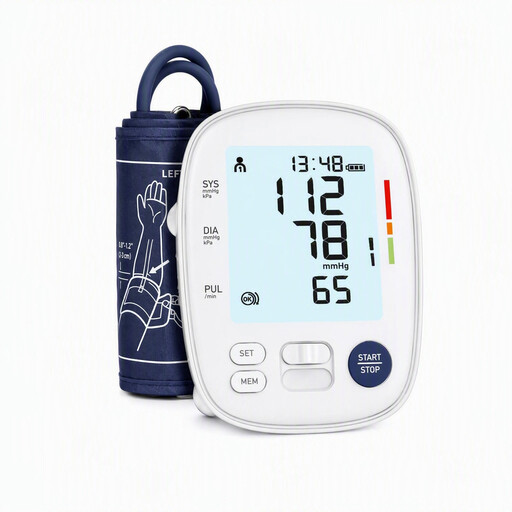
Why This Fits Their Persona: Suitable for families needing separate records, a wide cuff and a prominent screen for regular monitoring.
The 22–42 cm cuff and cuff-placement and movement reminders help address fit and technique issues.
Two sets of 120 memory slots, last-three-reading average and battery or Type-C power.
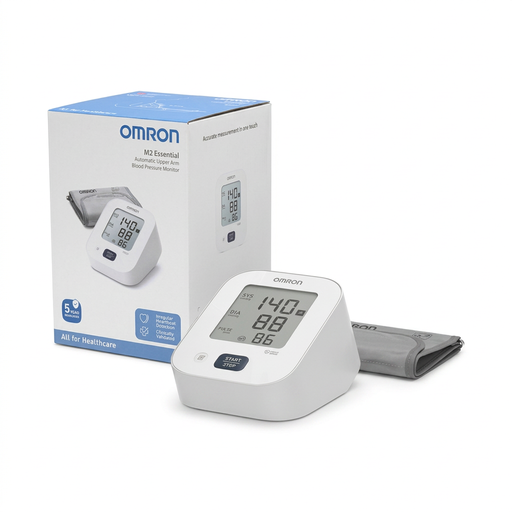
Why This Fits Their Persona: A compact choice for one user who wants straightforward daily monitoring and a medium cuff.
The cuff-wrapping guide and body-movement alert help users identify setup problems before relying on a reading.
Stores 30 readings, includes four AA batteries and has a 22–32 cm cuff.
We have compiled a complete, real-time list of products that fully satisfy these strict selection criteria and UK safety regulations.
Rest quietly for around five minutes before measuring. Place the cuff on bare skin, keep it at the correct position above the elbow and support your arm at heart level. Keep still and avoid speaking until the reading is complete. Follow the specific manual supplied with your monitor.
Lifespan varies by model, storage conditions and frequency of use. Some product listings specify a product life, while others provide warranty information instead. Keep the monitor dry, away from direct sunlight and extreme temperatures, and replace batteries when required. Check the cuff regularly for wear, as the cuff is essential to correct use.
A home monitor can help track readings when used consistently and correctly, but results may be affected by posture, movement, talking, recent exercise or an unsuitable cuff. Take repeated readings as directed and discuss persistent high or unusual results with a healthcare professional. Do not use readings alone to diagnose a condition or change medication.