
24/7 Customer Support

Free returns

Same-day & Next-day Delivery

Quality Guaranteed

Unlock Your Welcome Offers: FREE Delivery | Up to 80% OFF | Free 30-day JoyPlus trial
Download the APP
An upright freezer can add valuable frozen storage without taking up the floor area of a chest freezer. However, comparing models by capacity or price alone can lead to costly mistakes. The right choice depends on your available space, household habits, installation requirements and expected running costs.
Whether you are a batch-cooker, bulk grocery shopper, landlord, student or homeowner, check these practical details before ordering.
A tall freezer may appear spacious, but thick insulation, cooling equipment and awkwardly shaped compartments can reduce usable capacity. Check the net capacity in litres, not just the external height.
Storage layout also matters. A freezer with drawers is generally easier to organise than a single open cavity. Transparent drawers can help you identify food quickly, reducing the time the door remains open.
The current UK energy label uses a scale from A to G, with E-rated appliances positioned within that system. The rating is useful for comparison, but annual electricity consumption in kWh is also important. Two appliances with the same rating may have different running costs if their size, insulation and cooling systems differ.
Look for the annual energy figure on the product information and consider how much storage you actually need. Buying a larger freezer than your household can fill may increase consumption unnecessarily.
A standard freezer may not be designed for use in a cold garage, shed or outbuilding. Low ambient temperatures can affect how some appliances operate. If you need a garage-safe freezer, check the manufacturer’s stated operating range rather than relying on general advertising language.
The Midea MDRC211FZE01 chest freezer, for example, is specified for operation in ambient temperatures down to -18°C. This is a product-specific feature, not something that should be assumed across the category.
Measure the available space carefully, including door clearance, skirting boards and the route through doorways or staircases. A slimline freezer around 54–55cm wide may fit where a standard 60cm appliance cannot, but depth and door swing still need checking.
Freestanding models require ventilation around the appliance. Follow the supplied installation instructions and leave the recommended clearance at the sides, rear and top. An under-counter freezer needs suitable space beneath the worktop, while an integrated freezer requires a compatible cabinet and hinge system.
Choose capacity according to shopping habits:
Drawers are convenient for separating meat, vegetables and prepared meals. Shelves or open compartments may accommodate larger boxes, but can be less straightforward to organise.
Noise is measured in decibels, or dB(A). A specification around 39–41 dB(A) may be more suitable for an open-plan kitchen, studio flat or utility room beside living areas. It is still sensible to follow the installation instructions, as vibration from an uneven floor can increase perceived noise.
A reversible door freezer allows the hinge side to be changed, which is useful beside a wall or kitchen cabinet. Confirm whether door reversal is possible during installation and whether the process is covered by the instructions.
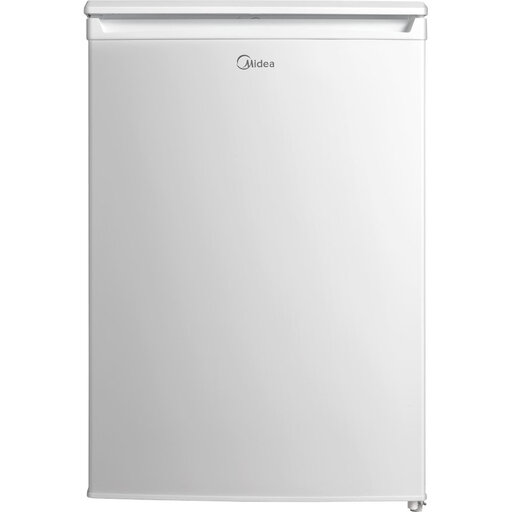
Why This Fits Their Persona: A compact option for students, renters and smaller kitchens where a full-height appliance would be impractical. Its 84.5cm height is designed for under-counter placement.
The 86-litre capacity is clearly specified, avoiding vague claims about compact storage. Three transparent drawers make the internal space easier to manage.
E energy rating, 39 dB(A) noise level, reversible door and mechanical temperature control.
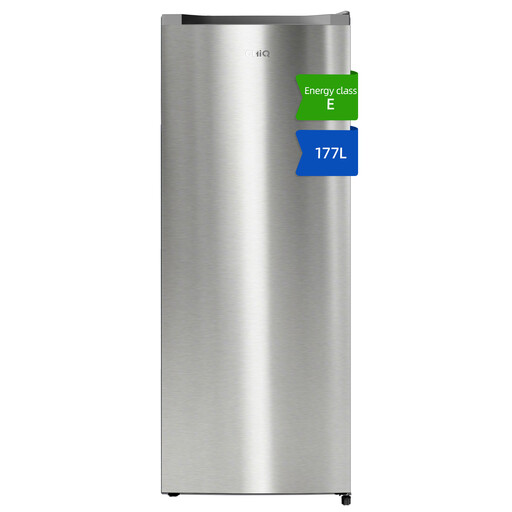
Why This Fits Their Persona: Suitable for households wanting a tall, coordinated appliance with a stainless steel finish while retaining a relatively narrow footprint.
Its stated 54.5cm width and 55cm depth make space planning more transparent, while the reversible door helps accommodate different kitchen layouts.
Six transparent drawers, 39 dB noise level, adjustable thermostat and E energy rating.
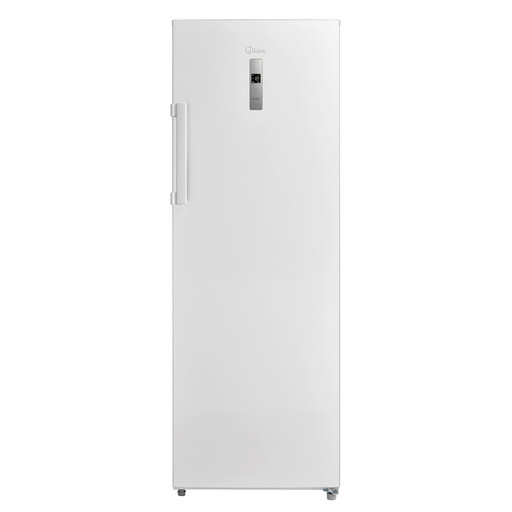
Why This Fits Their Persona: Designed for larger households, regular batch-cooking and bulk grocery shopping, with 238 litres of stated net capacity.
Total No Frost is specified, reducing the need for routine manual defrosting. The 172.2cm height and 59.5cm width should still be measured carefully before delivery.
Seven compartments, convertible fridge/freezer mode, exterior LED display and E energy rating.
We have compiled a complete, real-time list of products that fully satisfy these strict selection criteria and UK safety regulations.
Running cost depends on the appliance’s energy consumption, size, insulation and how it is used. A chest freezer may offer efficient storage, but an upright model can make stock rotation easier because food is separated into drawers. Compare the annual kWh figure rather than relying on the format alone.
Only if the product documentation confirms that it is suitable for the expected ambient temperature range. A garage-safe specification is particularly important in colder UK conditions. Keep the appliance level, provide the required ventilation and avoid placing it near a direct heat source.
Lifespan varies according to build quality, use, installation and maintenance. Keeping the door seal clean, avoiding overloading, allowing ventilation and defrosting manual models when ice builds up can support reliable operation. Always follow the supplied care and safety instructions.