
24/7 Customer Support

Free returns

Same-day & Next-day Delivery

Quality Guaranteed

Unlock Your Welcome Offers: FREE Delivery | Up to 80% OFF | Free 30-day JoyPlus trial
Download the APP
As more of our essential devices—from the iPhone 15 and Samsung Galaxy phones to MacBooks and iPads—adopt the USB-C standard, finding the right cable has become surprisingly complicated. A quick search reveals a flood of options, all promising speed and durability. Yet many of us have a drawer full of frayed, slow or completely dead cables to prove that not all are created equal.
As a Joybuy Product Recommendation Officer, my role is to help you navigate this market. Before you add another cable to your basket, let's look at the common pitfalls that lead to disappointing purchases and what to look for instead.
To ensure you get a reliable and effective Type C to Type C cable, focus on these three core parameters.
This is the single most important factor for charging speed. Your cable acts as a pipeline for power, and its wattage rating is its maximum capacity.
Remember, to achieve these speeds, your power adapter (the plug) must also support the same wattage.
A cable's lifespan is determined by its construction. Look for features that specifically address durability.
Cable length is a balance of convenience and portability.
Instead of a generic list, we've matched our recommendations to specific user needs.
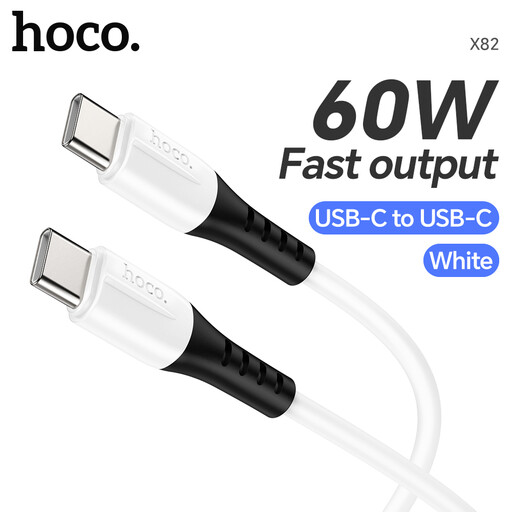
Why This Fits Their Persona: This is a practical, no-nonsense upgrade from the basic cable that came with your device. It's perfect for someone who needs a reliable replacement for charging their phone, tablet or standard laptop without paying for extreme power they don't need.
It clearly states its 60W power rating, avoiding the vague "fast charge" promise. The soft silicone material and reinforced joints are designed to resist tangling and fraying at the connector head.
The flexible silicone body is highly tangle-resistant, making it easy to manage. Its 60W output is versatile enough for fast-charging phones, tablets and many ultrabooks.
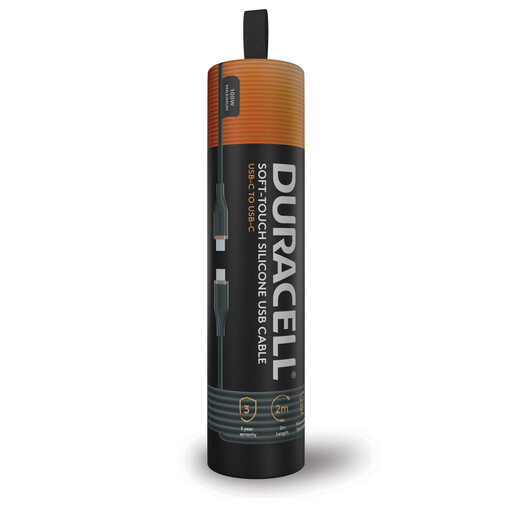
Why This Fits Their Persona: For those who rely on a single cable for their MacBook, iPad and phone, this is a workhorse. The 2-metre length is perfect for office or home use, and the 100W power handles demanding laptops with ease.
It sidesteps the "durable" material trap by specifying its construction: a double-braided nylon exterior, wear-resistant connectors and an internal core reinforced with Dupont Kevlar fibre.
Delivers a powerful 100W output suitable for laptops. The generous 2m length and robust, multi-layer construction are designed for long-term, heavy use.
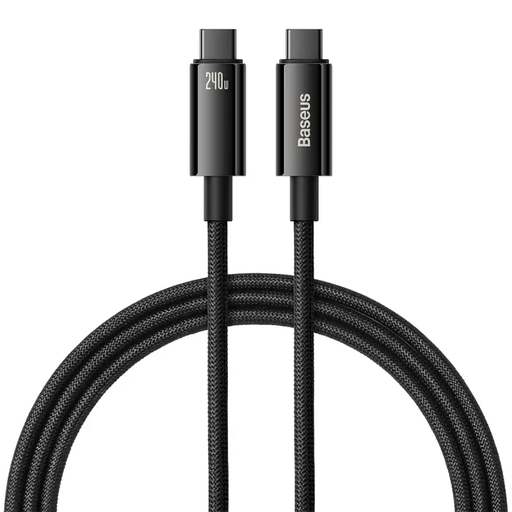
Why This Fits Their Persona: This cable is for the user who wants the highest specification available. The 240W capability is at the cutting edge of the PD 3.1 standard, ensuring it can handle the most power-hungry devices on the market now and in the near future.
It provides an exact, top-tier power rating of 240W. Its zinc alloy connectors and dense nylon braiding are tangible features that go beyond simple marketing claims of durability.
Future-proof 240W power delivery supports the most demanding devices. The built-in E-Marker smart chip ensures safe and stable power negotiation between the cable and your device.
We have compiled a complete, real-time list of products that fully satisfy these strict selection criteria and UK safety regulations.
1. Do all USB C to USB C cables support fast charging? No. The ability to fast charge depends on the cable's maximum power rating (wattage). A cable must be rated to handle the power output of your charger and the intake of your device. Always check the wattage (e.g., 60W, 100W) to ensure it's a true fast charging cable for your needs.
2. Is a 100W USB C cable safe to use with my phone? Yes, it is completely safe. The USB Power Delivery (PD) standard includes a communication protocol where your device (the phone) tells the charger how much power it can safely handle. The charger and cable will then only supply that amount. A high-wattage cable will not damage a low-wattage device.
3. How long should a quality braided USB C cable last? While lifespan depends on usage, a well-made braided USB C cable with reinforced connector joints should comfortably last for several years of daily use. This is a significant improvement over standard, non-reinforced cables that often show signs of wear and fail in under a year.