
24/7 Customer Support

Free returns

Same-day & Next-day Delivery

Quality Guaranteed

Unlock Your Welcome Offers: FREE Delivery | Up to 80% OFF | Free 30-day JoyPlus trial
Download the APP
Not all charging leads are created equal. With the universal adoption of USB-C, from the iPhone 15 to the latest MacBook Pro and Samsung Galaxy S24, finding the right USB-C to USB-C cable has become surprisingly complex. A poor choice can lead to slow charging, data transfer failures or even a frayed, useless wire in a matter of months.
As the Joybuy Product Recommendation Officer, my role is to help you navigate the market and identify the key features that matter. Before you spend your money, let's look at the common pitfalls that catch many UK shoppers out.
To ensure you get a cable that performs correctly and lasts, focus on these three non-negotiable specifications.
This is the most important factor. Your cable must be able to handle the power your device and charger require.
Always match the cable's wattage to the highest-wattage device you intend to charge. Using a 100W cable with a 60W charger is fine, but using a 60W cable with a 100W charger will limit your charging speed.
The material directly impacts the cable's lifespan.
Consider where you will be using the cable most often.
Based on these practical criteria, we've matched some standout options to different user needs.
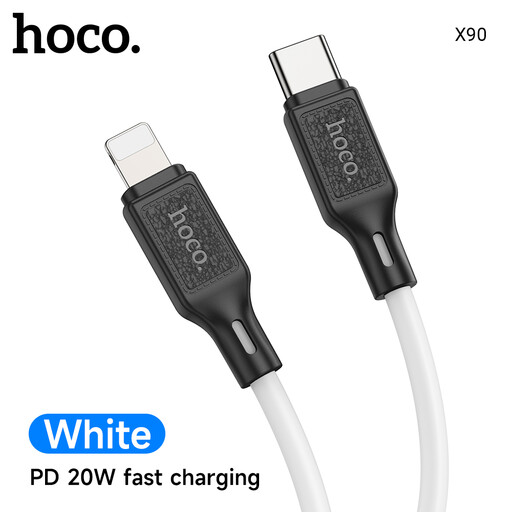
Why This Fits Their Persona: This is a practical, no-fuss option for those who primarily need to charge their smartphone, tablet or accessories. The 60W power is ample for a Samsung S24 fast charge or powering up an iPad, and the 1-metre length is perfect for daily carry and use.
It avoids the vague "fast charging" trap by clearly stating its 60W maximum output, ensuring users know it's for phones and tablets, not high-power laptops.
The flexible silicone outer layer resists tangles better than standard PVC, making it a great choice for use on the go.

Why This Fits Their Persona: For those who rely on a laptop for work or study, this cable is an ideal companion. The 100W PD cable capability is perfect for powering a MacBook Pro or Windows laptop, while the generous 2m USB-C cable length provides crucial flexibility in an office, library or at home.
It counters the durability deception with a robust nylon braided exterior and zinc alloy connectors, designed to withstand the rigours of daily packing and unpacking from a bag.
Delivers high-power 100W charging and a practical 2-metre length, a combination essential for productive laptop use.
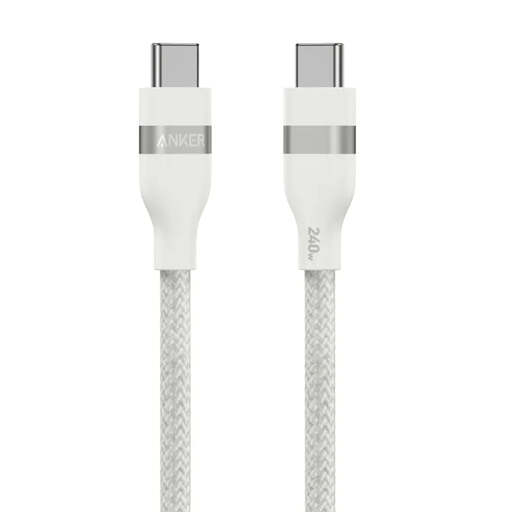
Why This Fits Their Persona: For those who want maximum performance and future-proofing, this 240W USB-C cable is a top-tier choice. It can handle the most demanding gaming laptops and will be ready for any high-power devices that come to market in the next few years.
This cable is the antithesis of the flimsy connector flaw. With a stated 30,000+ bend lifespan, it is constructed as a long-term investment, not a disposable accessory.
It offers the highest available 240W power delivery combined with a focus on extreme durability and sustainable materials.
We have compiled a complete, real-time list of products that fully satisfy these strict selection criteria and UK safety regulations.
No, you do not. The iPhone 15 series and similar smartphones cannot draw anywhere near 240W. A 60W cable is more than sufficient to achieve their maximum charging speed. However, using a 240W cable will not harm your phone; it will simply deliver the power your device requests.
There are three likely reasons:
While lifespan depends heavily on use, a well-made braided USB-C cable with reinforced connectors should comfortably last for several years of daily use. Many are designed to withstand thousands of bends, making them a far more reliable investment than cheaper, non-braided alternatives that may fail within a year.