
24/7 Customer Support

Free returns

Same-day & Next-day Delivery

Quality Guaranteed

Unlock Your Welcome Offers: FREE Delivery | Up to 80% OFF | Free 30-day JoyPlus trial
Download the APP
As a Joybuy Product Recommendation Officer, my role is to help you navigate the crowded market of tech accessories. A common frustration I hear about is the seemingly simple task of buying a new USB C cable. You buy one that promises fast charging, only for it to be disappointingly slow, or it frays at the connector after just a few months. It’s a small purchase, but getting it wrong is an unnecessary waste of money and time.
Before you add another cable to your basket, let's look at the common pitfalls that catch many UK shoppers out, and how you can avoid them to find a cable that genuinely meets your needs.
To ensure you get the right performance and longevity, focus on these three core parameters.
The power a cable can handle is measured in watts (W). This is the most critical factor for charging speed. Your cable, charger, and device must all be compatible to achieve the maximum speed.
A cable's lifespan is largely determined by its construction.
Always double-check the ports on both your device and your power source.
Based on these practical criteria, here are a few options from our catalogue matched to specific user needs.
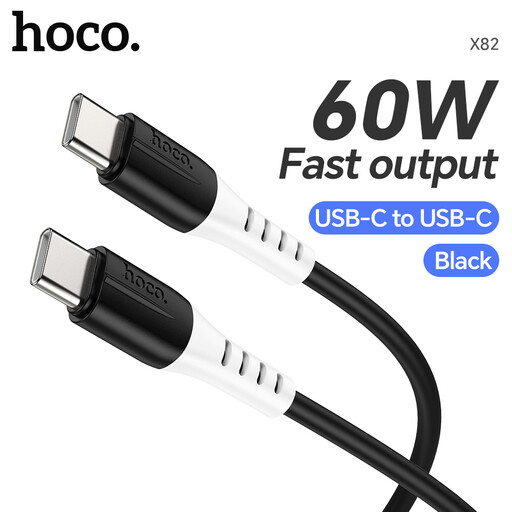
Why This Fits Their Persona: You need a reliable replacement for the cable that came with your phone or tablet, without overspending. This cable is perfect for fast-charging modern smartphones, tablets and even lightweight laptops like a MacBook Air at home or the office.
It clearly states its 60W power delivery, so you know exactly what performance to expect. The soft-touch silicone material is also designed to resist tangling and fraying, tackling the flimsy connector issue.
Delivers ample power for most personal devices and features a durable, tangle-resistant silicone jacket that feels more premium than basic plastic cables.
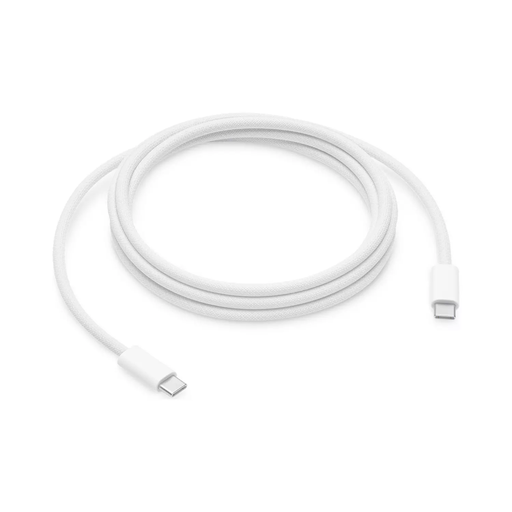
Why This Fits Their Persona: You own an iPhone (14 or older) and a modern MacBook or USB-C charger. You need a reliable connection that just works, with the extra flexibility to use your phone while it charges from a distant socket.
This is an official Apple product, which guarantees MFi-certification and avoids the "Accessory Not Supported" errors common with uncertified third-party cables. It correctly provides the USB-C to Lightning connection needed for this specific device combination.
Guaranteed compatibility and support for fast charging on compatible iPhones. The generous 2m charging cable length is a significant practical benefit for everyday use.

Why This Fits Their Persona: You rely on a powerful USB-C laptop for work and need a cable that can deliver maximum charging speed without fail. Durability is non-negotiable, as the cable is used daily in the office, at home and while travelling.
It sidesteps the vague "fast charge" claim by specifying a full 100W power delivery. It directly counters the flimsy connector flaw with a durable nylon braid and robust zinc alloy connector heads, designed for longevity.
Combines high-power 100W charging, a flexible 2-metre length and a highly durable braided charging cable construction. The built-in E-Marker chip also ensures safe and stable power negotiation with your devices.
We have compiled a complete, real-time list of products that fully satisfy these strict selection criteria and UK safety regulations.
This usually happens for one of three reasons: your power adapter (the plug) doesn't supply enough wattage, your device doesn't support faster charging speeds, or the cable itself is not rated for the high wattage your device requires. For true fast charging, the cable, the charger and the device must all support the same high-speed charging standard (like USB Power Delivery).
Yes, it is perfectly safe. USB-C cables with Power Delivery (PD) technology contain a chip that communicates with your device to determine the maximum power it can safely handle. The cable and charger will only supply the amount of power the device requests, so a 100W cable will safely charge a 20W phone at 20W, not 100W.
While there's no fixed lifespan, a well-made cable should last for several years of normal use. A braided charging cable with reinforced connectors will almost always outlast a basic plastic cable, which can show signs of wear in as little as 6-12 months, especially with frequent plugging, unplugging and bending.