
24/7 Customer Support

Free returns

Same-day & Next-day Delivery

Quality Guaranteed

Unlock Your Welcome Offers: FREE Delivery | Up to 80% OFF | Free 30-day JoyPlus trial
Download the APP
A USB-C charger can power anything from a pair of wireless earbuds to a high-performance laptop, but the number printed on the box does not tell the whole story. A charger with a high wattage may still be unsuitable for your device, while a compact model may have the wrong plug, insufficient ports or limited output when several devices are connected.
Before buying, UK shoppers should look beyond phrases such as “fast charging” and check the technical details that affect everyday use.
A 100W USB-C charger does not necessarily provide 100W to every connected device. The stated figure usually refers to one port under specific conditions. When two or more ports are used, the available power may be divided between them.
For example, the Anker Prime 100W model provides up to 100W when one port is in use, but its total output is listed as 89W when all three ports are connected. That is still useful for a laptop, phone and accessory, but it is important to understand the allocation before purchase.
USB-C describes the connector shape, not the charging performance. A port may support USB-C Power Delivery (PD), a lower-power charging protocol or data transfer only. Check whether the charger supports the PD profile required by your device.
A 20W USB-C charger is generally aimed at phones and smaller tablets. A 30W USB-C charger can suit compatible phones, tablets and some lightweight laptops. Larger laptops may need a 65W USB-C charger, while demanding models can require 100W or more.
A charger designed for European sockets may require an adaptor in the UK. That adds bulk and introduces another connection point. If you need a UK USB-C charger for home, office or business travel, check whether it includes a UK three-pin plug or a UK power cord.
The cable is also significant. A cable must be rated for the required power, particularly with a 100W or 140W USB-C PD charger. Some products are sold without a cable, so check the box contents before ordering.
USB-C PD allows the charger and device to negotiate a suitable voltage and current rather than delivering a fixed output. This supports a broad range of devices, but the charger still needs to meet your device’s recommended input.
Use the following as a practical guide:
A higher-rated charger can generally power a lower-wattage device, but it will not make a device charge faster than its own supported limit.
A multi-port USB charger can replace several individual adapters, making it useful for students, commuters and travellers. However, examine the output table rather than simply counting ports.
USB-A remains useful for older cables and accessories, while USB-C is usually more versatile for newer phones, tablets and laptops. A dual-port charger with one USB-C PD port and one USB-A port may be more practical for everyday accessories than a charger with USB-C ports only.
GaN chargers use gallium nitride components instead of traditional silicon components. This design can allow a smaller body at higher power, although size and heat performance vary by model.
Look for clearly stated protection against over-current, over-voltage, overheating and short circuits. These features do not remove the need to use an undamaged cable or a suitable socket, but they are useful indicators when comparing chargers.
For UK use, also check the supplied plug type, manufacturer information, warranty and stated certification markings. Do not use a charger that is cracked, unusually hot, smoking or making abnormal sounds.
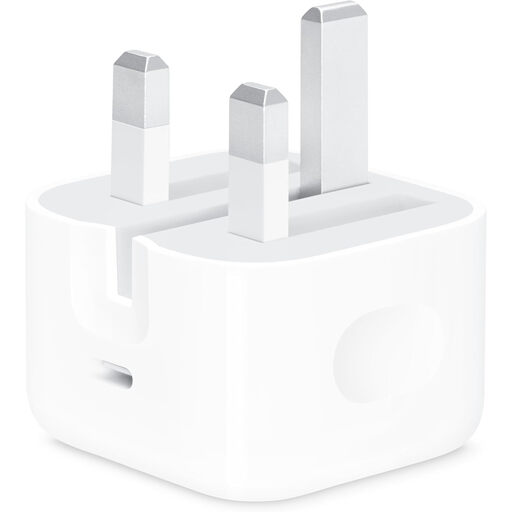
Why This Fits Their Persona: A straightforward choice for a phone or tablet user who needs one compact UK plug for home, work or occasional travel. A charging cable must be purchased separately.
Its listed output is clearly stated as 20W, and the UK three-pin design avoids relying on a separate travel adaptor.
Single USB-C port, up to 20W output, compact body and UK three-pin plug.
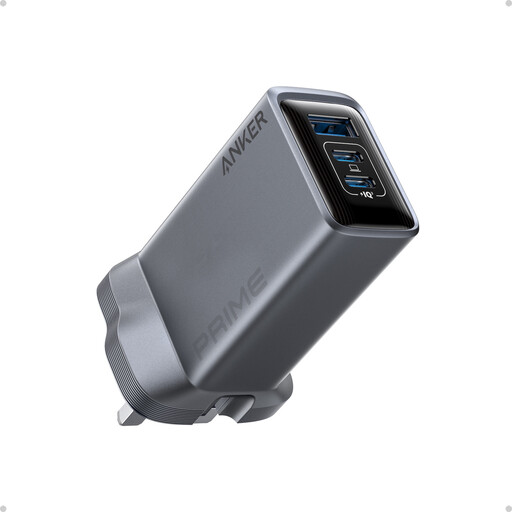
Why This Fits Their Persona: Suitable for professionals and business travellers carrying a laptop, phone and accessory while wanting one compact charging unit.
The output table identifies the power available with one, two and three ports in use, reducing uncertainty around shared charging.
100W total rating, two USB-C ports, one USB-A port and foldable prongs.
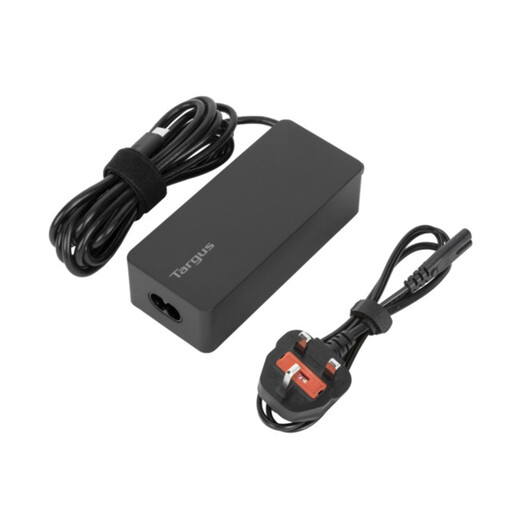
Why This Fits Their Persona: A practical laptop charger for professionals, students and travellers using a compatible laptop up to around 14 inches alongside a phone or tablet.
The 65W rating is more suitable for compatible laptops than a phone-focused adapter, and both EU and UK power cords are supplied.
Up to 65W USB-C PD, over-current and overheating protection, 1.8-metre cable and cable tie.
We have compiled a complete, real-time list of products that fully satisfy these strict selection criteria and UK safety regulations.
It can be, provided the charger supports the phone’s charging protocol and you use a suitable cable. USB-C PD chargers negotiate the required power, so a 65W rating does not automatically force 65W into a phone. The phone’s own charging limit determines the speed.
A higher maximum rating does not mean it constantly consumes that amount. Actual electricity use depends on the connected device, charging level and power-conversion efficiency. Unplug the charger when it is not needed, particularly if it becomes warm or will be stored for a long period.
Lifespan depends on heat, cable strain, travel conditions and daily usage. Keep the adapter ventilated, avoid wrapping cables tightly around the plug, and replace it if the casing, plug or cable becomes damaged. A stated warranty, such as the one-year limited warranty supplied with the Targus model, provides a useful reference when comparing products.