
24/7 Customer Support

Free returns

Same-day & Next-day Delivery

Quality Guaranteed

Unlock Your Welcome Offers: FREE Delivery | Up to 80% OFF | Free 30-day JoyPlus trial
Download the APP
The promise of USB-C is simple: one cable and one plug to power everything from your phone to your laptop. Yet, the reality for many UK shoppers is a drawer full of chargers that fail to deliver. A plug that claims to be a "fast charger" might take hours to fill your battery, or a multi-port hub might suddenly slow to a crawl when you plug in a second device.
As a Joybuy Product Recommendation Officer, my role is to help you see past the marketing jargon. Before you spend another pound on a charger that disappoints, let's look at the common pitfalls and what specifications truly matter.
To make a smart purchase, focus on these three core parameters. They determine whether a charger will meet your needs or become another piece of e-waste.
Think of wattage as the engine of your charger. The higher the watts, the more power it can deliver. However, this power is only useful if your device can accept it, which is managed by the Power Delivery (PD) protocol.
Here is a simple guide to matching wattage to your device:
Always check the wattage your device manufacturer recommends for optimal charging speed.
A GaN charger is the modern standard. This semiconductor material is far more efficient than the silicon used in older chargers. The practical benefits for you are:
Modern chargers come in various combinations.
A multi-port USB charger with at least two USB-C ports is a future-proof investment. A dual port wall charger combining USB-C and USB-A offers a good balance for transitioning your devices.
Instead of a generic list, we have matched specific chargers to different user needs, ensuring they address the common pitfalls.
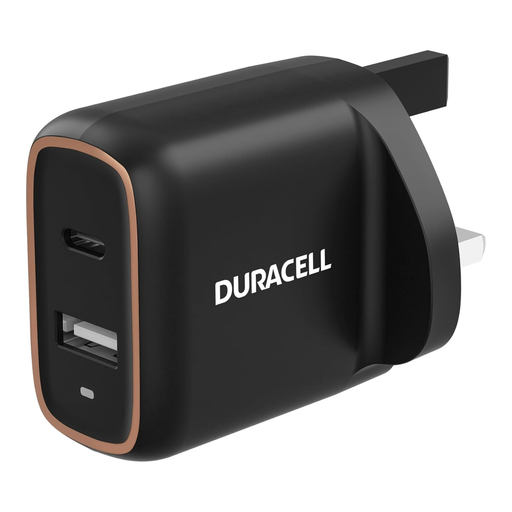
Why This Fits Their Persona: This is for the person who needs a reliable, no-fuss charger for their phone and an accessory like headphones. It's compact enough for a daily work bag and provides the right power for a quick top-up between meetings or on the train.
It avoids the "fast charging" deception by clearly stating its 20W Power Delivery output, the correct specification for fast-charging an iPhone or similar smartphone, without overpromising.
Features both a USB-C and USB-A port, offering great versatility for charging a modern phone and an older accessory simultaneously. Backed by a 3-year warranty.
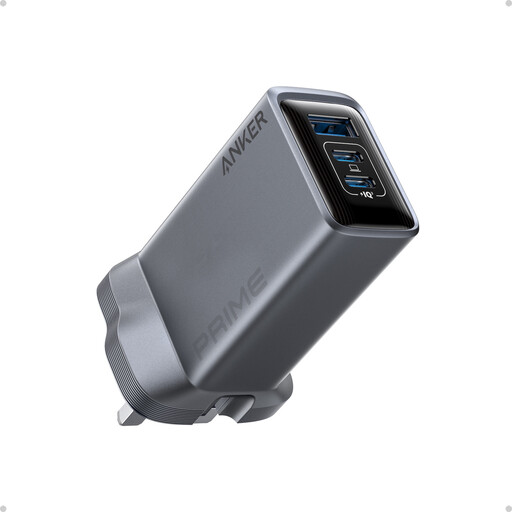
Why This Fits Their Persona: For the professional juggling a MacBook Pro charger replacement, a Samsung charger plug and more. This is a desktop workhorse that can power a demanding laptop and other devices from a single plug socket, decluttering the workspace.
It directly addresses the multi-port power myth by clearly stating its capabilities: a full 100W output from a single USB-C port, with intelligent power distribution when all three ports are in use.
High-power GaN technology provides 100W in a compact design. Two USB-C ports and one USB-A port offer maximum flexibility for charging new and old devices simultaneously.
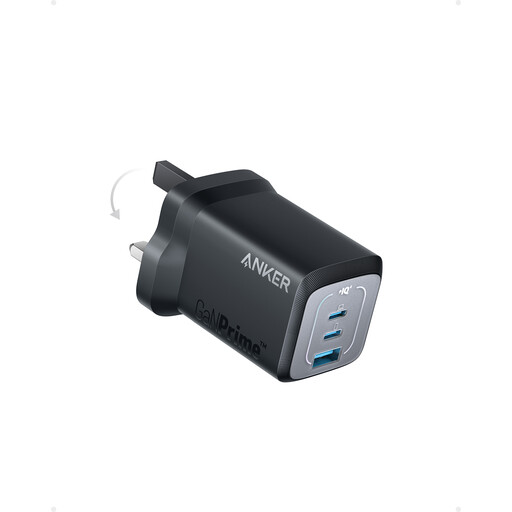
Why This Fits Their Persona: Perfect for those living out of a suitcase. This charger is powerful enough for a MacBook Air or tablet, plus a phone, yet is remarkably small. It replaces three separate chargers, saving precious space and weight in hand luggage.
It fully embraces GaN technology to avoid the trap of bulky, inefficient chargers. According to Anker, it is 51% smaller than an original 67W MacBook charger, a significant advantage for any traveller.
An ultra-compact and lightweight design with three ports (2x USB-C, 1x USB-A) provides a complete charging solution for the road. 67W is ample power for most travel tech.
We have compiled a complete, real-time list of products that fully satisfy these strict selection criteria and UK safety regulations.
Yes, it is safe. Modern chargers and devices that use the Power Delivery (PD) standard communicate with each other to determine the appropriate amount of power. A 100W charger will only deliver the ~20-30W your phone requests, not the full 100W. It will not overload or damage your device's battery.
A GaN charger uses Gallium Nitride instead of traditional silicon. This makes it smaller, more energy-efficient and cooler-running. While you do not strictly need one, the benefits are substantial. If you value portability for travel or want a less bulky plug at home, a GaN charger is a worthwhile upgrade.
Yes, the cable is just as important as the charger. To get the full benefit of a high-wattage charger, you need a USB-C cable that is rated to handle that power. For a 100W USB C charger, you should use a cable specifically rated for 100W. Using an older, lower-rated cable will limit the charging speed and can be a safety concern.