
24/7 Customer Support

Free returns

Same-day & Next-day Delivery

Quality Guaranteed

Unlock Your Welcome Offers: FREE Delivery | Up to 80% OFF | Free 30-day JoyPlus trial
Download the APP
Buying USB-C chargers and adapters can appear straightforward until you compare power ratings, port standards and plug types. A small charging plug may suit a phone but struggle with a laptop, while a high-wattage charger may be inconvenient if it lacks the ports your household still uses.
For UK consumers, the main risks are usually hidden in the specification rather than the appearance. Understanding a few practical details can help you avoid wasted money and choose a charger for your actual routine.
USB-C describes the connector shape, not the charging speed. A USB-C port may support basic charging, USB-C Power Delivery (PD) or another fast-charging protocol. The charger, cable and device must work together for the intended output.
A 20W USB-C charger can be suitable for many phones and smaller tablets, while a 30W USB-C charger offers additional headroom for compatible phones and compact devices. Most laptops require more power, commonly 45W, 65W or higher.
A multi-port USB charger may advertise a total output of 65W, 100W or more. However, that power can be divided between connected devices. A charger with one USB-C port may deliver its headline rating to a single device, while a multi-port model may use power allocation when several phones, tablets or laptops are connected.
Check the output table, not just the largest number on the packaging. This is particularly important when comparing a multi-port USB charger for a home office or business travel.
Some compact travel chargers are supplied with an EU-standard plug or require a separate travel adaptor. For regular use in Britain, confirm that the product includes a UK three-pin plug or a suitable UK power cord.
The Targus charger in this guide includes both EU and UK power cords, whereas the Baseus 30W GaN5 Compact Travel Charger is listed with an EU-standard plug. This does not make either product unsuitable, but it changes where and how you can use it.
USB-C Power Delivery allows compatible devices to negotiate an appropriate voltage and current with the charger. This can support faster charging than a basic USB plug, provided the device and cable are also compatible.
For an iPhone or similar smartphone, a 20W or 30W USB-C charger may be a practical choice. For a laptop USB-C charger, check the manufacturer’s recommended wattage. A 65W model is suitable for many USB-C laptops up to around 14 inches according to the supplied product information, but larger or performance-focused laptops may require more.
Some chargers also list QC, AFC or FCP compatibility. These protocols can be useful for devices that support them, but they do not override the device’s own charging limit.
Think about the cables and accessories you already own:
For data transfers, check the USB standard separately from the charging output. The ACEFAST J1 and J2 adapters support data transfer up to 5 Gb/s according to their specifications, but the connected devices and cables must also support the relevant standard.
Gallium Nitride, commonly called GaN, allows some chargers to provide substantial power in a compact design. A GaN charger can be convenient for a laptop bag or hand luggage, but compact size does not remove the need for ventilation.
Look for clearly stated protection features such as over-current, over-voltage, over-power, short-circuit or overheating protection. Use a suitable, certified cable, avoid covering the charger during use and stop using it if the casing is cracked, it emits an unusual smell or it becomes unusually hot.
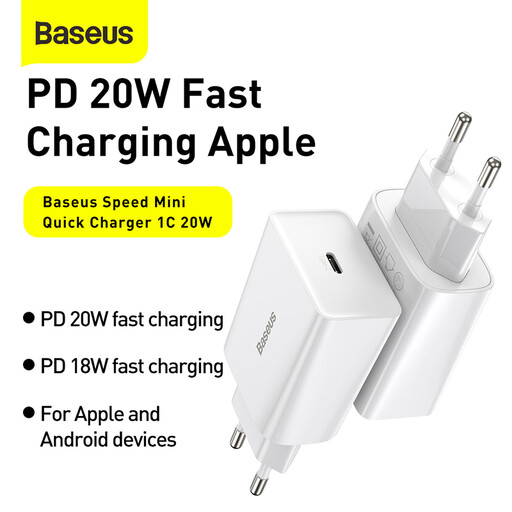
Why This Fits Their Persona: A straightforward option for shoppers replacing an older phone plug or carrying a small charger for everyday use. Note that this listing is EU-standard, so UK users should check their socket and adaptor requirements first.
Its 20W rating is clearly positioned for smaller devices rather than being presented as a laptop solution.
20W USB-C output; mini format for bags, drawers and bedside use.
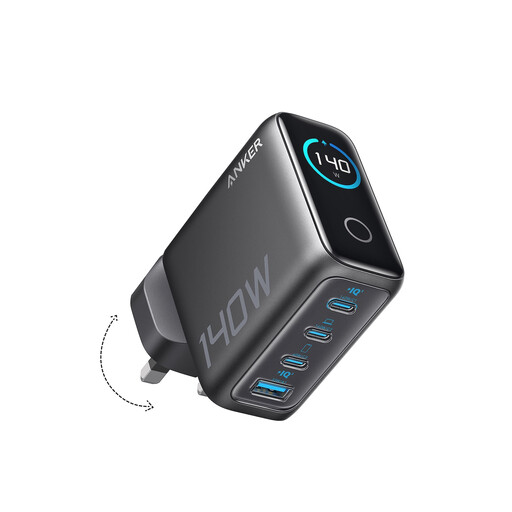
Why This Fits Their Persona: Suitable for a desk setup or frequent traveller who wants to charge several devices from one unit and values visible charging information.
Four ports make the output-sharing issue easier to manage, while the display shows charging status, temperature and port details.
Four-port GaN design; up to 140W output stated in the product information; two USB-C ports.
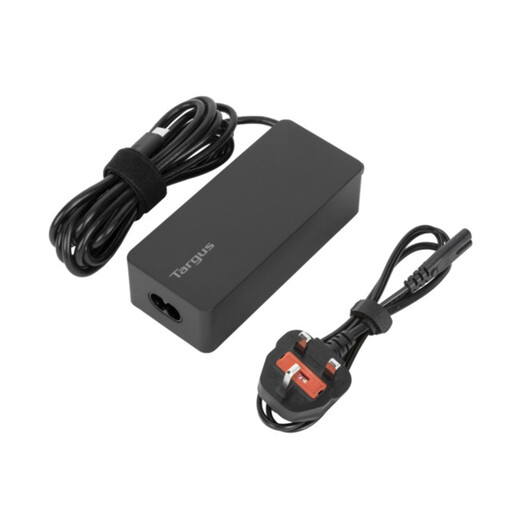
Why This Fits Their Persona: A practical laptop USB-C charger for professionals, commuters and business travellers carrying a compatible laptop, tablet and phone.
The stated 65W ceiling makes it easier to compare with a laptop’s required input, while over-current, overheating and over-voltage protection are listed.
USB-C PD; 1.8-metre cable; EU and UK power cords included; cable tie for storage.
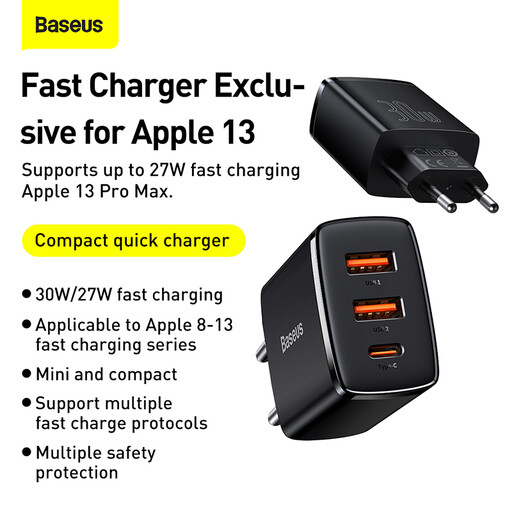
Why This Fits Their Persona: Useful for homes and offices where USB-C and USB-A cables are both still in circulation.
Three connectors reduce the need to carry separate plugs, while the listed total rating reminds users not to exceed the charger’s output limit.
One USB-C and two USB-A outputs; USB-C output listed at up to 30W and USB-A at up to 18W.
We have compiled a complete, real-time list of products that fully satisfy these strict selection criteria and UK safety regulations.
If your USB-C phone, iPad or Mac still needs to connect to a USB-A memory stick, keyboard, mouse or camera, an adapter can be more practical than replacing every accessory.
The Apple USB-C to USB Adapter is designed for USB-C-enabled iPhone, iPad and Mac models, with plug-and-play operation for compatible USB accessories. The ACEFAST J2 USB-C to USB-A Adapter has a USB-C female connector and USB-A male connector, while the ACEFAST J1 USB-A to USB-C Fast Charge Adapter has the opposite arrangement. Check the male and female ends carefully before ordering; connector direction is one of the easiest details to overlook.
It can be, provided the connector, cable and charging protocol match the iPhone model. A 20W USB-C charger is commonly considered for compatible iPhones, while a 30W model provides additional capacity for other devices. The phone controls how much power it accepts.
There is no fixed lifespan for every charger. Longevity depends on heat, cable strain, storage, moisture and build quality. Keep the unit ventilated, avoid pulling it from the socket by the cable and replace it if the casing, pins or cable show damage.
A 100W charger does not continuously consume 100W. Its actual electricity use depends on the connected device and charging stage. Higher-rated models can be convenient for laptops and multiple devices, but a smaller charger may be more suitable if you mainly charge a phone.