
24/7 Customer Support

Free returns

Same-day & Next-day Delivery

Quality Guaranteed

Unlock Your Welcome Offers: FREE Delivery | Up to 80% OFF | Free 30-day JoyPlus trial
Download the APP
A USB-C charger may look like a simple purchase, but the wrong model can mean slow charging, too few ports or an adaptor that cannot power your laptop. UK shoppers also need to check the plug format, cable requirements and how the charger shares power between devices.
This guide explains the specifications that matter before you buy, highlights common marketing pitfalls and matches practical options to different types of user.
A 140W USB-C charger cannot force a phone to accept 140W. The connected device, cable and charging protocol determine the actual charging rate. A smartphone may only draw 20W or 30W, while a compatible laptop can use considerably more.
Check your device’s recommended input before paying for extra capacity. For many phones, a 20W USB-C charger or 30W fast USB-C charger is sufficient. Larger laptops may need a 65W USB-C charger, while high-performance models can require more.
A multi-port USB charger might advertise its total output based on one device using one port. When two or more devices are connected, the available power may be divided between ports.
For example, a charger rated at 67W may provide its highest output to one connected device, but less power when several ports are in use. Look for the individual port ratings and the multi-device power distribution details, rather than relying only on the headline figure.
Many wall adaptors are sold without a charging cable. The Apple 20W USB-C Power Adapter, for example, includes the adaptor only. You may need a USB-C to USB-C cable or a USB-C to Lightning cable, depending on your device.
A cable also needs the right power rating. A low-rated cable may limit a laptop charger’s performance, even when the adaptor supports USB-C Power Delivery.
USB-C Power Delivery (PD) is a widely used charging standard that allows compatible devices and chargers to negotiate an appropriate voltage and current. It is particularly relevant for tablets, phones and laptops.
As a general guide:
The wattage describes the charger’s maximum capacity, not a guaranteed charging speed for every connected product.
A single-port USB-C wall charger keeps the design compact and avoids power-sharing decisions. Dual-port models are more convenient for charging a phone and tablet together. A multi-port USB charger with USB-C and USB-A can be useful if you still own older cables or accessories.
Consider where you will use it. A single-port phone charger may suit a bedside table, whereas a three- or four-port GaN charger can reduce the number of adaptors needed in a home office or travel bag.
For regular use in the UK, look for a secure UK three-pin plug or a charger supplied with a UK power cord. Some travel chargers use an EU plug and may require a separate travel adaptor, which adds bulk and another connection point.
GaN charger technology can enable a smaller design at higher power, but GaN alone does not confirm safety or compatibility. Check the manufacturer’s protection information, input range, warranty and instructions. Features such as over-current, over-voltage and over-temperature protection are useful safeguards, but the charger should still be kept dry, uncovered and well ventilated.
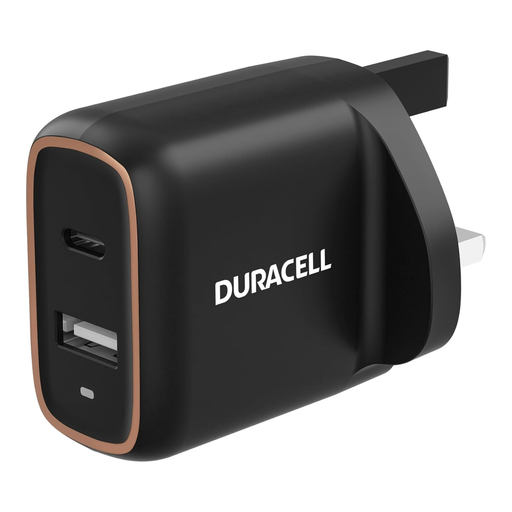
Why This Fits Their Persona: A practical option for students, commuters and households charging a phone alongside an older USB-A device from one UK wall socket.
Its specification states the USB-C port supports up to 20W and identifies simultaneous USB-C and USB-A charging, rather than relying on a single-port headline.
UK plug; one USB-C and one USB-A port; supports charging two devices at once.
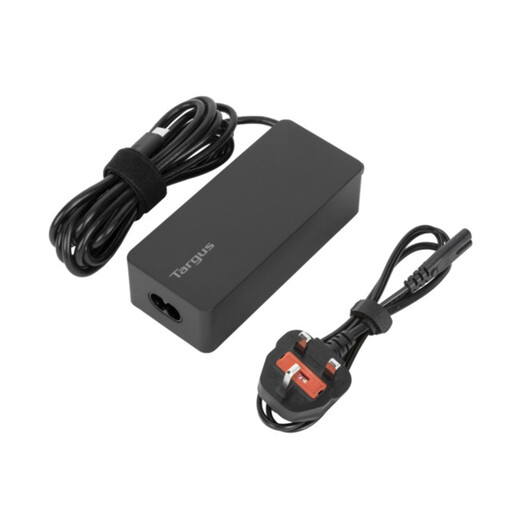
Why This Fits Their Persona: Well suited to business travellers and home-office users who want one laptop charger for compatible laptops, tablets and phones.
The listing specifies USB-C PD, up to 65W output and protection against over-current, overheating and over-voltage.
Includes EU and UK power cords; 1.8-metre cable; cable tie; one-year limited warranty stated in the listing.
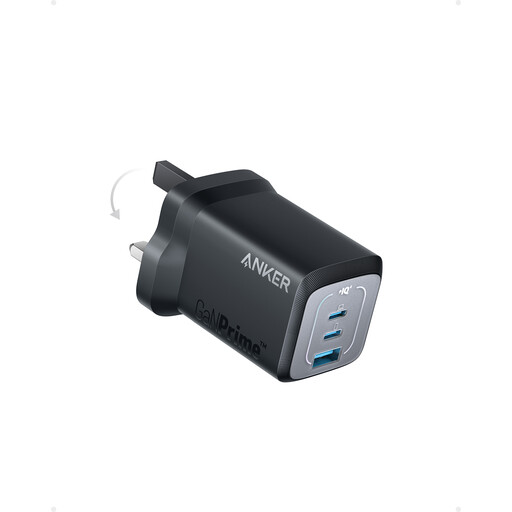
Why This Fits Their Persona: Designed for users who regularly charge a phone, tablet and notebook together at a desk, in a shared workspace or while travelling.
The listing identifies two USB-C ports, one USB-A port and separate two-port output information, making shared charging easier to assess.
Three ports; up to 67W with one connected device; GaN construction; listed protection system.
We have compiled a complete, real-time list of products that fully satisfy these strict selection criteria and UK safety regulations.
For many smartphones, 20W is a suitable level for fast charging, provided the phone and cable support the relevant charging standard. A higher-wattage charger can also be used, but the phone will normally draw only the power it is designed to accept.
Usually, yes, if the charger uses a compatible USB-C PD profile and you use an appropriate cable. The phone negotiates its required power rather than automatically receiving the full 65W. Always check the charger and device specifications.
The cost depends on the power used, charging time and electricity tariff. A charger does not continuously draw its maximum stated wattage; it generally adjusts output to the connected device. Unplugging adaptors when not needed can reduce standby consumption and is also sensible electrical practice.