
24/7 Customer Support

Free returns

Same-day & Next-day Delivery

Quality Guaranteed

Unlock Your Welcome Offers: FREE Delivery | Up to 80% OFF | Free 30-day JoyPlus trial
Download the APP
Finding suitable USB-C chargers UK shoppers can rely on is not simply a matter of choosing the highest wattage. A compact phone charger may be ideal for a daily commute, while a laptop USB-C charger needs enough power to maintain performance during work. Port type, charging protocols, plug design and cable compatibility all affect the result.
This guide explains the common buying traps, the specifications worth checking and which charger types suit different UK households, professionals, students and travellers.
A charger advertised as 65W or 100W does not necessarily deliver that amount to every connected device. Phones, tablets and laptops request the power they are designed to accept. A device that supports 20W will not charge at 65W simply because a more powerful adaptor is connected.
Multi-port USB chargers may also divide their available output when two or more devices are connected. Check both the single-port output and the combined output before buying.
USB-C describes the connector shape, not the charging performance. One port may support USB-C Power Delivery, while another may provide a lower output or use a different charging protocol. Product listings should clearly state port type, wattage and supported standards.
Also check whether a cable is included. The Apple 20W USB-C Power Adapter, for example, includes the adaptor but not a charging cable. You may need a USB-C to USB-C cable for newer devices or a USB-C to Lightning cable for compatible older Apple products.
An imported USB-C wall charger may have an EU two-pin plug rather than a UK three-pin plug. An adaptor can add bulk and may be inconvenient in crowded sockets. For everyday use in Britain, look for a clearly specified UK plug charger with a suitable three-pin design.
Frequent travellers should also check input voltage, included cords and whether the charger is intended for use with the socket systems at their destination.
As a practical guide:
A fast USB-C charger should match your device’s required power rather than simply offering the largest number. For a laptop, compare the original charger’s wattage with the replacement. A 30W model may be unsuitable for a laptop requiring 45W or more.
A USB-C PD charger uses Power Delivery to negotiate a suitable voltage and current with compatible devices. This can support faster charging for phones, tablets and laptops, but the device and cable must also be compatible.
Some chargers support additional protocols such as Quick Charge, Adaptive Fast Charging or similar systems. These may improve compatibility with certain Android phones, although charging speed remains dependent on the device.
GaN chargers use gallium nitride components to deliver relatively high output in a compact form. They can be useful for desks, travel bags and small sockets, but compact size does not remove the need for ventilation.
Look for clear information about:
Do not use a charger with a cracked casing, damaged plug or frayed cable. Keep it uncovered during use and away from water or excessive heat.
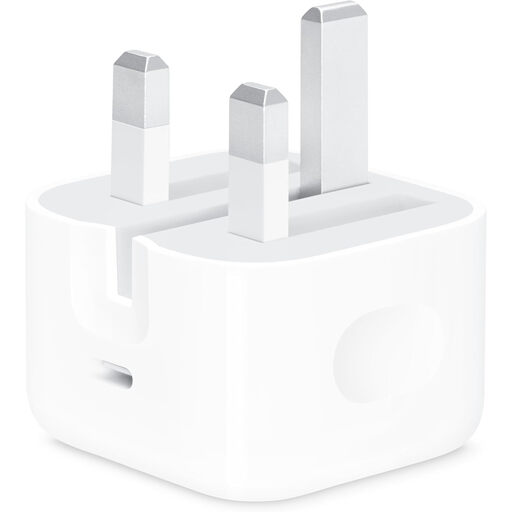
Why This Fits Their Persona: A straightforward single-port choice for iPhone or iPad owners who want a compact UK three-pin charger for home, office or occasional travel.
Its stated 20W output and single USB-C port make the intended use clear. Remember that a compatible charging cable is purchased separately.
20W output, one USB-C port, compact construction and an integrated UK three-pin plug.
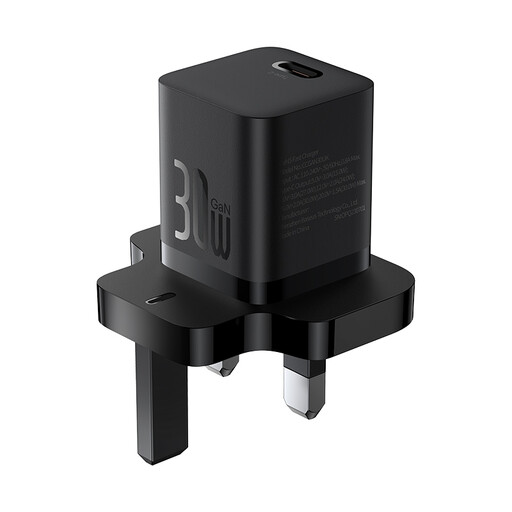
Why This Fits Their Persona: A compact GaN charger for shoppers who value portability and a higher output than a basic phone adaptor.
The listed 30W maximum and single Type-C port reduce uncertainty about power sharing. Its protection system includes temperature and over-voltage controls.
30W output, GaN5 design, 51.5g weight and AC 110–240V input for travel flexibility.
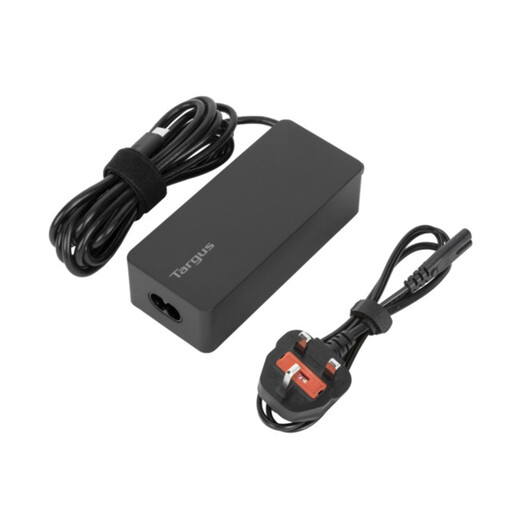
Why This Fits Their Persona: Designed for professionals and students carrying a USB-C laptop, tablet and phone between home, office and meetings.
Its stated 65W USB-C PD output is more suitable for many USB-C laptops than a phone-only adaptor. Confirm your laptop’s required wattage before purchase.
Up to 65W, USB-C Power Delivery, over-current and overheating protection, plus EU and UK power cords.
A single-port USB-C power adaptor is often smaller and simpler. It can be suitable beside a bed, in a home office or in a small travel pouch. A multi-port USB charger is more useful when several people or devices share one socket.
For example, the Anker Prime USB-C 3-Port GaN Charger has two USB-C ports and one USB-A port, with up to 67W when one device is connected. Its output changes when multiple devices are charging, so check the port allocation if you intend to power a laptop and phone together.
Not completely. The connector may fit, but output, charging protocol and cable capability differ. Match the charger’s wattage and PD support with your device, and use a suitable cable.
Lifespan depends on construction, heat exposure, handling and usage frequency. Keep the charger dry, ventilated and free from physical damage. Replace it if the casing, plug or cable shows signs of wear.
A higher-rated charger does not automatically consume its maximum power. The connected device normally requests the energy it needs, although electricity use varies with battery capacity, charging speed, device activity and time connected.
We have compiled a complete, real-time list of products that fully satisfy these strict selection criteria and UK safety regulations.